


5G Antenna Towers Explained: How They Power the Next Generation of Mobile Networks
What makes 5G antenna towers so powerful—and why are they appearing everywhere from city rooftops to streetlights? These advanced wireless structures form the backbone of next-generation mobile networks, delivering faster speeds, lower latency, and the capacity to connect millions of devices. Understanding how 5G towers work reveals the technology quietly transforming smartphones, smart cities, autonomous vehicles, and the entire digital infrastructure of modern life.

What Is a Cell Tower? The Complete Guide to Mobile Network Infrastructure
What exactly is a cell tower, and how does it keep billions of phones connected every day? These towering structures form the backbone of mobile networks, transmitting wireless signals that power calls, messages, and mobile internet. From antennas and radio transmitters to fiber connections and network infrastructure, cell towers play a crucial role in modern communication and the rapidly evolving world of wireless technology.
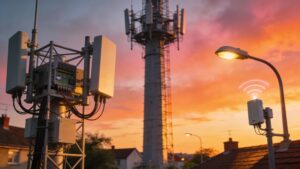
Cell Tower vs Small Cell: Understanding the Backbone of Modern Wireless Networks
How do cell towers and small cells work together to power modern mobile networks? While towering macro towers provide wide-area coverage, compact small cells boost capacity and speed in dense urban areas. Understanding the difference between these two technologies reveals how wireless networks deliver fast, reliable connections that support smartphones, streaming, smart cities, and the rapidly expanding world of connected devices.

How 5G Small Cell Antennas Are Changing Mobile Coverage in Cities
How are cities achieving faster, more reliable mobile coverage than ever before? 5G small cell antennas are reshaping urban connectivity by bringing networks closer to users. Instead of relying on distant towers, these compact installations create dense, high-performance coverage that supports streaming, smart city systems, and next-generation apps. Explore how this technology is redefining speed, reliability, and the future of mobile networks in modern cities.

Types of Cell Towers: Monopole, Lattice, Guyed, and Stealth Structures Explained
What are the different types of cell towers, and why do they matter for your signal? From sleek monopoles in cities to towering guyed structures in rural areas, each design serves a unique purpose. This guide explores monopole, lattice, guyed, and stealth towers, explaining how they impact coverage, capacity, and the future of mobile networks in an increasingly connected world.

How Cell Tower Antennas Work: The Technology Behind Wireless Signals
How do cell tower antennas turn your messages into invisible signals that travel across cities in seconds? This guide breaks down the technology behind wireless communication, from signal conversion and frequency use to MIMO and beamforming. Discover how antennas transmit, receive, and optimize data in real time, powering everything from calls and streaming to the fast, reliable networks we depend on every day.

Small Cell Antennas vs Macro Towers: Which Powers Your Mobile Signal?
What really powers your mobile signal—small cells or macro towers? This guide breaks down how each works, from wide-area coverage to high-speed urban performance. Discover the key differences in capacity, speed, and 5G capabilities, and see how these technologies combine to create the seamless, reliable connectivity you experience every day, whether you’re in a busy city or on an open highway.