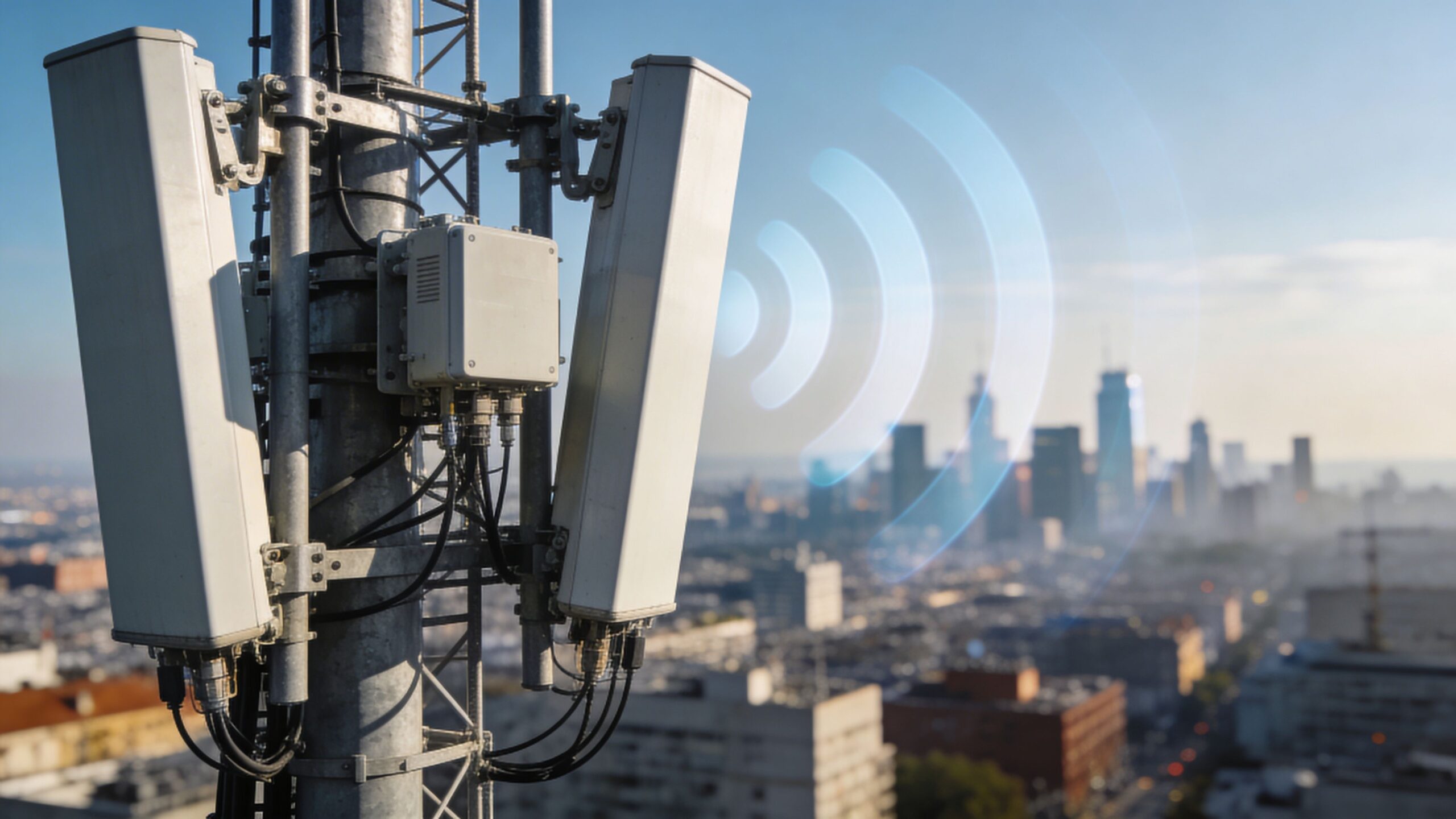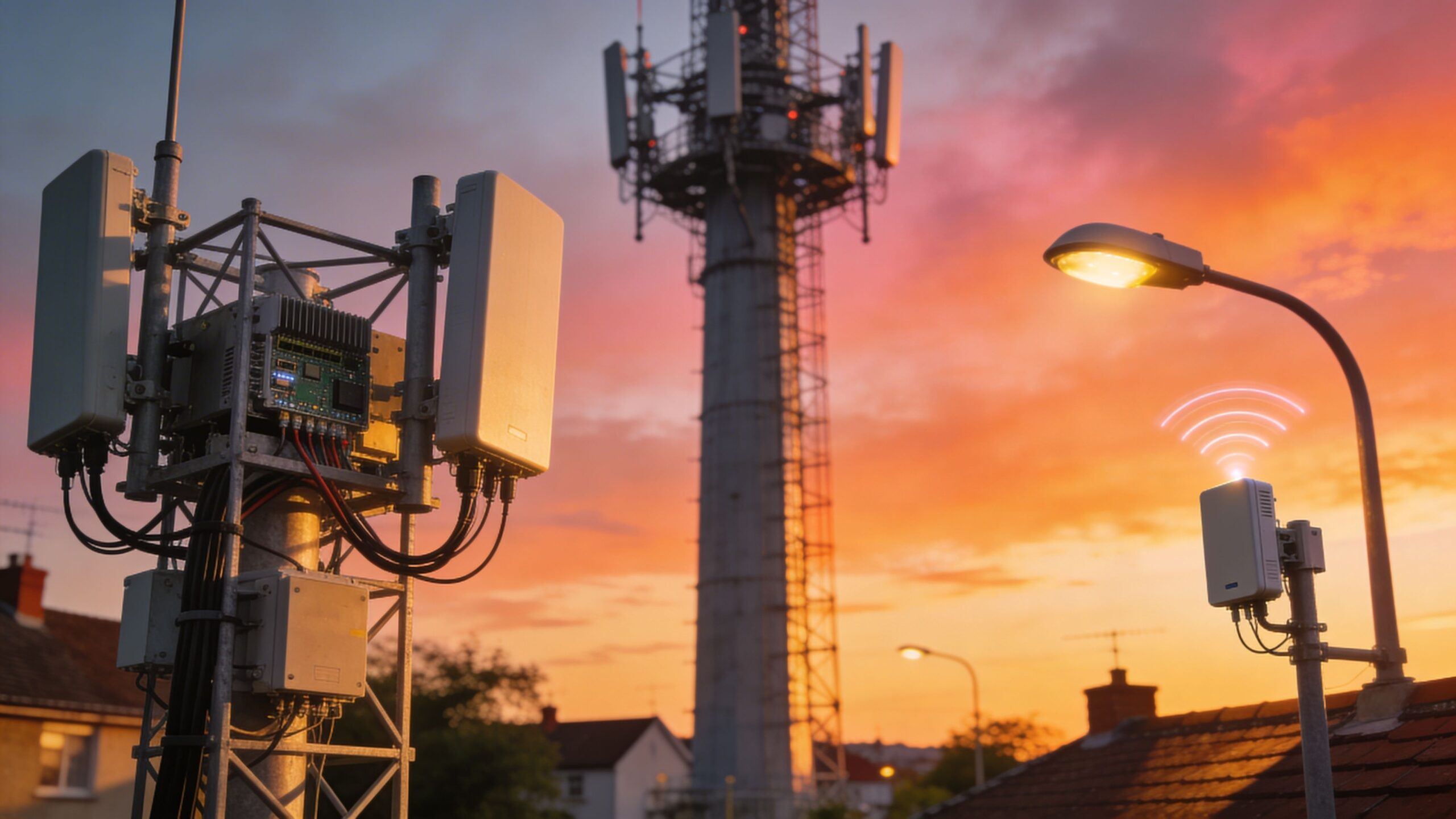
Look up almost anywhere—on the edge of a highway, behind a shopping center, or rising quietly above a city skyline—and you’ll find one of the most important pieces of modern infrastructure: the cell tower. These structures form the backbone of wireless communication, enabling everything from voice calls and streaming video to real-time navigation and emergency services. Yet most people rarely stop to consider the different types of towers that make this connectivity possible. As mobile networks evolve from early cellular systems to advanced 5G ecosystems, the design and deployment of cell towers have become increasingly specialized. Different environments, coverage needs, and engineering constraints require different structural solutions. This is where the four primary types of cell towers—monopole, lattice, guyed, and stealth—come into play.
A: It is a single-pole steel tower commonly used where a compact footprint and cleaner look are preferred.
A: It uses an open steel framework that supports heavier loads and multiple carriers very well.
A: Guy wires allow the structure to reach great heights efficiently, especially on large rural parcels.
A: It is a tower disguised to resemble something else, such as a tree, flagpole, steeple, or architectural feature.
A: Lattice towers are generally favored when high load capacity and future expansion are priorities.
A: Guyed towers usually require the most land because the support wires spread outward to anchor points.
A: Stealth designs can cost more, limit equipment options, and add complexity depending on the concealment method.
A: Not always. Many towers are shared through co-location, letting multiple carriers use the same structure.
A: Yes. Traditional towers still provide broad coverage, even as small cells and rooftop nodes add more capacity.
A: Monopoles are very common in many developed areas, while lattice and guyed towers remain essential in other settings.
Monopole Towers: The Sleek Backbone of Urban Coverage
Monopole towers are among the most recognizable and widely used structures in modern cellular networks, especially in urban and suburban environments. Characterized by a single, tubular steel pole, these towers offer a streamlined and space-efficient solution for delivering wireless coverage in areas where land is limited and aesthetics matter.
Typically ranging from 50 to 200 feet in height, monopole towers are designed to support multiple antennas and equipment arrays while maintaining a relatively small footprint. Their simple, vertical design makes them easier and faster to install compared to more complex structures. This efficiency is one of the key reasons they are so commonly used in cities, along highways, and in commercial districts.
From a performance standpoint, monopole towers are highly effective for medium-range coverage. They are often deployed in clusters to create dense networks, particularly in areas with high user demand. In the era of 5G, monopoles are frequently used to support small cell installations and additional equipment layers, helping to enhance capacity and reduce congestion.
Another advantage of monopole towers is their adaptability. They can be extended, modified, or upgraded with new technologies as network requirements evolve. This flexibility makes them a long-term investment for telecom providers looking to future-proof their infrastructure.
However, monopoles do have limitations. Their height and load capacity are generally lower than those of lattice or guyed towers, which can restrict their use in rural or wide-area coverage scenarios. Despite this, their balance of efficiency, aesthetics, and performance ensures they remain a cornerstone of modern cellular networks.
Lattice Towers: Engineering Strength for Maximum Reach
Lattice towers are the heavy-duty workhorses of the telecommunications world. Built from a framework of interconnected steel beams, these towers form a triangular or square structure that provides exceptional strength and stability. Their robust design allows them to reach impressive heights, often exceeding 300 feet, making them ideal for covering large geographic areas.
These towers are commonly found in rural regions, mountainous terrain, and areas where long-distance signal transmission is required. Their ability to support heavy loads makes them suitable for carrying multiple antennas, dishes, and other communication equipment, including microwave backhaul systems.
The open-frame design of lattice towers reduces wind resistance, which is a critical factor for maintaining structural integrity at greater heights. This design also allows for easier maintenance, as technicians can climb the structure using built-in ladders and platforms.
From a network perspective, lattice towers play a crucial role in extending coverage to remote areas where fewer towers are needed to serve a larger population. They are also used as anchor points in broader network architectures, connecting different regions and supporting high-capacity data transmission.
Despite their advantages, lattice towers are more visually prominent and can be perceived as less aesthetically pleasing compared to monopoles or stealth structures. Their construction is also more complex and time-intensive, requiring significant planning and resources. Nevertheless, their unmatched strength and coverage capabilities make them indispensable in the telecommunications landscape.
Guyed Towers: Reaching New Heights with Efficient Design
Guyed towers represent a unique approach to achieving extreme height while minimizing material costs. Unlike self-supporting structures, these towers rely on a series of tensioned cables, known as guy wires, to maintain stability. The central mast is anchored to the ground, while the cables extend outward and are secured at multiple points around the base. This design allows guyed towers to reach heights of 1,000 feet or more, making them some of the tallest structures used in telecommunications. Their impressive reach enables them to cover vast areas, making them particularly valuable in rural and sparsely populated regions. One of the primary advantages of guyed towers is their cost efficiency. Because the cables provide additional support, the central structure can be lighter and require less material than a comparable self-supporting tower. This makes them an attractive option for expanding coverage in areas where budget constraints are a concern. However, the use of guy wires introduces additional considerations. These towers require a large amount of land to accommodate the anchor points, which can limit their placement in densely populated areas. The cables themselves also pose potential hazards, requiring clear markings and maintenance to ensure safety. From a performance perspective, guyed towers excel in delivering wide-area coverage with fewer installations. They are often used for broadcast and long-range communication applications, as well as for supporting cellular networks in remote regions. While they may not be as common in urban environments, their ability to reach extraordinary heights ensures they remain a critical component of global communication infrastructure.
Stealth Towers: Blending Technology with the Urban Landscape
As cities become more design-conscious and communities place greater emphasis on aesthetics, stealth towers have emerged as an innovative solution for integrating telecommunications infrastructure into the built environment. These towers are designed to disguise their true function, blending seamlessly into their surroundings while still delivering reliable coverage.
Stealth towers can take many forms. Some are disguised as trees, complete with artificial branches and foliage, while others are integrated into church steeples, clock towers, or building facades. In urban settings, they may be concealed בתוך light poles, signage structures, or rooftop enclosures.
The primary goal of stealth design is to minimize visual impact. By camouflaging the tower, telecom providers can deploy infrastructure in areas where traditional towers might face resistance due to zoning regulations or community concerns.
From a technical standpoint, stealth towers function much like their non-disguised counterparts. They house antennas and equipment within their structures, ensuring that performance is not compromised by their appearance. However, the design process is more complex, requiring careful engineering to balance aesthetics with functionality.
Stealth towers are particularly important in historic districts, residential neighborhoods, and scenic areas where preserving the visual character of the environment is a priority. They also play a growing role in supporting dense urban networks, where space is limited and public acceptance is crucial.
While they can be more expensive to design and construct, their ability to harmonize technology with the environment makes them an increasingly popular choice in modern telecommunications.
Choosing the Right Tower: Matching Design to Demand
Selecting the appropriate type of cell tower involves a careful evaluation of multiple factors, including coverage requirements, geographic conditions, budget constraints, and community considerations. Each tower type offers distinct advantages, and the choice often depends on the specific needs of the network. In densely populated urban areas, monopole and stealth towers are typically preferred due to their compact design and minimal visual impact. These structures can be deployed بسرعة and integrated into existing infrastructure, making them ideal for supporting high-capacity networks.
In contrast, rural and remote areas often rely on lattice and guyed towers to achieve broader coverage with fewer installations. These towers provide the height and strength needed to transmit signals over long distances, ensuring connectivity even in challenging environments. Network planners must also consider future scalability. As demand for data continues to grow, towers must be capable of supporting additional تجهیزات and فناوری upgrades. This requires a forward-thinking approach that anticipates changes in technology and user behavior.
Ultimately, the choice of tower is not just a technical decision—it is a strategic one that shapes the performance and resilience of the entire network.
The Role of Cell Towers in the 5G Era
The transition to 5G is redefining how cell towers are used and deployed. While traditional towers remain essential for providing broad coverage, the introduction of higher-frequency signals has created a need for more localized infrastructure.
In this new landscape, cell towers serve as anchor points within a layered network architecture. Macro towers provide wide-area coverage, while smaller installations, such as small cells, enhance capacity and performance in high-demand areas. This combination allows networks to deliver both reach and speed, meeting the diverse needs of modern users.
Monopole towers are often adapted to support additional تجهیزات, including small cell nodes and advanced antenna systems. Lattice and guyed towers continue to play a vital role in connecting different أجزاء of the network, ensuring seamless communication across regions.
Stealth towers, meanwhile, are becoming increasingly important in urban deployments, where the density of infrastructure must increase without overwhelming the visual environment. As 5G continues to expand, the integration of different tower types will become even more critical. The future of connectivity depends on a flexible and dynamic network that can adapt to changing demands and technological advancements.
The Evolving Skyline of Connectivity
The world of cell towers is far more diverse and sophisticated than it might appear at first glance. From the sleek simplicity of monopole structures to the towering strength of lattice and guyed designs, each type plays a vital role in keeping us connected. Stealth towers add another dimension, proving that technology can coexist with aesthetics in even the most sensitive environments. As cities grow and technology continues to advance, the importance of these structures will only increase. They are not just functional components of a network—they are integral to the way we communicate, work, and live in a connected world. The next time you notice a tower on the horizon or a discreet installation on a city street, it is worth remembering the complexity and innovation behind it. These structures may be silent and often overlooked, but they are the unseen giants powering the digital age, shaping the future of connectivity one signal at a time.