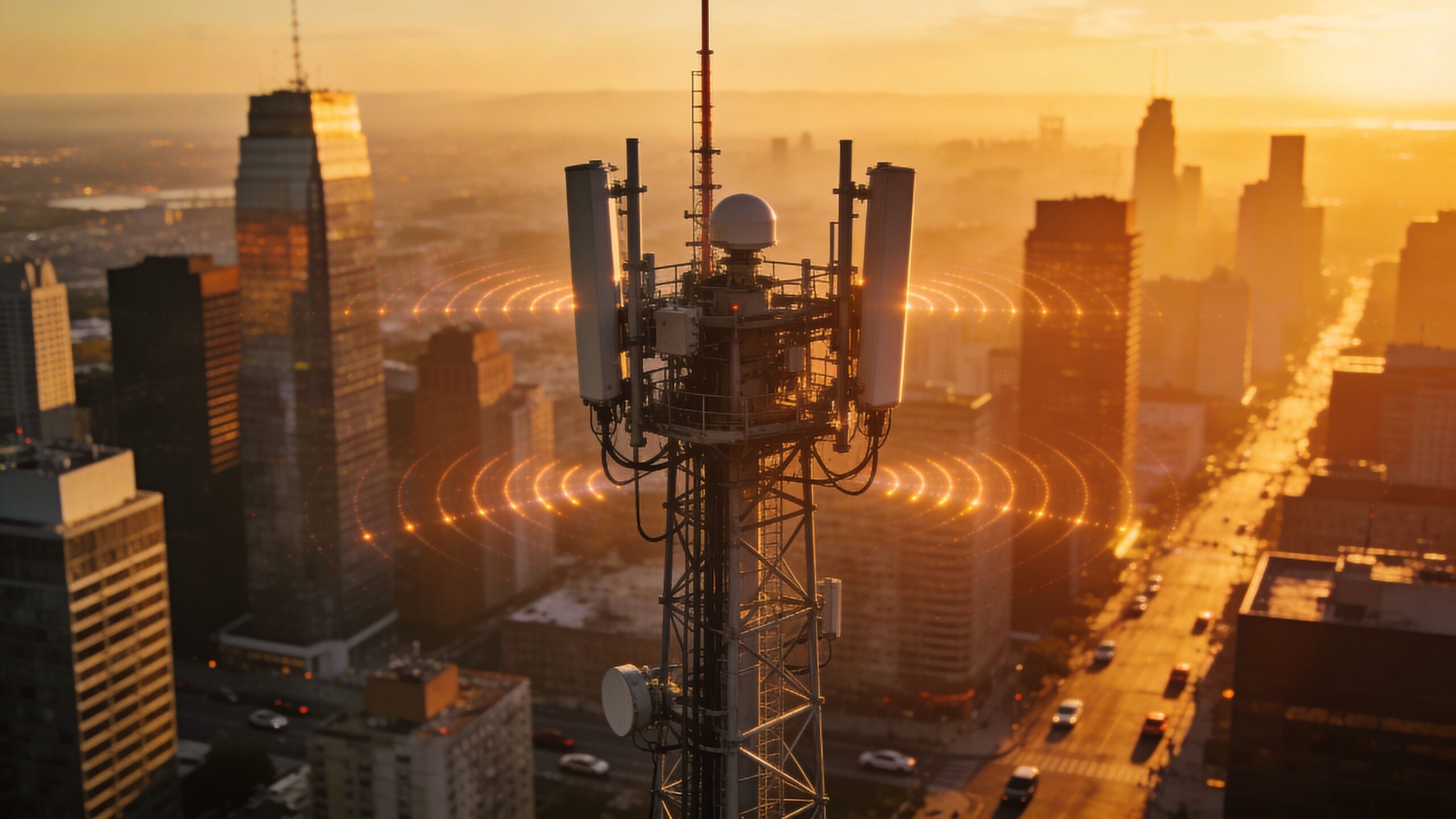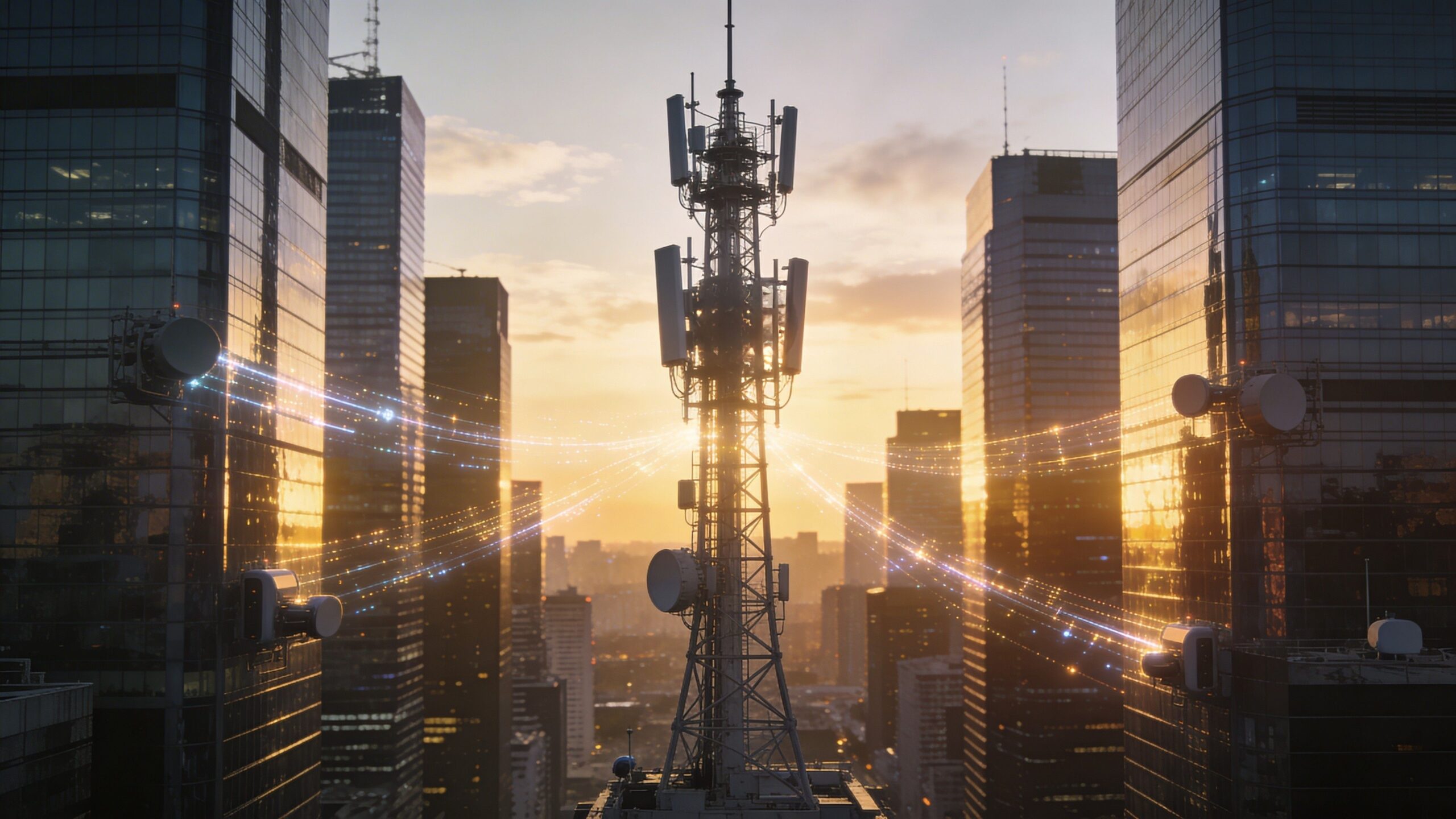
Walk through any modern city and you might notice sleek poles, compact boxes mounted on streetlights, or discreet panels attached to buildings. These are not random pieces of infrastructure—they are the backbone of a quiet but transformative shift in how mobile connectivity works. The rise of 5G small cell antennas is redefining urban coverage, not by building taller towers, but by bringing the network closer to where people actually live, work, and move. For decades, mobile networks relied on large macro towers spaced miles apart, broadcasting signals over wide areas. That model worked well for voice calls and early mobile data, but today’s demand for ultra-fast streaming, real-time gaming, smart city systems, and connected devices has pushed traditional infrastructure to its limits. 5G small cells step in as a fundamentally different approach, one that prioritizes density, proximity, and precision.
A: It is a compact, low-powered antenna system placed close to users to improve coverage and capacity in busy areas.
A: No. They usually work with macro towers to create a layered, more capable network.
A: Urban areas have more users, more buildings, and more data traffic, which makes denser coverage especially valuable.
A: No. They can support different 5G bands, though mmWave often depends heavily on dense placement.
A: In many city hotspots, yes—especially through better speeds, less congestion, and more reliable service.
A: Coverage still depends on carrier buildout, device support, building materials, congestion, and local network design.
A: Sometimes near street-facing spaces, but dedicated indoor systems are often still needed for deeper building penetration.
A: They are generally deployed under regulated standards and are common parts of modern wireless infrastructure.
A: Poles provide height, power access, and close proximity to the sidewalks and streets where demand is highest.
A: They bring mobile capacity closer to people, which helps cities handle modern data demand far more effectively.
From Tower-Centric to Street-Level Connectivity
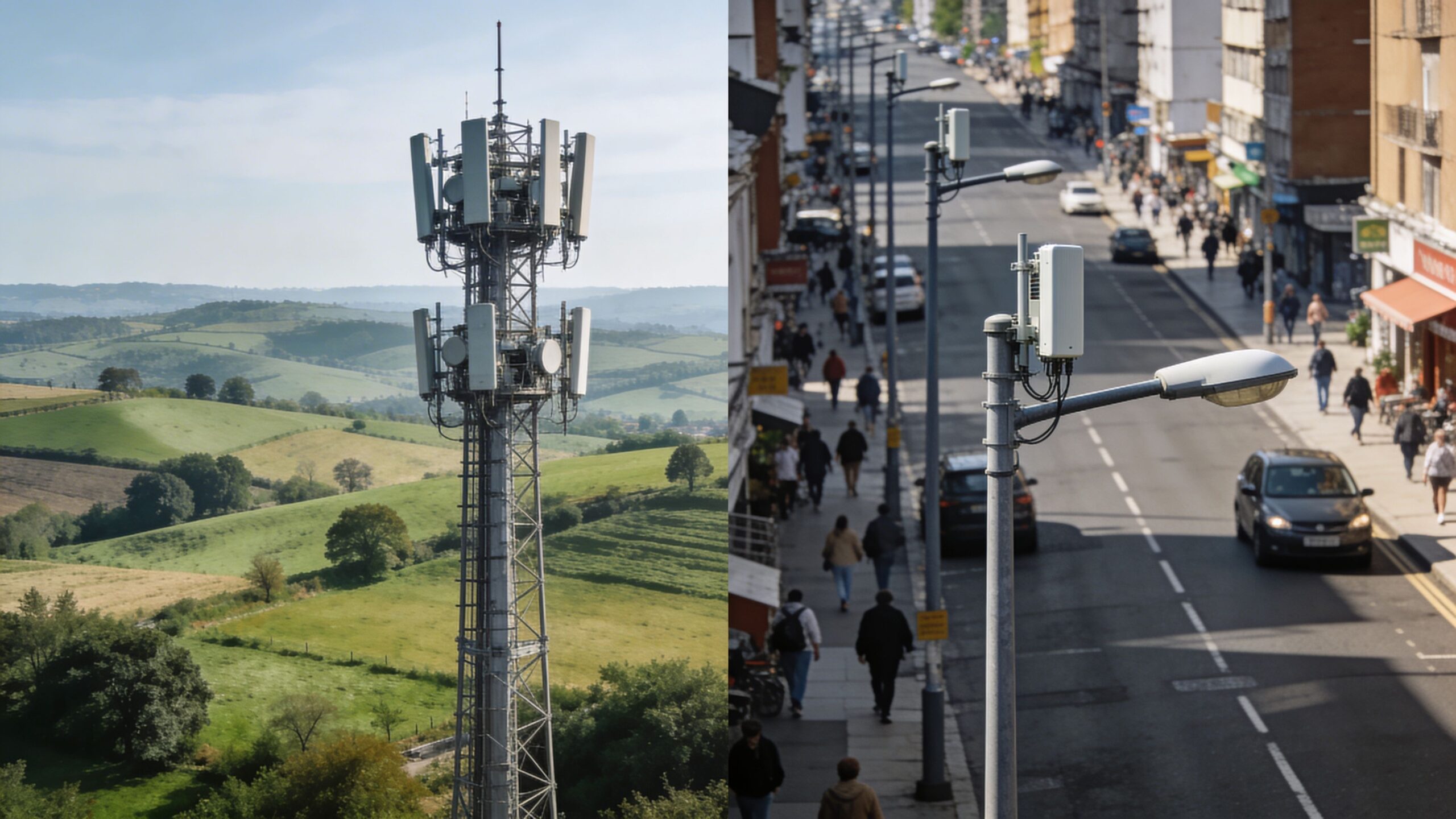
The traditional cellular model was built around coverage zones defined by large towers. Each tower served thousands of users across a wide radius, often leading to congestion in dense areas. In busy downtown districts, stadiums, and transit hubs, this approach created bottlenecks where demand far exceeded capacity.
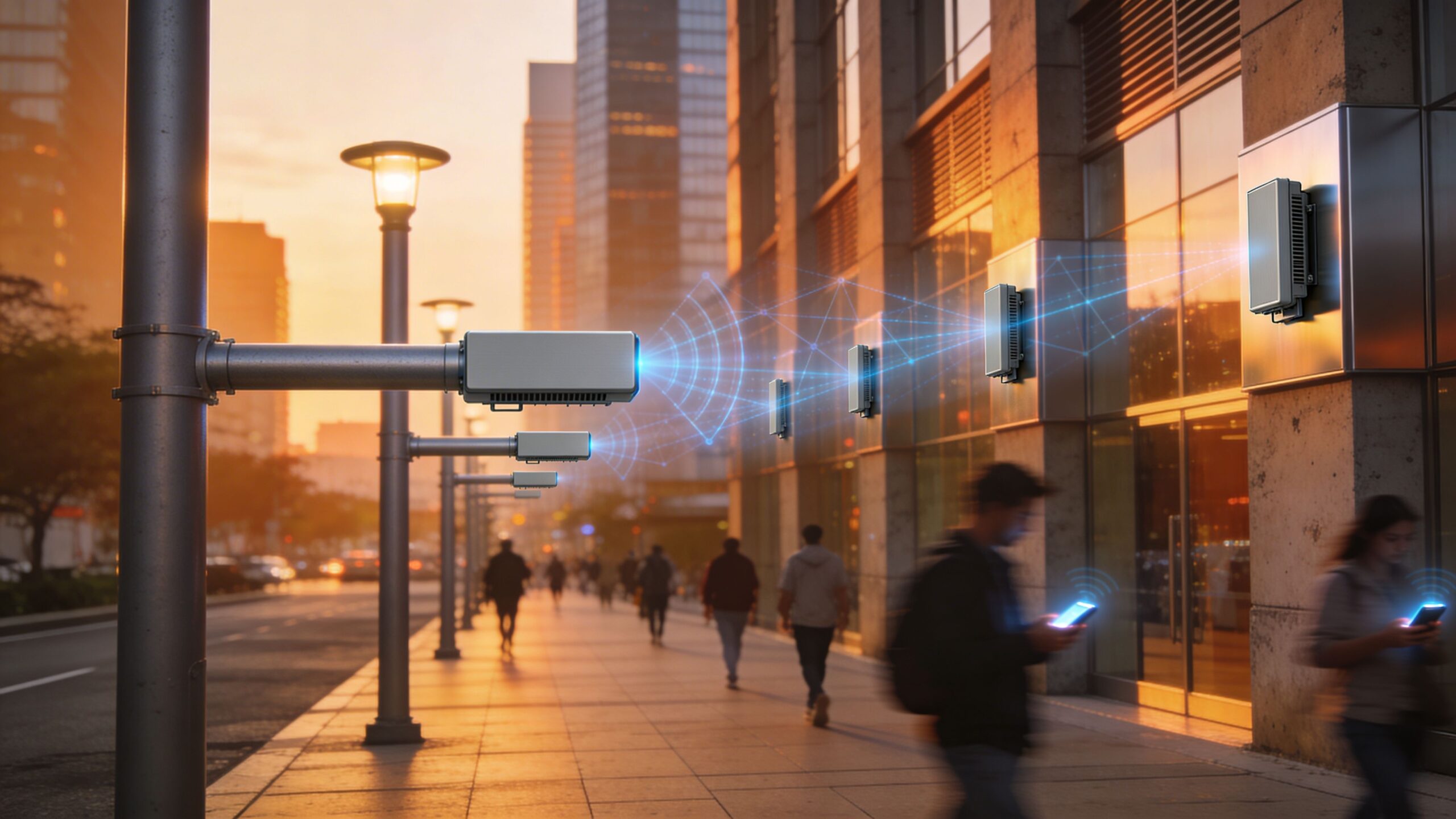
5G small cells change this paradigm by breaking large coverage areas into smaller, more manageable zones. Instead of relying on a single tower to serve an entire neighborhood, networks deploy dozens or even hundreds of small cells throughout a city block. These compact antennas are typically installed on existing infrastructure such as streetlights, utility poles, and building facades.
By shortening the distance between the user and the antenna, small cells dramatically improve signal strength and data throughput. This proximity allows networks to deliver faster speeds and more consistent performance, even during peak usage times. It also reduces interference, since each cell serves a smaller number of users within a defined space.
The result is a network that feels less like a distant broadcast and more like a localized, responsive system tailored to the rhythm of urban life.
Speed and Capacity in the Age of Urban Data Demand
Cities generate enormous amounts of data traffic. From commuters streaming video on trains to businesses running cloud-based applications, the demand for bandwidth continues to grow at an unprecedented pace. Traditional networks struggle to keep up, often leading to slower speeds and dropped connections in high-density areas.
5G small cells address this challenge by increasing network capacity rather than simply boosting power. By distributing traffic across many small nodes, the network can handle far more simultaneous connections without degrading performance. Each small cell acts as a mini hub, capable of delivering gigabit-level speeds to nearby users.
This distributed architecture is especially important for emerging technologies that rely on high-speed connectivity. Augmented reality applications, autonomous vehicles, and smart infrastructure systems all require low latency and high reliability. Small cells make these capabilities possible by reducing the distance data must travel and minimizing delays. In practical terms, this means smoother video streaming, faster downloads, and more responsive apps, even in the busiest parts of a city.
The Power of Proximity: Why Placement Matters
One of the defining features of 5G small cells is their reliance on proximity. Unlike macro towers that broadcast signals over long distances, small cells operate within a limited range, often covering just a few hundred feet. This design allows them to use higher-frequency spectrum, including millimeter wave bands, which offer incredible speed but have shorter reach.
Because these signals do not travel as far or penetrate obstacles as easily, strategic placement becomes critical. Urban planners and network engineers must carefully position small cells to ensure consistent coverage, taking into account building density, street layouts, and user movement patterns.
This attention to placement leads to a more nuanced and adaptive network. Instead of blanketing an area with a one-size-fits-all signal, small cells create a layered coverage model that responds to real-world conditions. In areas with heavy foot traffic, more cells can be added to handle demand. In quieter zones, fewer cells are needed, optimizing efficiency.
The result is a network that feels almost tailored to the city itself, evolving alongside its infrastructure and population.
Transforming Urban Design and Infrastructure
The deployment of 5G small cells is not just a technological upgrade—it is reshaping the physical landscape of cities. As these antennas become more common, they are being integrated into urban design in ways that balance functionality with aesthetics.
City planners and telecom providers are increasingly collaborating to ensure that small cells blend seamlessly into their surroundings. Many installations are designed to be unobtrusive, using compact enclosures and neutral colors that match existing structures. In some cases, antennas are hidden בתוך street furniture or incorporated into decorative elements.
This integration reflects a broader trend toward smart city development, where connectivity is treated as a core component of infrastructure. Just as roads and utilities are essential for urban life, high-speed wireless networks are becoming a foundational element of modern cities.
At the same time, the proliferation of small cells raises important considerations around zoning, regulation, and public perception. Cities must navigate the balance between expanding connectivity and maintaining the visual and environmental quality of public spaces.
Enabling the Next Generation of Smart Cities
The true potential of 5G small cells extends far beyond faster smartphones. These networks are a critical enabler of smart city technologies that rely on real-time data and seamless connectivity. Traffic management systems can use connected sensors to optimize flow and reduce congestion. Public safety networks can transmit high-definition video and coordinate emergency responses with minimal delay. Environmental monitoring systems can track air quality, noise levels, and energy usage with unprecedented precision. All of these applications depend on a dense, reliable network capable of handling large volumes of data with minimal latency. Small cells provide the infrastructure needed to support these systems, creating a foundation for more efficient, responsive, and sustainable urban environments. As cities continue to adopt smart technologies, the role of small cells will only grow, serving as the connective tissue that ties together diverse systems into a cohesive digital ecosystem.
Challenges and Trade-Offs in Dense Network Deployment
While the benefits of 5G small cells are significant, their deployment is not without challenges. Building a dense network requires substantial investment in equipment, installation, and maintenance. Unlike traditional towers, which can cover large areas with a single structure, small cells must be deployed in large numbers to achieve comprehensive coverage.
This density also introduces logistical complexities. Securing permits, coordinating with local governments, and integrating with existing infrastructure can be time-consuming and costly. Additionally, each small cell requires a reliable backhaul connection, often through fiber networks, to transmit data to the broader network.
There are also ongoing discussions حول public concerns, including the visual impact of equipment and questions about electromagnetic exposure. While regulatory standards ensure that installations meet safety guidelines, public perception remains an important factor in deployment strategies.
Despite these challenges, the long-term benefits of improved connectivity and network performance continue to drive investment in small cell infrastructure. As technology advances and deployment processes become more streamlined, these obstacles are likely to diminish over time.
The Future of Urban Connectivity: A Hyper-Connected Landscape
The rise of 5G small cell antennas marks the beginning of a new era in urban connectivity. As networks become more dense and localized, the distinction between digital and physical infrastructure continues to blur. Connectivity is no longer something that reaches into a city from the outside—it is embedded within the city itself. Looking ahead, the evolution of small cell technology will likely bring even greater integration with emerging innovations. Edge computing, for example, can be combined with small cells to process data closer to the user, further reducing latency and enabling real-time applications. Advances in network management and artificial intelligence will allow systems to adapt dynamically to changing conditions, optimizing performance in ways that were previously impossible. For users, this means a more seamless and immersive digital experience. For cities, it means new opportunities to enhance efficiency, sustainability, and quality of life. And for the broader telecommunications industry, it represents a shift toward a more flexible, scalable, and resilient network model. In the end, the transformation driven by 5G small cells is not just about faster speeds—it is about redefining how connectivity is delivered, experienced, and integrated into the fabric of urban life.