Every time you stream a movie on your phone, send a message across the world, or navigate a city with GPS, an enormous invisible network is working behind the scenes to keep you connected. At the heart of this system are two critical pieces of infrastructure: traditional cell towers and small cells. Together, they form the backbone of modern wireless networks, enabling billions of devices to communicate simultaneously across cities, highways, and remote landscapes. For decades, large cell towers defined the architecture of mobile networks. These tall structures spread signals across wide areas, allowing people to make calls and access the internet from miles away. But as smartphones, connected devices, and high-bandwidth applications began to explode in popularity, traditional towers alone could no longer keep up with demand.
A: A cell tower covers broader areas, while a small cell boosts targeted local coverage and capacity.
A: Macro cell towers, because they are built to cover larger distances with fewer sites.
A: Small cells, especially when carriers need more capacity on crowded streets and in dense buildings.
A: Usually no. They are typically designed to support and enhance the broader macro network.
A: Because many advanced 5G deployments benefit from dense, short-range infrastructure in high-demand areas.
A: Yes. In fact, the strongest modern networks usually depend on both working together.
A: Macro towers are usually more obvious, while small cells are often blended into poles or buildings.
A: It depends on where you are: macro towers for reach, small cells for dense-area performance.
A: Even with signal present, congestion, weak backhaul, or overloaded sectors can reduce performance.
A: A layered infrastructure strategy that blends large cell towers with strategically placed small cells.
The Rise of Cellular Networks and the Need for Coverage
The idea of cellular communication emerged from a simple challenge: how to allow millions of people to communicate wirelessly without overwhelming limited radio frequencies. Early mobile communication systems relied on powerful transmitters that covered massive geographic areas, but these systems supported only a small number of users at a time.
Engineers solved this problem by dividing geographic regions into smaller coverage zones called cells. Each cell would be served by its own transmitter tower, allowing frequencies to be reused in nearby areas without causing interference. This approach dramatically increased the number of users that could access the network simultaneously.
Traditional cell towers became the foundation of this cellular architecture. By placing towers at strategic locations across cities and rural regions, network providers created overlapping coverage zones that allowed users to stay connected even while moving between locations.
As mobile technology advanced through successive generations—from early analog systems to modern high-speed networks—the role of cell towers continued to expand. They evolved from simple voice communication transmitters into sophisticated data hubs capable of supporting streaming video, mobile apps, and cloud-based services.
Yet the explosive growth of mobile data usage eventually created new challenges that large towers alone could not fully solve.
What Is a Traditional Cell Tower?
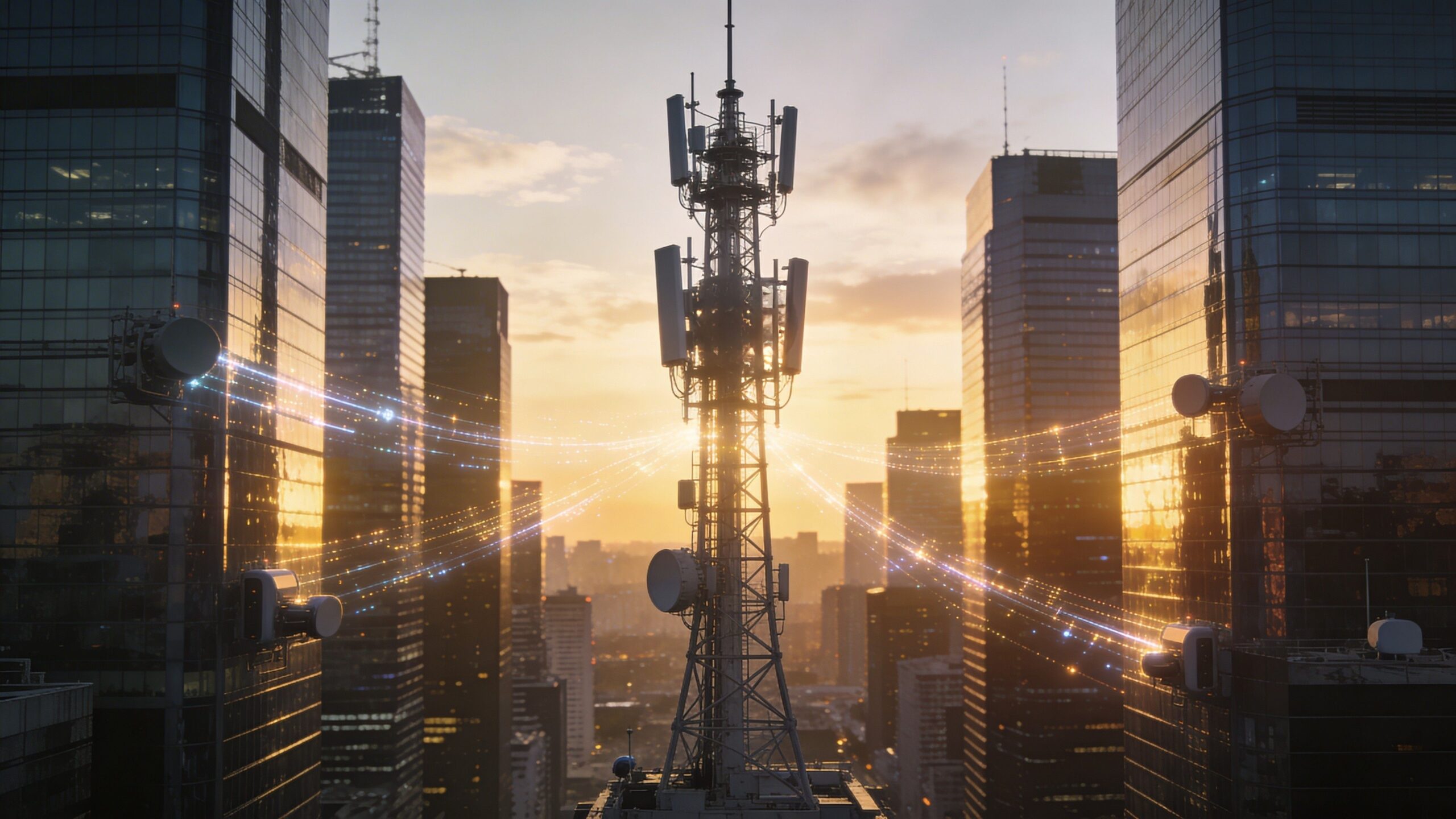
A traditional cell tower, often referred to as a macro tower, is a tall structure designed to transmit and receive wireless signals across large geographic areas. These towers typically range from 100 to more than 300 feet in height and are strategically positioned to maximize coverage.
At the top of the tower are sector antennas that broadcast radio signals outward in multiple directions. Each antenna serves a specific coverage zone, allowing the tower to connect with thousands of mobile devices simultaneously. The signals transmitted from these antennas carry voice calls, text messages, and data between devices and the broader telecommunications network.
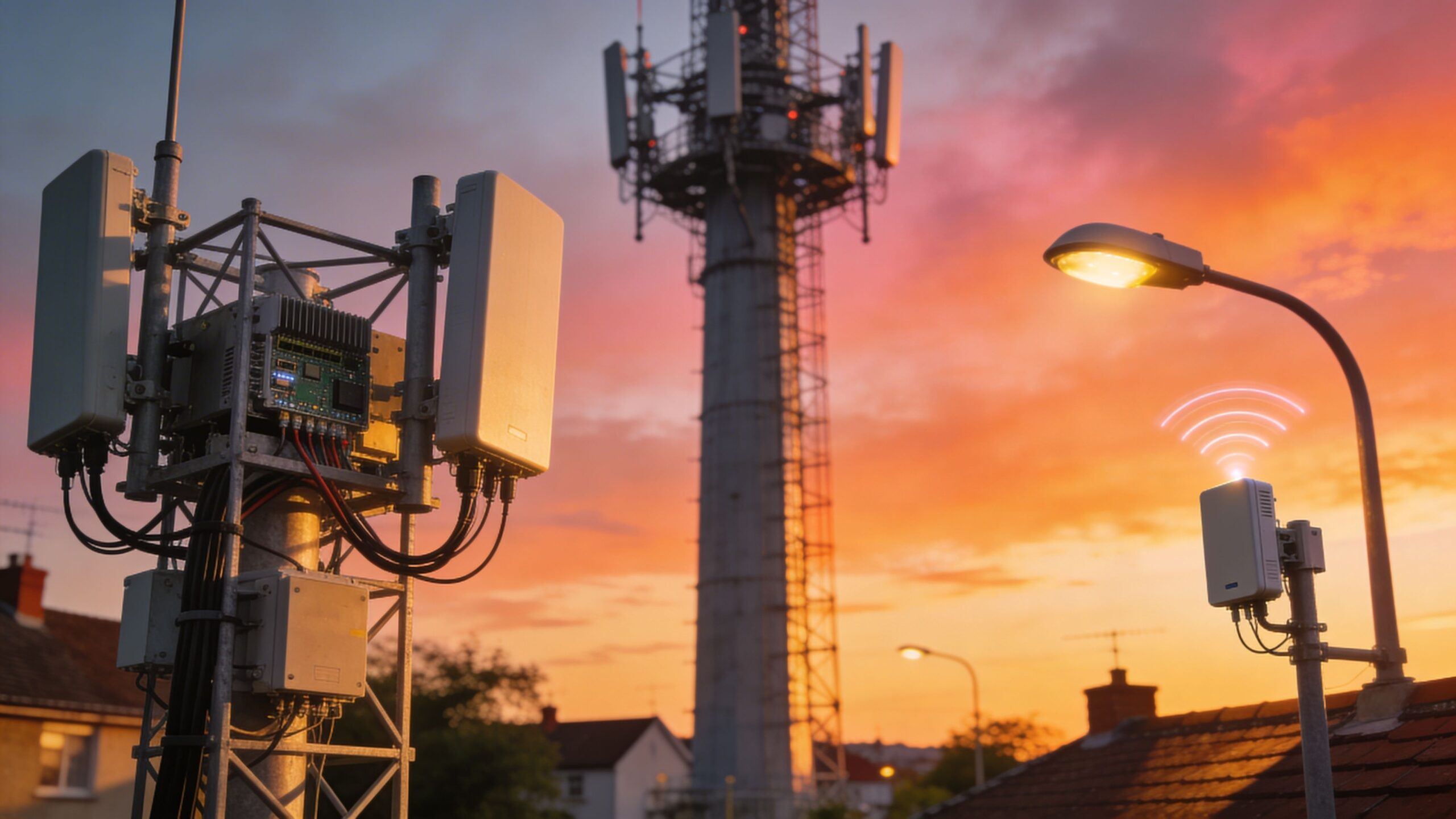
Inside equipment shelters located near the base of the tower, powerful base station hardware processes incoming and outgoing signals. This equipment connects the tower to the carrier’s core network through fiber-optic cables or microwave links. From there, data travels across the internet or telecommunications infrastructure to its final destination.
Macro towers are particularly effective for providing wide-area coverage. A single tower can serve users several miles away depending on terrain, frequency bands, and surrounding obstacles. This makes them essential for covering highways, rural regions, and suburban neighborhoods where fewer infrastructure nodes are needed.
However, in dense cities filled with skyscrapers and millions of connected devices, traditional towers alone often struggle to provide the speed and capacity required by modern mobile networks.
The Emergence of Small Cells in Modern Cities
Small cells represent a new generation of wireless infrastructure designed to complement traditional towers. Unlike large macro towers, small cells are compact antenna systems that operate over shorter distances but deliver higher network capacity.
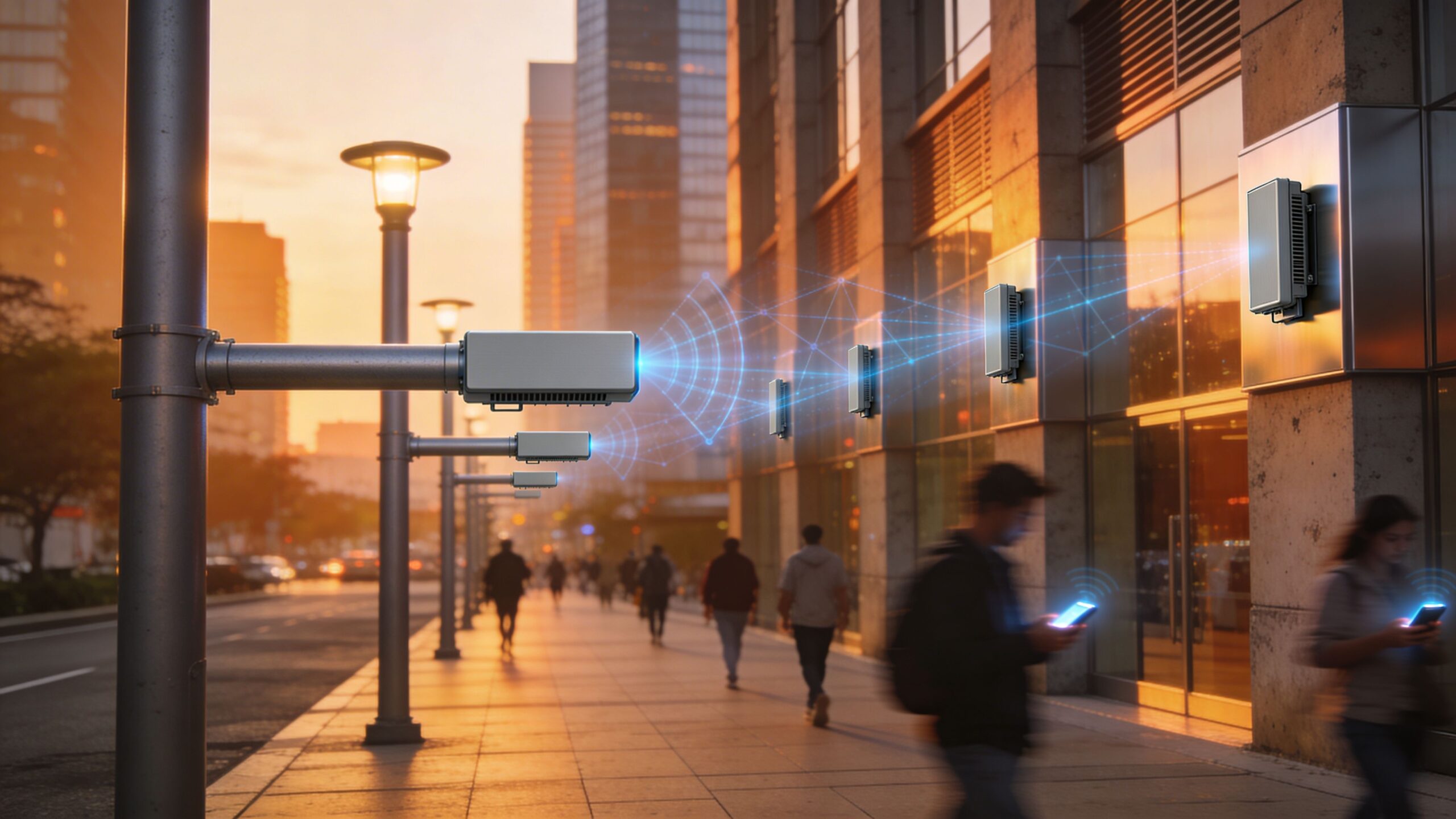
These units are typically mounted on existing urban infrastructure such as streetlights, utility poles, building facades, and traffic signals. Because they are smaller and less visually intrusive than traditional towers, they can be deployed more densely throughout cities.
Small cells serve a relatively small geographic area—often only a few hundred feet to a few thousand feet in radius. While this coverage range is much smaller than that of macro towers, the closer proximity to users allows small cells to provide stronger signals and faster data speeds.
By placing many small cells throughout a city, network providers can dramatically increase the number of devices that can connect simultaneously without congestion. This is particularly important in crowded locations such as downtown districts, stadiums, airports, and shopping centers where thousands of users may be accessing the network at the same time.
The widespread deployment of small cells is a key factor enabling the high performance of modern wireless networks.
How Cell Towers and Small Cells Work Together
Rather than replacing traditional towers, small cells are designed to work alongside them as part of a layered network architecture. Each type of infrastructure plays a distinct role in maintaining reliable wireless connectivity.
Macro towers provide broad coverage across large areas, acting as the foundation of the network. They ensure that users remain connected while traveling between cities, driving along highways, or living in suburban neighborhoods.
Small cells, on the other hand, strengthen the network in areas where demand is highest. By adding localized capacity, they help prevent congestion in crowded urban environments where large towers may struggle to handle heavy traffic.
This layered approach allows networks to balance wide coverage with high performance. When a smartphone connects to the network, it automatically communicates with whichever tower or small cell provides the strongest and most efficient signal at that moment.
The result is a seamless experience where users can move through cities, buildings, and transportation systems while maintaining reliable connectivity.
Why 5G Networks Depend on Small Cell Deployment
The expansion of 5G technology has dramatically increased the importance of small cells in wireless infrastructure. While earlier generations of mobile networks relied primarily on macro towers, 5G networks often operate at higher frequencies that travel shorter distances.
These high-frequency signals can deliver incredibly fast speeds and low latency, but they are more easily blocked by buildings, trees, and other obstacles. To overcome this limitation, network providers deploy large numbers of small cells throughout urban environments.
By placing these nodes closer to users, 5G networks can maintain strong signal strength and support data-intensive applications such as high-definition streaming, augmented reality, and cloud gaming.
Small cells also enable new capabilities such as smart city technologies, connected transportation systems, and advanced industrial automation. These innovations require reliable low-latency connectivity that only dense wireless infrastructure can provide.
In many cities, the expansion of 5G networks has led to the installation of thousands of small cells on existing infrastructure, quietly transforming urban communication systems.
Infrastructure Behind the Signals
While towers and small cells transmit signals through the air, they rely on a vast network of supporting infrastructure to function effectively. One of the most important components of this system is fiber-optic connectivity.
Fiber cables connect towers and small cells to centralized network facilities where data is routed across the internet and telecommunications networks. These cables transmit information using pulses of light, allowing enormous amounts of data to travel at extremely high speeds.
Power systems also play a crucial role in maintaining network reliability. Backup batteries and generators ensure that towers remain operational during power outages or natural disasters.
Modern wireless networks are also supported by advanced monitoring and automation tools that help engineers manage network traffic and optimize performance. These systems allow carriers to quickly detect technical issues and adjust network resources to maintain smooth connectivity.
Together, these hidden systems create the foundation that allows wireless infrastructure to operate seamlessly across large geographic regions.
The Future of Wireless Infrastructure
The evolution of wireless infrastructure is far from complete. As mobile devices become more powerful and data demand continues to grow, networks must adapt to support new technologies and applications. Future mobile networks will likely involve even denser deployments of small cells combined with traditional macro towers and emerging technologies such as satellite connectivity. This hybrid infrastructure could extend reliable coverage into remote regions while delivering ultra-fast speeds in urban centers. Advances in artificial intelligence and network automation may also transform how wireless systems operate. Intelligent network management tools could dynamically allocate bandwidth, optimize tower performance, and reduce congestion in real time. In addition, edge computing infrastructure will bring data processing closer to users, enabling new services such as autonomous vehicles, immersive virtual environments, and advanced industrial robotics. Despite these technological changes, one thing remains certain: both traditional cell towers and small cells will continue to play vital roles in the wireless ecosystem. Together, they form the interconnected framework that powers the mobile networks shaping the future of communication. By understanding the relationship between these two forms of infrastructure, it becomes easier to appreciate the remarkable engineering that keeps the world connected every second of every day.