Look around any city skyline, rural highway, or suburban neighborhood and you will likely spot one of the most important pieces of modern technology: a cell tower. These tall structures quietly power the mobile connectivity that billions of people rely on every day. From phone calls and text messages to streaming video and navigation apps, cell towers form the backbone of the global wireless communication system. Despite their importance, most people rarely think about how these towers actually work. They blend into the background of everyday life, standing atop buildings, disguised as trees, or rising from fields along highways. Yet behind their simple appearance lies an incredibly sophisticated network of antennas, transmitters, fiber connections, and computing infrastructure.
A: It sends and receives radio signals so phones and other devices can connect to a wireless network.
A: No. Some are monopoles, rooftop sites, stealth designs, or smaller support structures.
A: Yes. Many towers are shared, with each carrier installing its own equipment on the structure.
A: Strong signal does not always mean strong capacity; congestion and limited backhaul can still reduce performance.
A: A macro tower covers a wider area, while a small cell boosts localized coverage and capacity.
A: No. Tablets, hotspots, cars, sensors, and fixed wireless devices also rely on them.
A: Carriers choose locations based on coverage gaps, traffic demand, terrain, zoning, and backhaul access.
A: Absolutely. Many older towers are upgraded over time with newer radios and antennas.
A: Strong spectrum assets, modern radios, smart antenna design, and high-capacity backhaul all help.
A: They form the backbone of mobile infrastructure that keeps people, services, and businesses connected.
From Analog Beginnings to Global Mobile Networks
The story of cell towers begins long before smartphones and mobile apps existed. Early wireless communication systems in the mid-20th century relied on large broadcast transmitters that covered wide areas but supported only a limited number of users. As mobile phone technology began to develop in the 1970s and 1980s, engineers faced a major challenge: how to allow millions of people to communicate wirelessly without overwhelming the available radio spectrum.
The solution was the cellular network concept. Instead of using a single powerful transmitter, engineers divided geographic areas into smaller sections known as cells. Each cell would have its own tower transmitting radio signals within a specific coverage zone. By dividing the network into many smaller cells, the same radio frequencies could be reused across different areas without interference.
This design dramatically increased the number of devices that could connect to the network simultaneously. Early cellular networks supported basic voice calls, but the system quickly evolved to handle text messaging, mobile data, and eventually high-speed internet access.
Over time, mobile technology progressed through several generations. First-generation networks supported analog voice communication. Second-generation networks introduced digital voice and SMS messaging. Third-generation networks brought mobile internet access. Fourth-generation LTE networks delivered fast data speeds capable of supporting video streaming and advanced applications.
Today’s networks continue this evolution with the deployment of 5G infrastructure, dramatically increasing speed, capacity, and connectivity across the mobile landscape.
How Cell Towers Actually Work
At its core, a cell tower is a communication relay station. Its primary function is to send and receive radio signals between mobile devices and the broader telecommunications network.
When you make a phone call, send a message, or load a website on your smartphone, your device transmits a radio signal. That signal travels through the air to the nearest cell tower. The tower receives the signal using specialized antennas and equipment mounted at the top of the structure.
Once the signal reaches the tower, it is processed by base station hardware located either on the tower itself or in equipment shelters nearby. The signal is then routed through high-speed fiber-optic cables or microwave links that connect the tower to the carrier’s core network.
From there, the data is transmitted across the internet or through other telecommunications systems until it reaches its destination. When someone calls your phone, the process works in reverse. The network routes the signal to the tower closest to you, which then transmits the signal through the air to your device.
This constant exchange of radio signals between devices and towers allows millions of users to stay connected while moving through cities, driving along highways, or traveling across entire regions.
Anatomy of a Modern Cell Tower
Although they may appear simple from a distance, modern cell towers contain a wide array of specialized equipment. Each component plays an important role in maintaining reliable wireless communication.
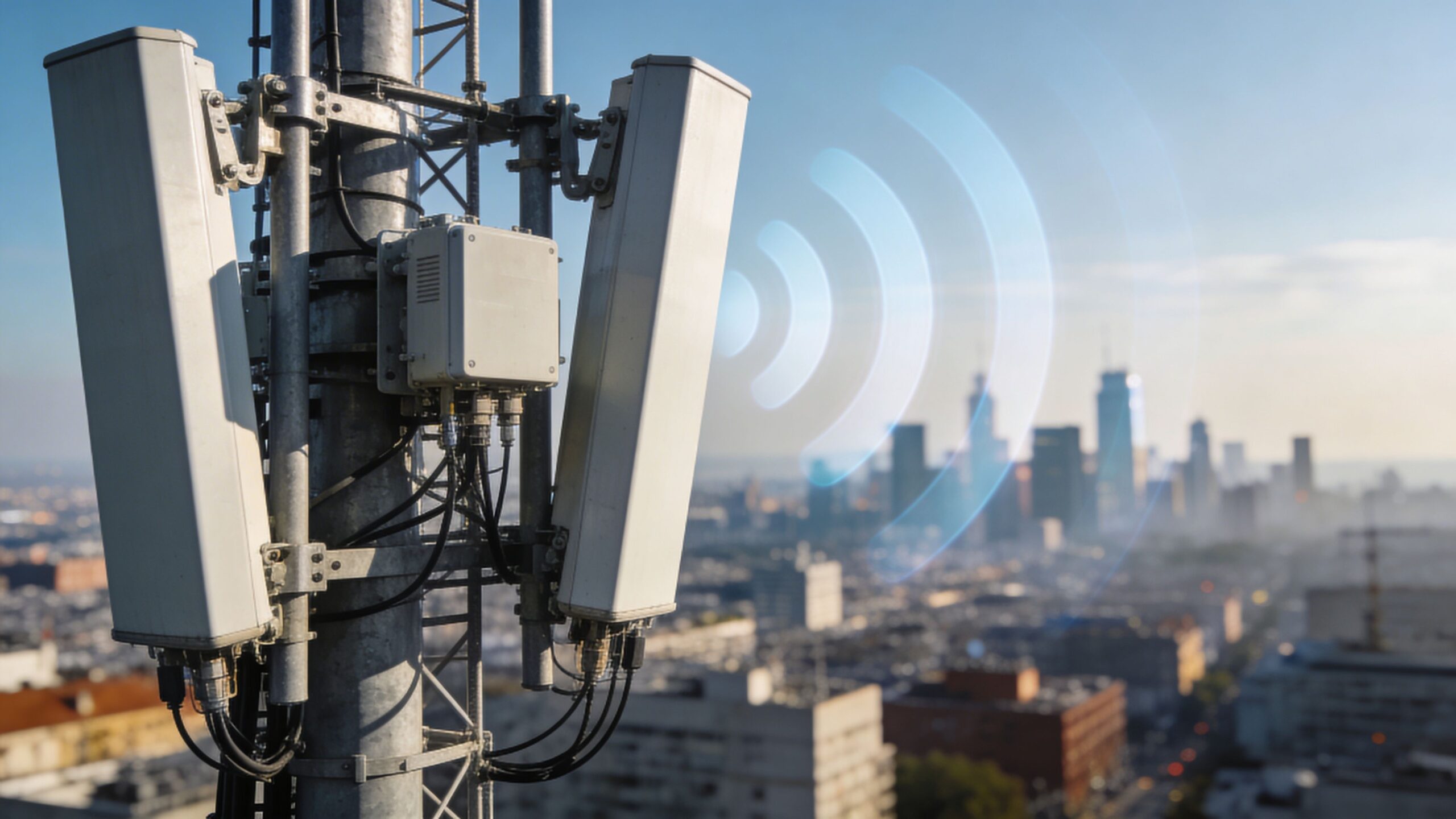
At the top of the tower are sector antennas, which transmit and receive radio signals across specific coverage zones. Most towers divide their coverage area into three or more sectors, allowing them to serve multiple directions simultaneously while minimizing interference.
Mounted alongside these antennas are remote radio units that convert digital signals from the network into radio frequency transmissions. These units amplify and broadcast signals toward nearby devices while also receiving incoming signals from smartphones and other wireless equipment.
Below the antennas are transmission lines or fiber connections that carry signals down the tower to base station equipment. This hardware processes the data and connects the tower to the wider telecommunications network.
Many towers also include backup power systems, cooling equipment, and monitoring systems designed to keep operations running even during outages or severe weather conditions.
The combination of antennas, radios, and network equipment transforms each tower into a highly sophisticated communications hub capable of managing thousands of simultaneous connections.
Different Types of Cell Towers in the Network
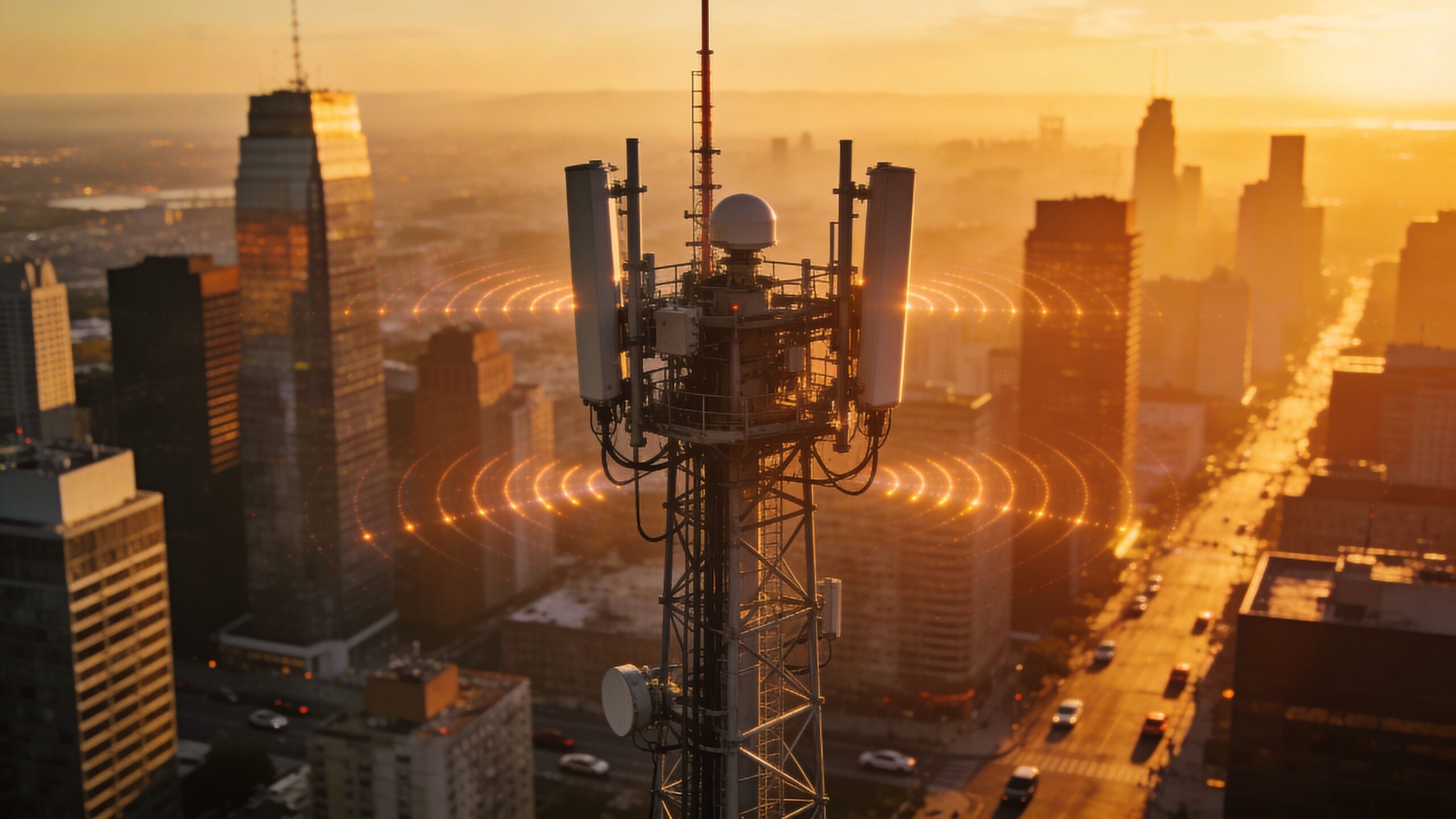
Cell towers come in many shapes and designs depending on their location and purpose. The most recognizable are macro towers, which are tall freestanding structures designed to provide wide-area coverage. These towers often stand hundreds of feet tall and can serve users several miles away.
In dense urban environments, smaller towers known as small cells are increasingly common. These compact antenna systems are mounted on streetlights, utility poles, rooftops, or traffic signals. Because they operate closer to users, small cells can provide faster speeds and support higher network capacity in crowded areas.
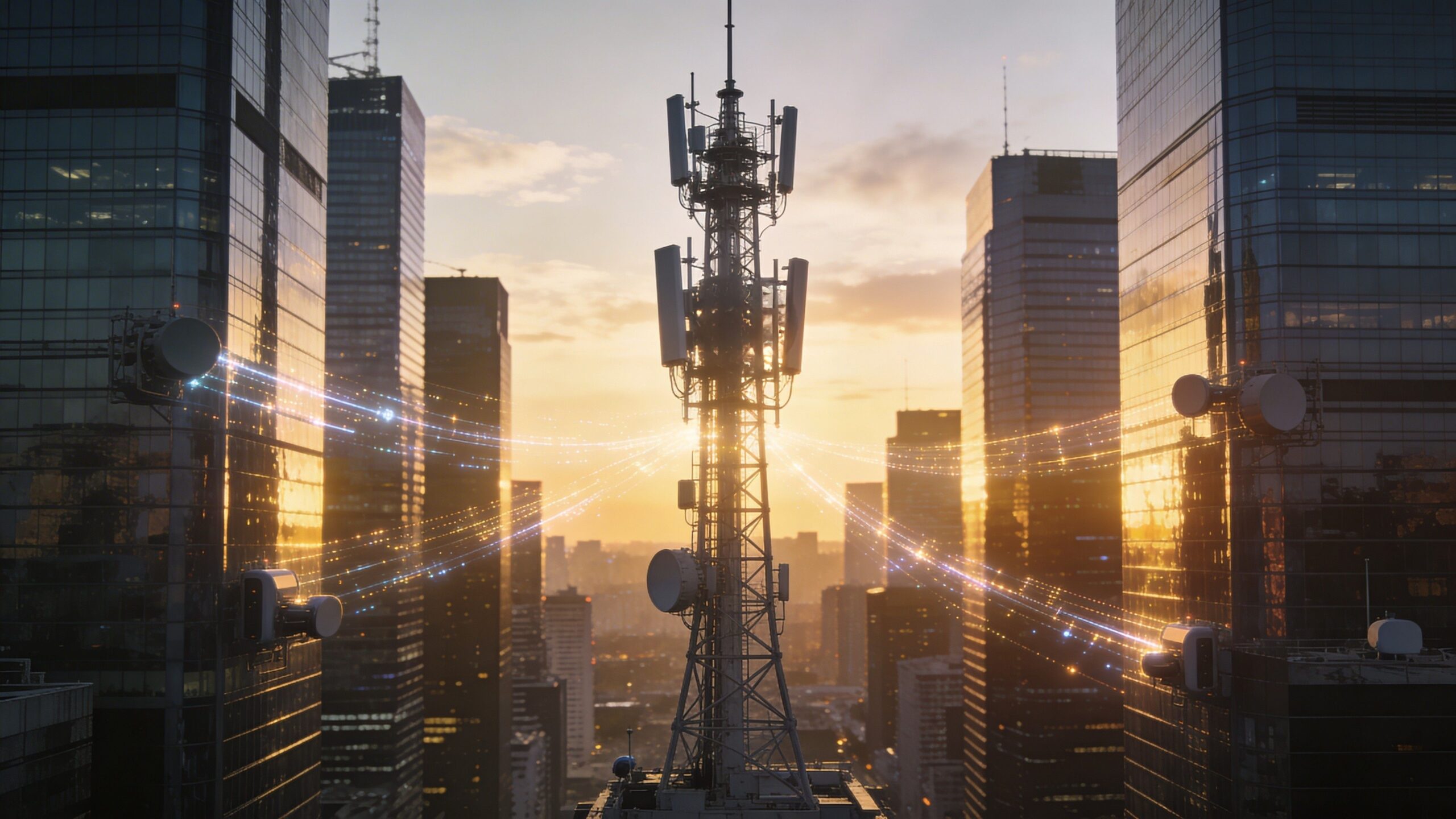
Another common form of infrastructure is the rooftop tower installation. Instead of constructing a freestanding tower, carriers mount antennas and radio equipment on top of existing buildings. This approach helps expand coverage in cities without requiring additional land.
Distributed antenna systems are also used in large venues such as stadiums, airports, and shopping centers. These systems place multiple small antennas throughout a building to ensure strong signal coverage indoors where traditional towers may struggle to penetrate.
Together, these different tower types create a layered wireless network that balances wide coverage with high performance.
The Invisible Highways of Radio Spectrum
Every mobile network relies on radio spectrum, the range of electromagnetic frequencies used to transmit wireless signals. These frequencies act like invisible highways carrying data between devices and cell towers.
Different portions of the spectrum have unique characteristics. Lower frequencies can travel long distances and penetrate buildings more easily, making them ideal for wide-area coverage. Higher frequencies provide faster data speeds but typically travel shorter distances.
Mobile carriers acquire licenses to operate within specific portions of the spectrum. They carefully manage these frequencies to prevent interference between towers and ensure reliable communication across the network.
As mobile technology evolves, new portions of the spectrum are being opened to support advanced services. The introduction of high-frequency millimeter wave bands in modern networks is one example of how carriers continue to expand the available capacity for wireless communication.
Efficient spectrum management allows cell towers to support enormous numbers of devices while maintaining stable connections.
The Infrastructure Behind the Towers
While towers are the most visible part of mobile networks, much of the system’s complexity lies behind the scenes. Every tower connects to a massive infrastructure of fiber-optic cables, data centers, and switching systems that manage the flow of information across the network.
Fiber-optic cables act as the high-speed backbone of modern telecommunications. These cables carry enormous volumes of data between towers and core network facilities at incredible speeds using pulses of light.
Inside carrier data centers, powerful computers route calls, messages, and internet traffic to their intended destinations. These systems manage network authentication, security, billing, and traffic optimization.
Modern networks also rely heavily on network monitoring and automation tools. Engineers use sophisticated software to track tower performance, manage spectrum usage, and quickly resolve technical issues before they affect users.
Together, these hidden systems allow cell towers to operate as part of a coordinated global network capable of delivering seamless connectivity across vast geographic areas.
The Future of Mobile Infrastructure
Cell towers will remain central to wireless communication for decades to come, but their design and deployment are continuing to evolve rapidly. As mobile data demand grows, networks must expand capacity while delivering faster speeds and lower latency. One major trend is the increasing deployment of small cells and dense urban infrastructure. These compact antenna systems help support data-intensive applications such as augmented reality, cloud gaming, and real-time video communication. Another important development is the integration of edge computing technology. By processing data closer to users, edge networks reduce latency and enable advanced services like autonomous vehicles and smart city systems. Satellite communication is also becoming more integrated with traditional cellular networks. Future mobile systems may combine terrestrial towers with satellite connectivity to extend coverage into remote areas and across oceans. As these innovations continue to unfold, the humble cell tower will remain one of the most essential components of modern digital infrastructure. These silent giants enable the constant flow of information that powers smartphones, businesses, transportation systems, and the global internet itself. Understanding how cell towers work offers a glimpse into the remarkable technology that keeps the modern world connected.