The arrival of 5G promised a revolution—faster downloads, near-zero latency, seamless streaming, autonomous vehicles, smart cities, and a fully connected digital ecosystem. But behind the marketing headlines lies a technical reality that shapes everything about your 5G experience: spectrum bands. Specifically, the debate between mmWave vs Sub-6 GHz. These two 5G frequency ranges define how fast your connection can be, how far signals travel, how well they penetrate buildings, and how reliably your device stays connected. When consumers ask, “Which 5G band is better?” the answer depends on where you are, what you’re doing, and how networks are deployed.
A: Sub-6 GHz—because you’ll actually stay connected across more places, more often.
A: When you’re in a true mmWave hotspot with a clean link, usually yes—but it can vanish quickly indoors or behind obstacles.
A: It could be DSS/shared spectrum, congestion, weak signal, or limited backhaul—“5G” doesn’t guarantee capacity.
A: Sometimes near windows or in venues with indoor mmWave nodes, but in general it’s far less reliable indoors than Sub-6.
A: Not always—Sub-6 includes low-band and mid-band. Mid-band is often the performance sweet spot within Sub-6.
A: Only if you routinely spend time in areas where your carrier has mmWave deployed and you’ll benefit from the burst speeds.
A: It can increase power use during heavy sessions due to beam tracking and higher throughput, but day-to-day impact varies by device and network.
A: Real coverage on your routes, network congestion, and site backhaul—those three decide your lived experience.
A: Some networks/devices can aggregate carriers, but the real benefit depends on the operator’s configuration and your exact location.
A: Run speed tests in your home, office, commute, and favorite hotspots—then decide based on consistency, not peak screenshots.
Understanding Sub-6 GHz: The Backbone of Everyday 5G
Sub-6 GHz refers to 5G spectrum operating below 6 gigahertz. This range includes low-band frequencies (such as 600 MHz and 700 MHz) and mid-band frequencies (like 2.5 GHz and 3.7 GHz C-band). These frequencies are closer to traditional 4G LTE bands, which makes them easier to deploy using existing infrastructure.
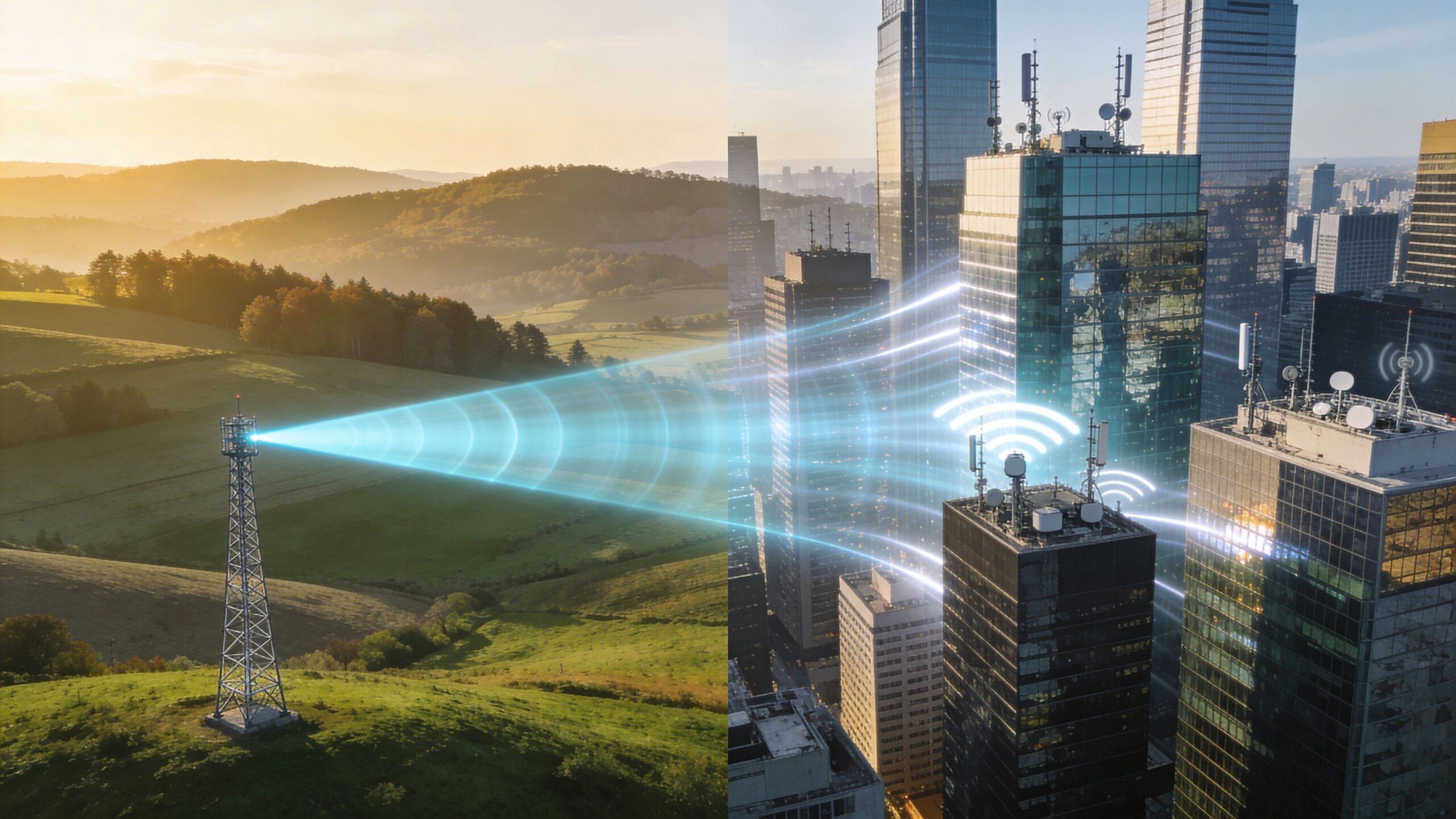
The defining strength of Sub-6 GHz 5G is coverage. Lower-frequency signals travel farther distances and penetrate walls, buildings, and obstacles more effectively than higher-frequency signals. That means stronger indoor reception, broader rural coverage, and fewer dead zones.
In practical terms, Sub-6 GHz delivers reliable performance across large geographic areas. Speeds are significantly faster than 4G LTE, often ranging between 100 Mbps to 400 Mbps in real-world use, with potential peaks even higher depending on network conditions. Latency improvements also enhance video calls, gaming, and real-time applications.
Because Sub-6 GHz provides a balanced mix of speed and range, it forms the backbone of nationwide 5G networks. Most users interacting with 5G today are connected via Sub-6 GHz bands, even if their device simply displays a “5G” icon.
Exploring mmWave: The Speed Champion of 5G
Millimeter wave, commonly called mmWave, operates at much higher frequencies—typically between 24 GHz and 40 GHz, though it can extend beyond that range. These extremely high frequencies allow mmWave to transmit massive amounts of data at incredible speeds.
In ideal conditions, mmWave can exceed 1 Gbps and sometimes approach multi-gigabit performance. Downloads that once took minutes can complete in seconds. Ultra-low latency makes it ideal for advanced use cases like augmented reality, cloud gaming, remote surgery, and industrial automation.
However, the physics of high-frequency signals introduces challenges. mmWave signals have short wavelengths, which means they travel shorter distances and struggle to penetrate obstacles like walls, glass, trees, and even heavy rain. Coverage is highly localized, often limited to specific city blocks, stadiums, airports, or dense urban zones.
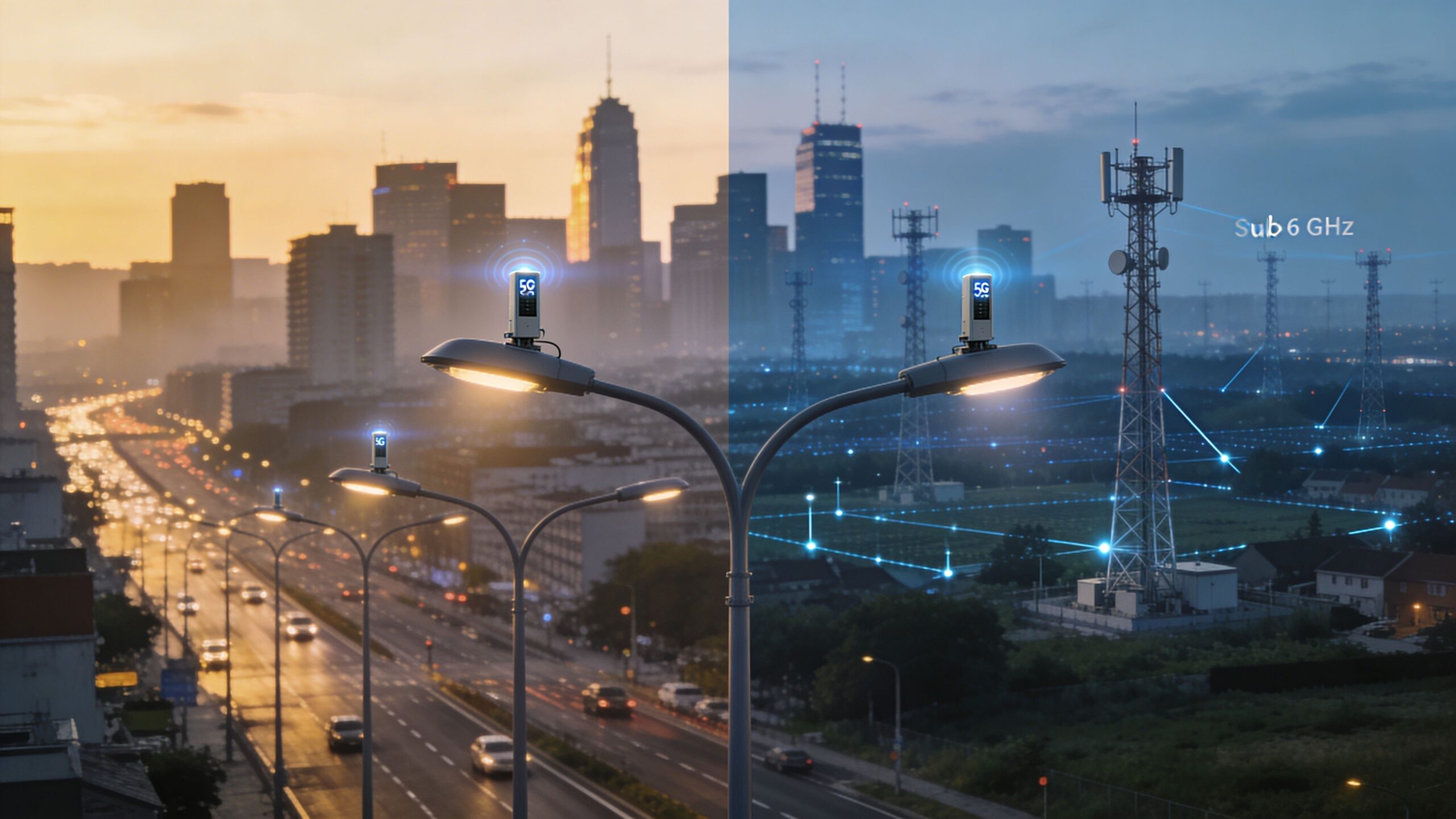
Deploying mmWave requires installing many small cells close together. These are compact base stations mounted on light poles, rooftops, and street infrastructure. While this dense network architecture enables high performance in concentrated areas, it significantly increases infrastructure costs and complexity.
In short, mmWave is incredibly powerful—but only within its limited footprint.
Speed vs Coverage: The Core Tradeoff Explained
When comparing mmWave vs Sub-6 GHz, the central tradeoff comes down to speed versus coverage.
Sub-6 GHz prioritizes reach and reliability. It ensures that 5G works across suburbs, highways, office buildings, and residential areas. Its broader propagation makes it practical for nationwide deployment.
mmWave prioritizes raw performance. It thrives in dense environments where many users demand high data throughput simultaneously, such as downtown business districts or large events.
Imagine two scenarios. In a packed stadium, mmWave can deliver blazing-fast speeds to thousands of fans uploading videos simultaneously. In contrast, on a rural highway, Sub-6 GHz ensures your navigation app and streaming service remain stable over long distances.
Neither band is universally superior. Instead, each excels in different environments.
Real-World Performance: What Users Actually Experience
From a consumer perspective, the mmWave vs Sub-6 GHz debate often feels confusing because the “5G” label doesn’t specify which band you’re connected to. In reality, most everyday 5G usage happens on Sub-6 GHz networks.
In cities with dense infrastructure, some users may briefly connect to mmWave zones, particularly near major intersections or event venues. When they do, speed tests can show dramatic spikes—sometimes several times faster than home broadband.
However, mmWave connections can be inconsistent. Turning a corner, entering a building, or even blocking the signal with your hand may cause your device to switch back to Sub-6 GHz or LTE.
Sub-6 GHz, by contrast, offers more stable coverage. While it may not reach gigabit speeds as consistently as mmWave, it provides dependable connectivity in more places. For most daily activities—streaming HD video, video conferencing, social media, cloud apps—Sub-6 GHz performance is more than sufficient.
The user experience therefore depends heavily on location and network density rather than just theoretical speed limits.
Infrastructure and Deployment: Why Network Design Matters
Deploying mmWave and Sub-6 GHz networks involves very different engineering strategies.
Sub-6 GHz can leverage existing cell towers with upgrades to antennas and equipment. Because signals travel farther, fewer towers are needed to cover large areas. This makes it cost-effective for nationwide rollouts and rural expansion.
mmWave requires a dense grid of small cells placed much closer together—sometimes every few hundred feet. Each small cell needs fiber backhaul and power access. Urban planning, zoning approvals, and infrastructure investment all play a role in how quickly mmWave expands.
The cost differences are significant. Sub-6 GHz builds scale efficiently across wide regions. mmWave investments focus on high-demand zones where data congestion is a concern.
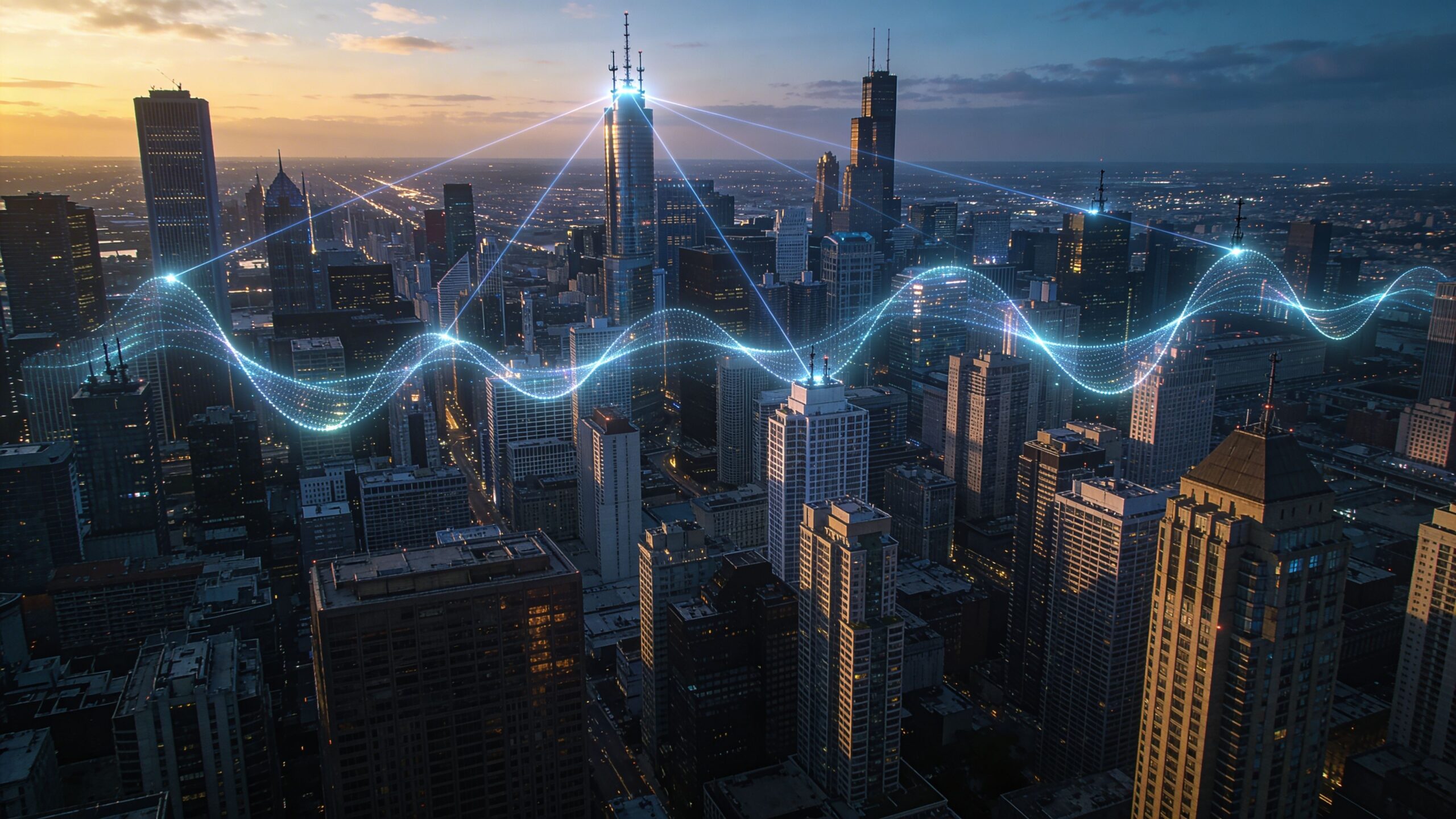
Telecom providers often use a layered approach. Low-band frequencies ensure broad coverage. Mid-band Sub-6 GHz boosts speed in suburban and urban areas. mmWave acts as a high-capacity layer in dense hotspots.
This multi-layer architecture explains why the question “Which 5G band is better?” is really about network strategy rather than a simple winner.
Use Cases: Where Each Band Truly Shines
Different industries and technologies benefit differently from mmWave and Sub-6 GHz.
Sub-6 GHz is ideal for nationwide IoT deployments, connected vehicles, smart agriculture, logistics tracking, and rural broadband expansion. Its wide coverage and building penetration make it practical for everyday connectivity.
mmWave, on the other hand, enables next-generation innovation in controlled environments. Smart factories, automated warehouses, augmented reality retail experiences, and high-density public venues benefit from its ultra-high capacity and low latency.
Enterprise networks may even deploy private mmWave systems within campuses or industrial facilities to achieve localized, ultra-fast wireless performance.
As 5G evolves toward 5G Advanced and eventually 6G, both spectrum strategies will likely coexist, each powering different layers of the digital economy.
Battery Life and Device Impact: An Overlooked Factor
Another dimension of the mmWave vs Sub-6 GHz comparison is device performance and battery consumption.
mmWave connections require advanced antenna arrays and beamforming technology to maintain stable links. These systems can consume more power, especially when devices continuously search for high-frequency signals.
Sub-6 GHz, being closer to traditional cellular bands, generally demands less aggressive signal management. As a result, devices connected primarily to Sub-6 GHz networks often experience more predictable battery performance.
Modern smartphones are engineered to manage both efficiently, but mmWave-heavy usage may impact battery life more noticeably under sustained high-speed conditions.
This consideration becomes especially relevant for wearables, IoT sensors, and devices where power efficiency is critical.
The Verdict: Which 5G Band Is Better?
So, which 5G band is better: mmWave or Sub-6 GHz? The honest answer is that neither replaces the other. Instead, they complement each other. If your priority is widespread coverage, stable indoor reception, and consistent connectivity across cities and rural areas, Sub-6 GHz is the clear foundation. It represents the practical, scalable core of 5G deployment. If your priority is peak speed, ultra-low latency, and high-capacity performance in dense urban hotspots, mmWave offers unmatched potential. For consumers, Sub-6 GHz will likely define the majority of daily 5G experiences. For businesses and specialized applications, mmWave unlocks new technological possibilities. The future of wireless connectivity depends not on choosing one band over the other, but on intelligently integrating both. Together, mmWave and Sub-6 GHz form a layered spectrum strategy that balances speed, coverage, and capacity. As 5G networks continue expanding and infrastructure matures, users will increasingly experience seamless transitions between bands without even realizing it. The real victory isn’t about declaring a winner in the mmWave vs Sub-6 GHz debate. It’s about building a network ecosystem where each frequency plays to its strengths—delivering faster, smarter, and more reliable connectivity for everyone. In the end, the better band is the one that fits the moment. And in the world of 5G, both moments matter.