When you glance at the signal bars on your phone and see the 5G icon glowing back at you, it feels simple. Faster speeds. Better connectivity. A new generation of wireless performance. But behind that small symbol is a complex architectural decision that shapes your real-world experience: the type of spectrum powering your connection. Specifically, whether you are connected to low-band 5G or mid-band 5G can dramatically impact your speed, range, and coverage. Low-band 5G and mid-band 5G are not competing technologies in the traditional sense. They are complementary layers within modern wireless networks. Yet understanding the difference between them explains why some areas enjoy blazing download speeds while others prioritize stable, long-distance coverage. It also reveals why two users in different parts of the same city can have entirely different 5G experiences.
A: Mid-band is usually faster because it often has more usable bandwidth and capacity.
A: Low-band typically reaches farther and penetrates obstacles better, so coverage is wider.
A: You may be on low-band with heavy congestion, or the site backhaul could be limiting speeds.
A: Band switching, tower load, building blockage, and network tuning can change quickly as you move.
A: Often yes, but it’s more sensitive to building materials than low-band; results vary by location.
A: In many cases, yes—carrier aggregation can combine bands to improve stability and throughput.
A: Carrier build quality where you live/work matters most—spectrum only helps if it’s deployed well.
A: Often—newer modems and antennas can improve efficiency, weak-signal handling, and aggregation support.
A: Uplink is often the hidden bottleneck; mid-band capacity can noticeably improve upload consistency.
A: Low-band gets you connected in more places; mid-band makes the connection faster in the places you use most.
Understanding 5G Spectrum: The Foundation of Performance
To compare low-band and mid-band 5G effectively, it is essential to understand how wireless spectrum works. Spectrum refers to the range of radio frequencies used to transmit data wirelessly. These frequencies are measured in hertz, representing cycles per second. Lower frequencies have longer wavelengths, while higher frequencies have shorter wavelengths.
The physical properties of these wavelengths shape network performance. Longer wavelengths travel farther distances and penetrate obstacles like buildings and trees more easily. Shorter wavelengths carry more data but typically cover smaller areas. These natural laws of physics determine how spectrum is categorized and deployed.
Low-band 5G typically operates below 1 GHz. Mid-band 5G generally ranges from about 1 GHz to 6 GHz. The difference in frequency directly impacts speed, coverage area, signal strength indoors, and network capacity. When carriers build 5G networks, they do not rely on one band alone. Instead, they layer multiple spectrum types together to create a balanced system.
However, when comparing low-band 5G vs mid-band 5G, the tradeoffs become clear. Each serves a distinct purpose, and each excels in different environments.
Low-Band 5G: The Champion of Wide-Area Coverage
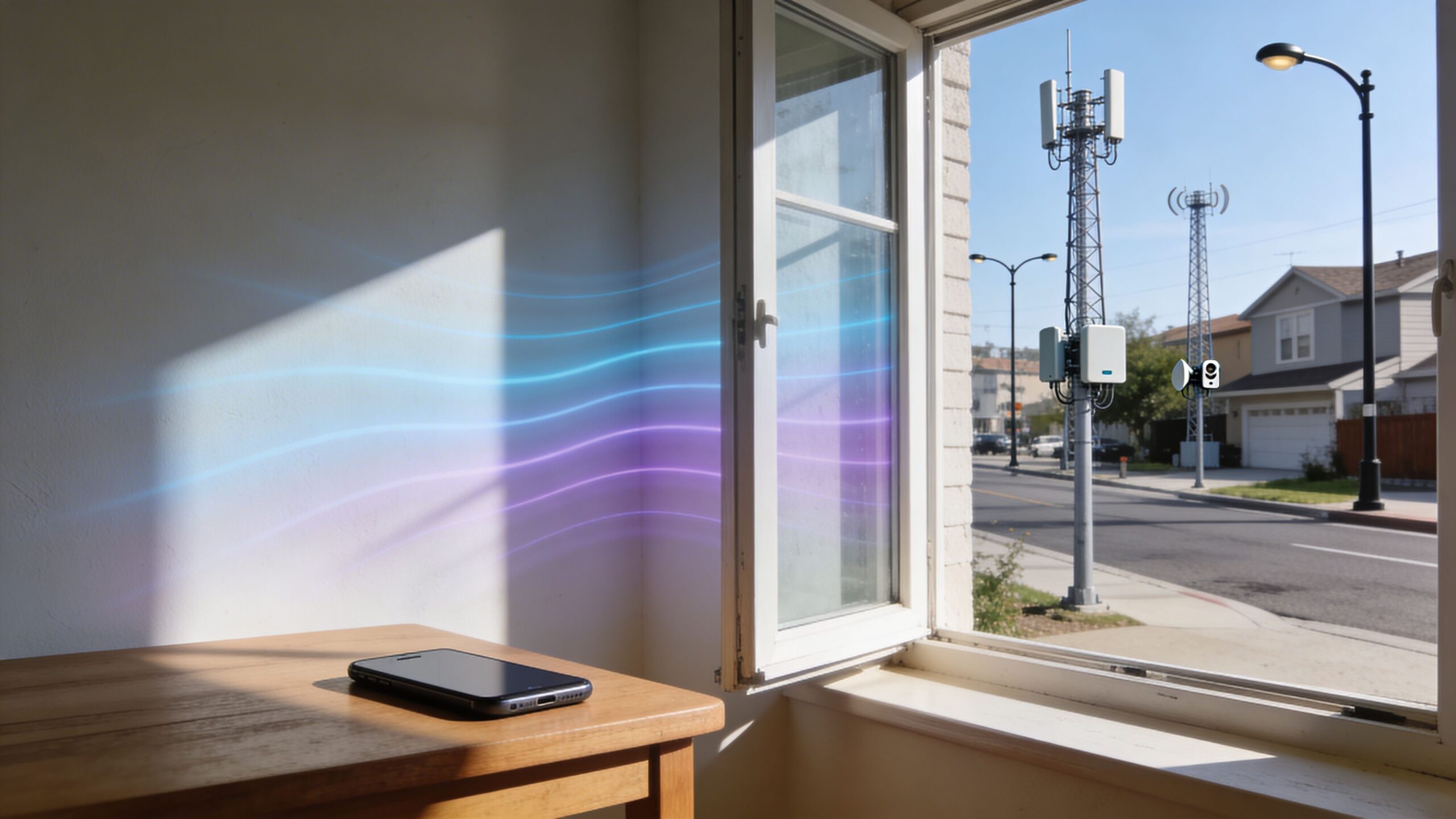
Low-band 5G is often described as the coverage layer of the 5G network. Because it operates at lower frequencies, its signals can travel long distances and penetrate buildings more effectively than higher-frequency bands. This makes it ideal for rural areas, highways, suburban neighborhoods, and indoor environments.
One of the most significant advantages of low-band 5G is its range. A single cell tower broadcasting low-band frequencies can cover a large geographic area. This efficiency reduces infrastructure costs and allows carriers to extend 5G service across vast territories. When providers advertise nationwide 5G coverage, low-band spectrum is typically responsible for delivering that reach.
Low-band 5G also offers improved indoor performance. Because its signals penetrate walls more easily, users are more likely to maintain connectivity inside homes, offices, and shopping centers. In areas where infrastructure density is low, low-band ensures that devices remain connected.
However, speed is where low-band faces limitations. While it delivers performance improvements over 4G LTE, it generally cannot achieve the high data rates associated with more advanced 5G deployments. Bandwidth in low-band spectrum is often narrower, meaning fewer data lanes are available for simultaneous traffic. In crowded urban environments with heavy demand, this can result in slower speeds compared to mid-band networks.
Even so, low-band 5G plays a foundational role. It provides consistency, reliability, and wide coverage that keeps users connected across large distances.
Mid-Band 5G: The Sweet Spot for Speed and Coverage
Mid-band 5G is often considered the performance sweet spot of modern wireless networks. Operating between roughly 1 GHz and 6 GHz, mid-band spectrum strikes a powerful balance between range and speed.
Compared to low-band, mid-band frequencies do not travel as far. They require a denser network of towers and small cells to maintain consistent coverage. However, they offer significantly wider bandwidth channels, which translates into faster download and upload speeds. This increased capacity allows mid-band 5G to handle more users and more data-intensive applications simultaneously.
In urban and suburban environments, mid-band 5G often delivers the dramatic performance gains people associate with the 5G brand. Faster streaming, smoother video calls, quicker downloads, and lower latency are typically powered by mid-band deployments. It supports high-definition media consumption, cloud gaming, and emerging applications that demand robust connectivity.
Mid-band also offers reasonable building penetration, though not as strong as low-band. Indoor coverage may require additional infrastructure, especially in dense cities. Despite this, mid-band remains the engine of many advanced 5G networks because it provides meaningful speed improvements without sacrificing coverage entirely.
When comparing low-band 5G vs mid-band 5G, mid-band clearly leads in raw performance while still maintaining practical coverage across populated regions.
Speed Comparison: Real-World Performance Differences
Speed is often the most visible metric when comparing low-band 5G vs mid-band 5G. While both operate under the 5G standard, their real-world performance can vary significantly.
Low-band 5G typically offers modest speed improvements over 4G LTE. Users may see enhanced reliability and slightly faster downloads, but peak speeds are often limited by narrower bandwidth. In many cases, low-band 5G prioritizes coverage over dramatic speed gains.
Mid-band 5G, on the other hand, is capable of delivering much higher data rates. Because it operates on wider frequency channels, it can carry more information simultaneously. This translates into noticeably faster downloads, quicker app loading times, and smoother streaming experiences. For users in areas with strong mid-band coverage, the difference can feel transformative.
Latency also tends to improve with mid-band deployments. Lower latency enhances real-time applications such as online gaming, augmented reality, and video conferencing. While low-band supports these functions, mid-band generally handles them more efficiently in high-demand environments.
However, performance depends heavily on network density and congestion. In areas where infrastructure is limited, low-band may outperform mid-band simply because its signal is stronger and more stable. This highlights the importance of balanced deployment strategies.
Range and Coverage: Distance Versus Density
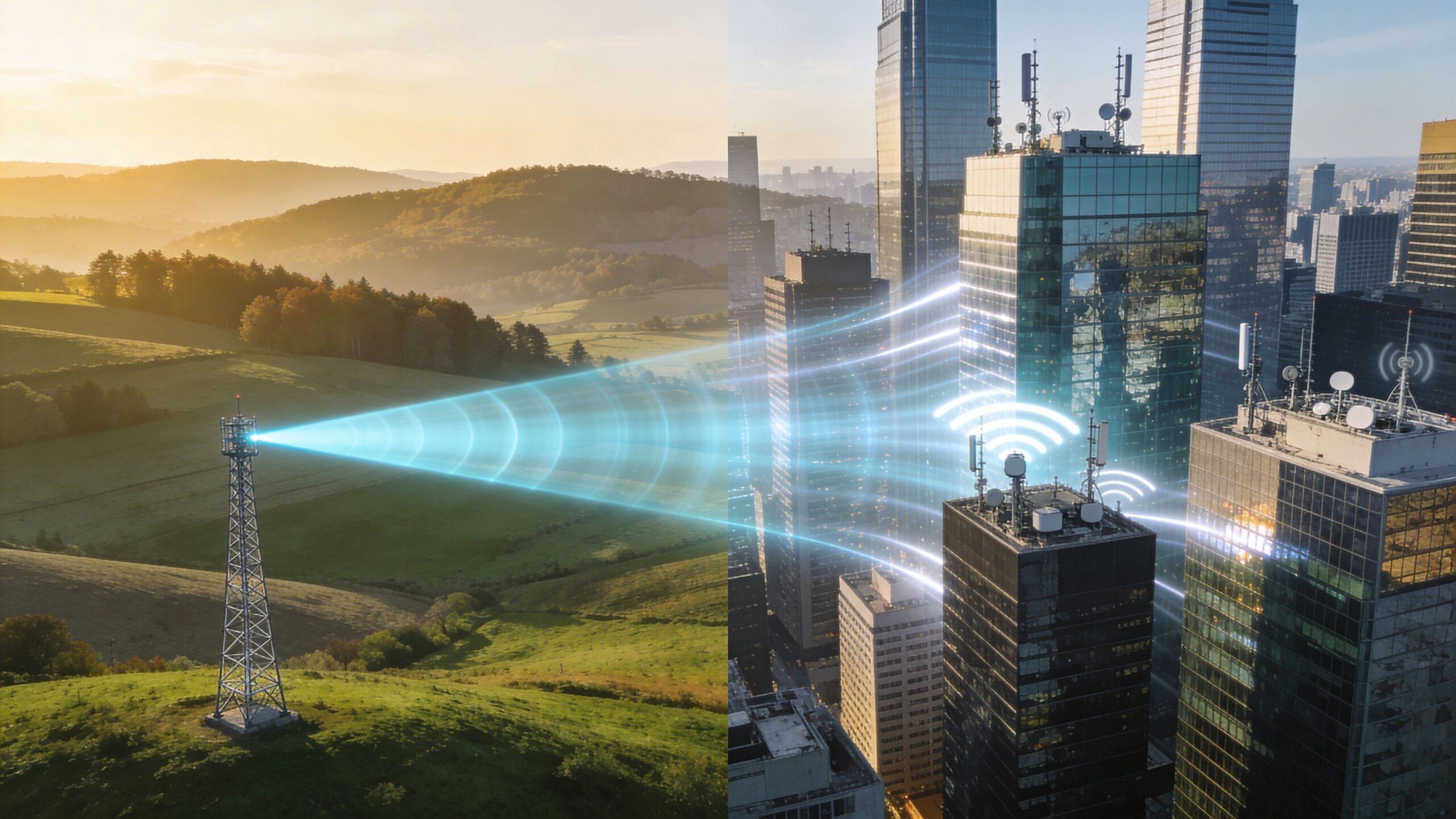
Range is where low-band 5G truly shines. Its longer wavelengths allow it to travel farther from the transmission source. This makes it ideal for rural and semi-rural regions where towers are spaced miles apart. A single low-band tower can serve a wide geographic footprint, ensuring that users remain connected even in sparsely populated areas.
Mid-band 5G offers shorter range. To achieve consistent coverage, carriers must deploy more infrastructure, including additional towers and small cells. In densely populated cities, this infrastructure density is practical and cost-effective because user demand justifies the investment.
Indoor coverage also differs between the two bands. Low-band penetrates buildings more effectively, maintaining signal strength inside homes and offices. Mid-band can struggle in heavily reinforced structures unless supplemented with additional indoor network equipment.
Yet in urban environments where towers are placed closer together, mid-band coverage can feel seamless. Its balance of speed and coverage makes it well-suited for city centers and suburban neighborhoods where users expect strong performance.
Ultimately, low-band emphasizes geographic reach, while mid-band emphasizes performance density. Both are necessary for building a comprehensive 5G network.
Network Strategy: Why Carriers Use Both
The comparison of low-band 5G vs mid-band 5G is not about choosing one over the other. Modern carriers deploy both as part of a layered network strategy. This approach ensures that users benefit from wide-area connectivity while also accessing high-performance speeds where infrastructure supports it.
A smartphone may connect to low-band 5G while traveling along a highway, maintaining stable service across long distances. Upon entering a city with dense infrastructure, the device may automatically switch to mid-band 5G for improved performance. Technologies such as carrier aggregation allow devices to combine multiple frequency bands simultaneously, enhancing both speed and reliability.
This layered strategy is what makes 5G adaptable. Low-band ensures broad availability. Mid-band delivers performance enhancements in high-demand areas. Together, they create a flexible network capable of serving diverse environments.
Carriers must carefully balance spectrum resources based on population density, geographic terrain, and data demand. Strategic investment in mid-band infrastructure has become a competitive priority because it unlocks the most visible performance gains for consumers.
Which One Is Better? The Context Matters
When asking whether low-band 5G or mid-band 5G is better, the answer depends entirely on context. If the goal is maximum coverage across vast territories, low-band is superior. It connects rural communities, supports highway travel, and ensures indoor reliability in low-density areas. If the goal is maximum speed and capacity in urban environments, mid-band takes the lead. It supports high user density, data-intensive applications, and noticeable performance improvements. For many users, mid-band represents the true promise of 5G. In practice, the most effective networks combine both. The future of wireless connectivity lies in intelligent integration, not single-band dominance. Low-band and mid-band 5G work together to create a cohesive experience that balances reach with performance. Understanding the distinction empowers consumers and businesses alike. It explains why speeds vary by location and why coverage maps do not always reflect performance expectations. It reveals the engineering decisions behind every connection. Low-band 5G vs mid-band 5G is not a rivalry. It is a partnership built on physics, infrastructure, and strategic deployment. Together, they form the backbone of modern 5G networks, delivering the speed, range, and coverage that define the next generation of wireless technology.