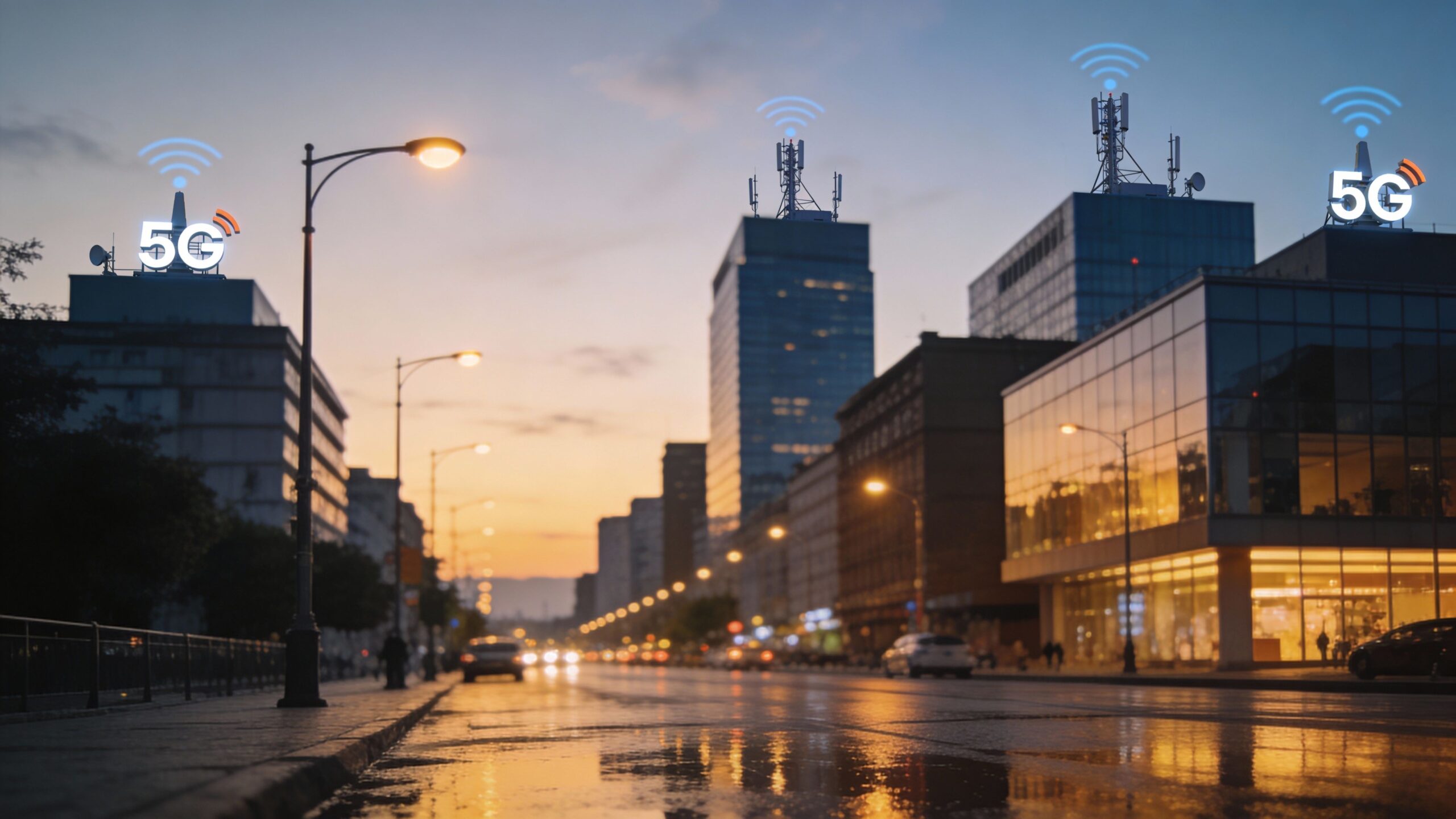
Mobile infrastructure is the silent engine that keeps modern society moving. Every message sent, map loaded, payment approved, and video streamed relies on a vast physical and digital system operating mostly out of sight. While smartphones and apps capture attention, the infrastructure behind them is what transforms digital ideas into real-world experiences. This infrastructure is not a single technology but a layered ecosystem of towers, antennas, fiber lines, data centers, software platforms, and power systems working in constant coordination. What makes mobile infrastructure so powerful is its ubiquity. It spans cities, suburbs, highways, rural towns, oceans, and even remote regions where traditional connectivity struggles to reach. It supports personal communication, global commerce, emergency response, entertainment, and the rapidly expanding universe of connected devices. Without it, the modern world as we know it would slow to a crawl. Understanding what mobile infrastructure is and why it matters reveals how deeply it is woven into everyday life.
A: No—towers are the visible piece. The real system includes fiber backhaul, data centers, and the core network that routes traffic.
A: In dense areas, capacity is the problem. Small cells add “more lanes” where people actually use data.
A: Backhaul. A tower can have modern radios, but limited fiber/microwave capacity can cap speeds.
A: Walls and coated glass absorb signal—especially higher frequencies. Wi-Fi calling often solves it.
A: Not always. It depends on spectrum, site density, and backhaul. Great LTE can beat weak 5G in some spots.
A: It’s a deeper rebuild using a 5G core, enabling different performance and advanced features where deployed.
A: Congestion. Thousands of devices compete for the same local resources unless the venue has extra capacity deployed.
A: Site batteries and generators—plus redundant routing—though runtime varies by site and fuel access.
A: Yes—low-band spectrum, new site builds, and better backhaul can dramatically improve coverage and reliability.
A: Turn on Wi-Fi calling and keep your phone updated—two simple steps that often improve real-world reliability.
The Physical Foundations That Keep Signals Alive
At its most visible level, mobile infrastructure begins with physical assets. Cell towers, rooftop antennas, and small cells form the access layer that connects devices to networks. These structures are strategically placed to balance coverage, capacity, and reliability. Tall macro towers provide wide-area coverage, while dense networks of smaller installations handle heavy traffic in cities, stadiums, campuses, and business districts.
Beneath and beyond these structures lies an equally important foundation. Fiber-optic cables carry massive volumes of data between towers and core network facilities at near-light speeds. Where fiber is impractical, high-capacity microwave links bridge gaps across terrain. Power systems, including grid connections and backup generators, ensure that networks remain operational even during outages. Every component is designed with redundancy in mind, because downtime in mobile infrastructure can ripple across entire economies.
This physical layer is constantly evolving. New sites are added as populations grow and usage increases. Older equipment is upgraded to support higher speeds and greater efficiency. Despite its complexity, the goal remains simple: ensure that a signal can reach users wherever they are, whenever they need it.
The Digital Brain Behind the Network
While towers and cables handle the movement of signals, the intelligence of mobile infrastructure resides in its digital core. This layer manages authentication, routing, mobility, security, and performance optimization. When a device connects to a network, the core determines who the user is, what services they are authorized to use, and how their data should be handled. Modern mobile cores are increasingly software-driven. Virtualized network functions run on standardized hardware in data centers, allowing operators to scale capacity up or down as demand changes. This flexibility is critical in a world where usage patterns can shift rapidly due to events, emergencies, or new applications. Software-defined networking enables real-time control over traffic flows, ensuring that critical services receive priority when needed. This digital brain also enables seamless mobility. As users move from one location to another, the network tracks their session and hands it off between access points without interruption. Calls remain connected, streams continue playing, and applications stay responsive. The complexity of this coordination is immense, yet it happens so smoothly that users rarely give it a second thought.
Why Mobile Infrastructure Is Essential to Everyday Life
Mobile infrastructure has become as fundamental to modern life as electricity and water. It underpins communication between individuals, businesses, and governments. Families stay connected across continents, companies coordinate global operations, and public agencies deliver services with unprecedented speed and reach. In many regions, mobile networks are the primary means of accessing the internet, making them essential for education, healthcare, and economic participation.
Commerce increasingly depends on mobile connectivity. Digital payments, mobile banking, logistics tracking, and real-time inventory systems all rely on reliable infrastructure. Small businesses use mobile tools to reach customers, manage operations, and compete on a global scale. Entire industries, from transportation to hospitality, are built around the assumption that mobile connectivity is always available.
In moments of crisis, mobile infrastructure becomes even more critical. Emergency calls, disaster alerts, and coordination among first responders depend on resilient networks. When other systems fail, mobile connectivity often remains the last lifeline, providing information and assistance when it is needed most.
Powering Innovation and the Connected World
Beyond everyday communication, mobile infrastructure is the platform on which innovation thrives. It enables the rise of connected devices that monitor health, manage energy use, track assets, and automate industrial processes. Sensors embedded in cities optimize traffic flow and reduce energy consumption. Wearable devices collect health data that can improve outcomes and reduce costs. These capabilities are only possible because mobile networks can connect vast numbers of devices reliably and securely.
The infrastructure also supports new forms of work and creativity. Remote collaboration, cloud computing, and digital content creation all depend on fast, stable connections. Entrepreneurs can build businesses from anywhere, reaching customers and partners without geographic constraints. As applications become more immersive and data-intensive, the demands placed on infrastructure continue to grow, driving further investment and innovation.
This cycle is self-reinforcing. Improved infrastructure enables new services, which in turn create demand for even better connectivity. The result is a continuously advancing ecosystem that shapes how societies function and evolve.
Building and maintaining mobile infrastructure requires enormous investment and careful planning. Operators must acquire spectrum, secure sites, deploy equipment, and maintain networks while competing on price and performance. Decisions about where to invest are influenced by population density, usage patterns, regulatory environments, and long-term growth forecasts.
Infrastructure sharing has become an important strategy. By sharing towers, fiber, or even core network elements, operators can reduce costs and accelerate deployment. This approach is especially valuable in rural or underserved areas, where the economics of standalone networks may not be viable. Governments and regulators often play a role by encouraging investment through policy incentives and spectrum management.
Despite these challenges, the return on investment extends far beyond financial metrics. Robust mobile infrastructure supports economic growth, attracts businesses, and improves quality of life. Regions with strong connectivity are better positioned to compete in the global economy, making infrastructure investment a strategic priority for nations and communities alike.
Resilience, Security, and Trust in a Mobile World
As reliance on mobile infrastructure grows, so does the importance of resilience and security. Networks must withstand natural disasters, cyber threats, and unexpected surges in demand. Redundant systems, backup power, and diversified routing paths are essential to maintaining service under adverse conditions.
Security is built into every layer of the infrastructure. Encryption protects data as it travels through the air and across networks. Authentication systems ensure that only authorized devices and users gain access. Continuous monitoring helps detect and mitigate threats before they disrupt service. Trust in mobile infrastructure is not optional; it is a prerequisite for widespread adoption and use.
Public confidence depends on the ability of networks to protect privacy while delivering reliable service. This balance is central to the long-term sustainability of mobile infrastructure and the digital ecosystems it supports.
The Future Role of Mobile Infrastructure in Society
Looking ahead, mobile infrastructure will play an even more central role in shaping the modern world. As digital services become more integrated into daily life, expectations for performance, coverage, and reliability will continue to rise. Infrastructure will need to be more intelligent, more adaptable, and more deeply embedded into the environments it serves. The lines between physical and digital spaces will blur as connectivity becomes ambient and ubiquitous. Transportation systems, healthcare delivery, education, and entertainment will increasingly rely on mobile networks as their foundation. The infrastructure itself may remain largely invisible, but its impact will be unmistakable. Mobile infrastructure is not just a technical system; it is a societal asset. It powers communication, enables innovation, and connects people to opportunity. Understanding its role helps explain why it is one of the most important forces driving the modern world forward, quietly supporting progress with every signal it carries.