Every time you send a text, stream a video, or refresh a webpage, you’re tapping into one of the most remarkable technological systems ever built. Cell towers—those tall, often overlooked structures scattered across cities, highways, and rural landscapes—are the backbone of modern communication. They make it possible for signals to travel miles in what feels like an instant, connecting billions of people across the globe. But how does this invisible network actually work? How can your voice, data, or video leap across vast distances without wires, delays, or noticeable interruption? The answer lies in a sophisticated blend of physics, engineering, and infrastructure design that transforms electromagnetic waves into real-time communication. Understanding how cell towers operate not only demystifies your smartphone but also reveals the incredible scale of the systems we rely on every day.
A: It depends on terrain, frequency, tower height, and congestion, but coverage can range from a fraction of a mile to many miles.
A: Thick walls, metal framing, glass coatings, and underground spaces can weaken or block radio waves.
A: Signal strength may be fine, but the tower could be congested or the available spectrum may be limited.
A: It is an area where the tower signal is too weak or obstructed for reliable service.
A: Usually denser placement helps, but smart planning, backhaul, and spectrum matter just as much.
A: 5G sites often use newer radios, more advanced antennas, and wider spectrum options for speed and capacity.
A: Yes, many sites are shared, though each carrier still uses its own network equipment or leased configurations.
A: Your phone is moving across cell boundaries and switching towers as conditions change.
A: They do the same general job, but rooftop sites usually serve shorter-range urban coverage needs.
A: Many sites use batteries, backup generators, hardened equipment, and network rerouting to stay operational.
From Voice to Waves: The Journey Begins
When you make a call or send a message, your smartphone doesn’t transmit your voice or text directly as you experience it. Instead, it converts your input into digital data—streams of binary code made up of ones and zeros. This data is then encoded into radio frequency signals, a form of electromagnetic energy that can travel through the air.
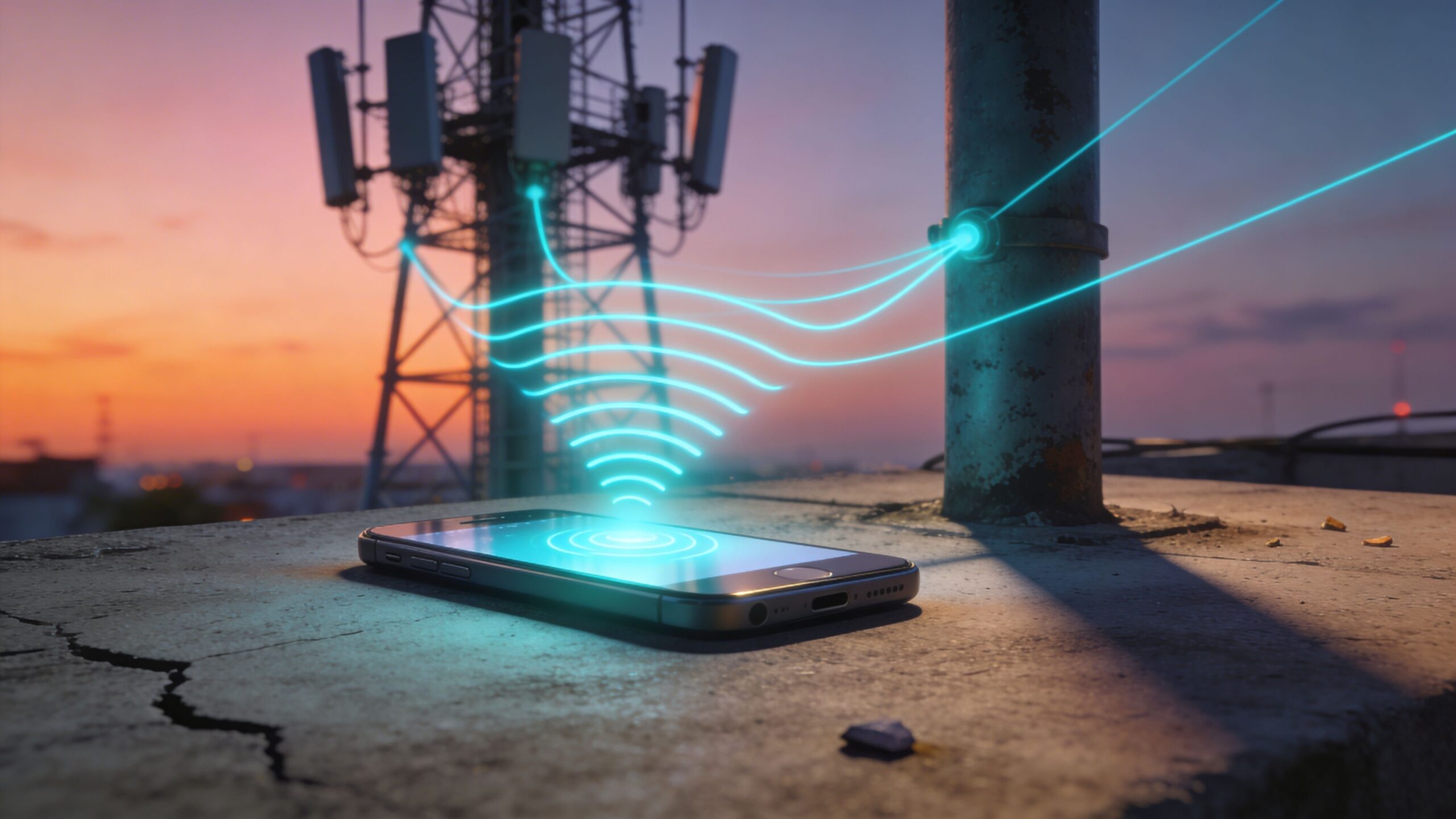
These radio waves are emitted from your phone’s antenna and begin their journey outward, searching for the nearest cell tower. The process happens in fractions of a second, but it involves precise modulation techniques that ensure your signal can be distinguished from countless others moving through the air at the same time.
The speed at which these signals travel is nearly the speed of light, roughly 186,000 miles per second. This is why communication feels instantaneous, even when you’re connecting across cities or continents. However, while the speed is fast, the path your signal takes is anything but simple.
The Role of Cell Towers in a Connected Grid
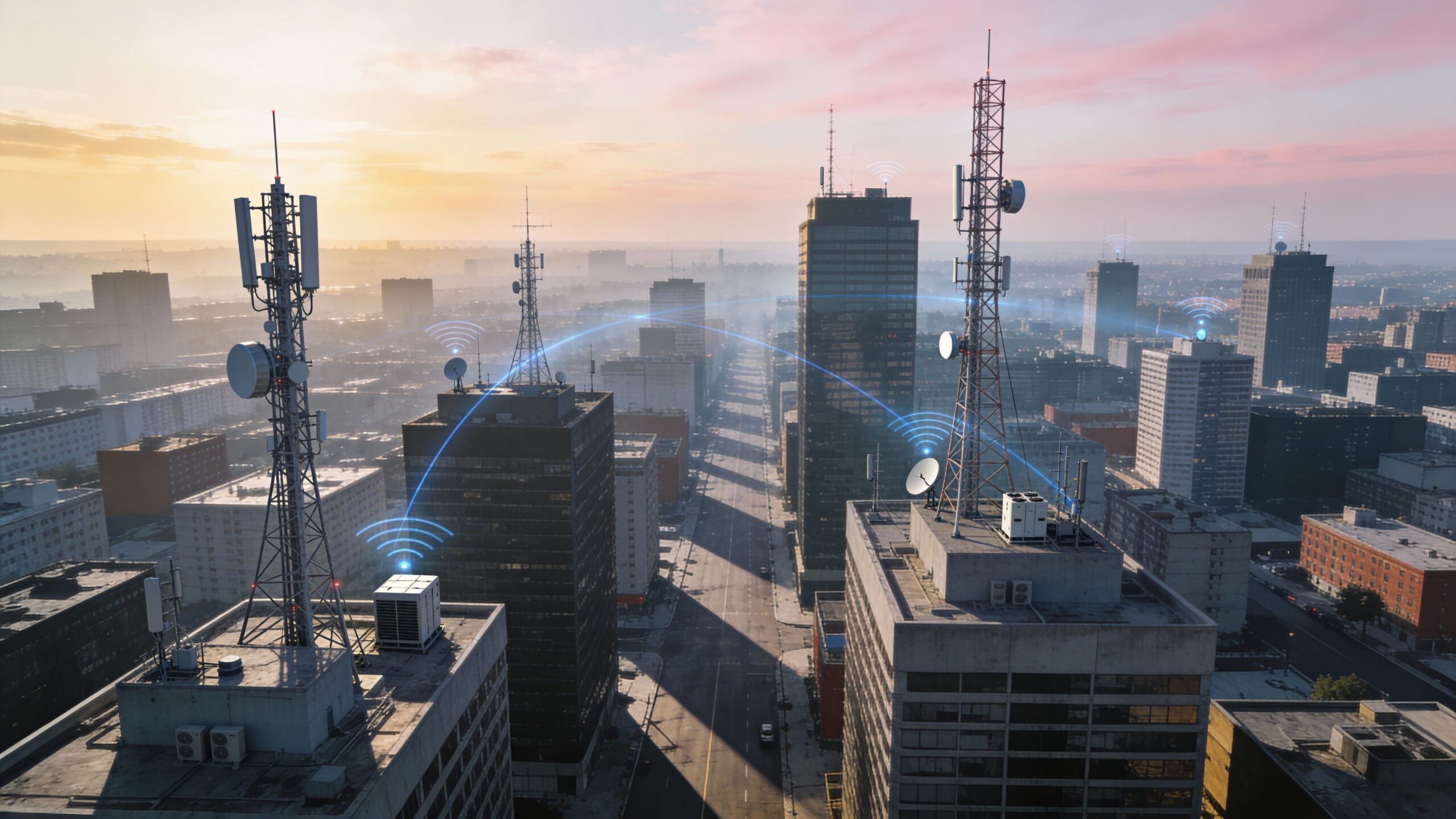
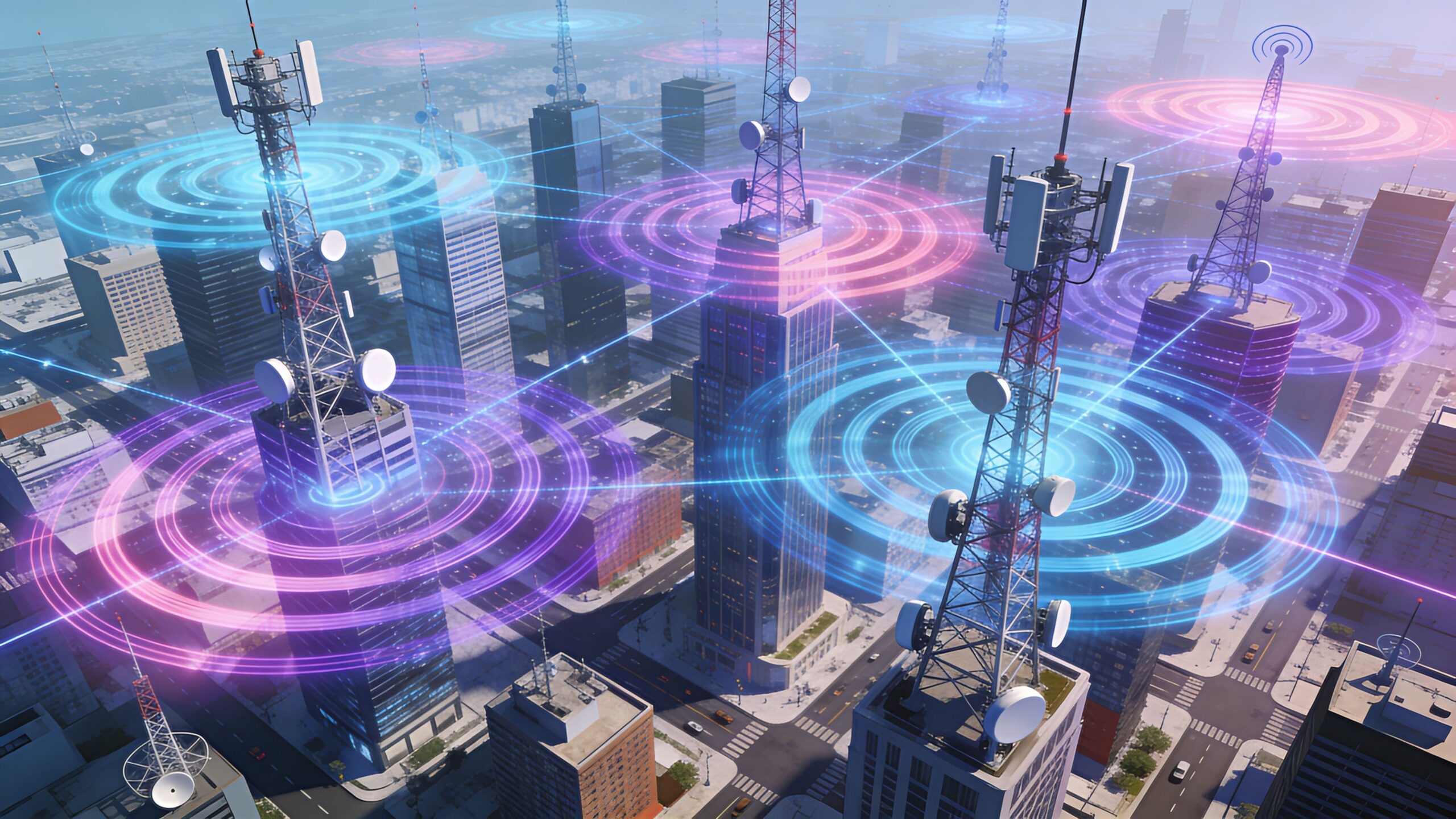
Cell towers act as the critical relay points in the wireless communication network. Each tower covers a specific geographic area known as a “cell,” which is where the term “cellular network” originates. These cells are carefully designed to overlap slightly, ensuring continuous coverage as users move from one location to another.
When your phone sends out a signal, the nearest tower picks it up using specialized antennas. These antennas are engineered to detect specific frequency bands and can handle thousands of connections simultaneously. Once the tower receives your signal, it converts it back into digital data and routes it through a broader network infrastructure.
This infrastructure often includes fiber optic cables, switching centers, and data hubs that carry your information to its intended destination. If you’re calling someone nearby, the signal may only need to travel through a few network nodes. If you’re streaming a video hosted on a server across the country, your data may pass through multiple systems before reaching you.
Frequency Bands and the Science of Signal Travel
One of the most fascinating aspects of cell tower technology is how it uses different frequency bands to optimize communication. Radio frequencies used in cellular networks typically range from low-band (around 600–900 MHz) to mid-band (1–6 GHz) and high-band frequencies, often referred to as millimeter waves.
Low-band frequencies travel farther and penetrate buildings more effectively, making them ideal for rural areas and indoor coverage. Mid-band frequencies offer a balance between speed and range, commonly used in suburban and urban settings. High-band frequencies provide incredibly fast data speeds but have a shorter range and are more easily blocked by obstacles.
This layered approach allows networks to deliver both coverage and performance. Your device automatically connects to the best available frequency based on your location, movement, and network demand. The seamless switching between these bands is part of what makes modern cellular networks so efficient.
Handoffs and Mobility: Staying Connected on the Move
One of the defining features of cellular networks is the ability to maintain a stable connection while you’re moving. Whether you’re driving down a highway or walking through a city, your phone constantly communicates with nearby towers to ensure uninterrupted service.
This process is known as a “handoff” or “handover.” As you move out of one cell’s coverage area, your device begins communicating with the next nearest tower. The network coordinates this transition in real time, transferring your connection without dropping the call or interrupting your data session.
Handoffs rely on advanced algorithms that evaluate signal strength, network congestion, and device speed. The system predicts when a switch is needed and executes it seamlessly. This is why you can stream music or stay on a call even while traveling at high speeds.
Backhaul Networks: The Hidden Backbone
While cell towers are the most visible part of the system, the real heavy lifting often happens behind the scenes in what’s known as the backhaul network. This is the infrastructure that connects cell towers to the core network, enabling data to travel beyond local coverage areas.
Backhaul connections are typically powered by high-capacity fiber optic cables, which use light signals to transmit data at incredible speeds. In some cases, especially in remote areas, microwave links are used to connect towers wirelessly over long distances.
The efficiency and capacity of the backhaul network play a crucial role in overall performance. Even the most advanced cell tower cannot deliver fast speeds if it’s connected to a limited or congested backhaul system. As demand for data continues to grow, upgrading these networks has become a top priority for telecom providers.
Signal Challenges: Obstacles in the Air
Despite the sophistication of cellular networks, signal transmission is not without its challenges. Physical obstacles such as buildings, mountains, and even dense foliage can interfere with radio waves, weakening or blocking signals altogether.
Weather conditions can also impact signal quality. Rain, snow, and atmospheric disturbances can affect certain frequency bands, particularly higher frequencies used in advanced networks. Additionally, interference from other electronic devices and competing signals can introduce noise into the system.
To overcome these challenges, engineers use a combination of strategies, including deploying more towers, optimizing antenna placement, and using technologies like beamforming. Beamforming allows signals to be directed toward specific users rather than broadcast in all directions, improving efficiency and reliability.
The Evolution to 5G and Beyond
Cellular technology has evolved dramatically over the past few decades, from the early days of analog communication to the high-speed digital networks we use today. The latest generation, 5G, represents a significant leap forward in both speed and capacity.
5G networks use a combination of frequency bands, including high-frequency millimeter waves, to deliver ultra-fast data speeds and low latency. This enables new applications such as real-time gaming, augmented reality, and advanced IoT systems.
However, the rollout of 5G also requires a denser network of smaller cell sites, often installed on streetlights, buildings, and other urban infrastructure. These “small cells” work alongside traditional towers to provide consistent coverage and performance in high-demand areas.
Looking ahead, future advancements may include 6G technology, which could push speeds even further and integrate new forms of communication, such as satellite-based networks and AI-driven optimization.
The Silent System That Powers Modern Life
Cell towers may not capture much attention, but they are among the most essential components of modern life. They enable everything from emergency communication and navigation to entertainment and remote work. Without them, the seamless connectivity we take for granted would simply not exist. What makes this system truly remarkable is its ability to operate quietly and efficiently in the background. Billions of signals move through the air every second, connecting people, devices, and systems across vast distances without visible infrastructure. Understanding how cell towers work reveals not just the complexity of the technology, but also the ingenuity behind it. It’s a system built on precision, coordination, and constant innovation—one that continues to evolve as our demand for connectivity grows. As you go about your day, sending messages, browsing the web, or making calls, it’s worth remembering the invisible network working tirelessly behind the scenes. Those towering structures are more than just metal and wires—they are the gateways to a connected world.