Modern life runs on connection. Every call placed, message sent, and video streamed depends on a vast, invisible system working in perfect coordination. At the center of it all lies the cellular network, an intricate web of radio waves, towers, transport systems, and core infrastructure that transforms raw signals into seamless communication. Understanding what happens inside a cellular network reveals a remarkable journey—one that begins in your hand and travels through multiple layers of technology before reaching its destination. It’s a system built for speed, reliability, and scale, designed to serve billions of devices simultaneously without noticeable delay. From the moment you tap your screen, a complex chain reaction unfolds, carrying your data across distances in milliseconds.
A: It is the central intelligence layer that handles routing, subscriber identity, sessions, and service policies.
A: Backhaul is the transport link that carries traffic from the cell site toward the rest of the carrier network.
A: The network shifts your connection as you move or as radio conditions change to keep service stable.
A: The radio access network is the part of the cellular system that connects devices to antennas and site equipment.
A: Coverage and capacity are different; a site may reach the area well but still be crowded or transport-limited.
A: It is a compact radio site used to improve coverage and capacity in dense, high-demand locations.
A: No, it upgrades parts of the radio and core architecture, but a core network is still essential.
A: They authenticate your device and subscriber identity using secure network databases and signaling systems.
A: Fiber provides high-capacity, low-latency transport that helps unlock the performance of modern radio systems.
A: Nearby cells may partially fill the gap, but coverage, speed, and reliability in that area can still suffer until service is restored.
The First Leap: How Your Device Speaks to the Air
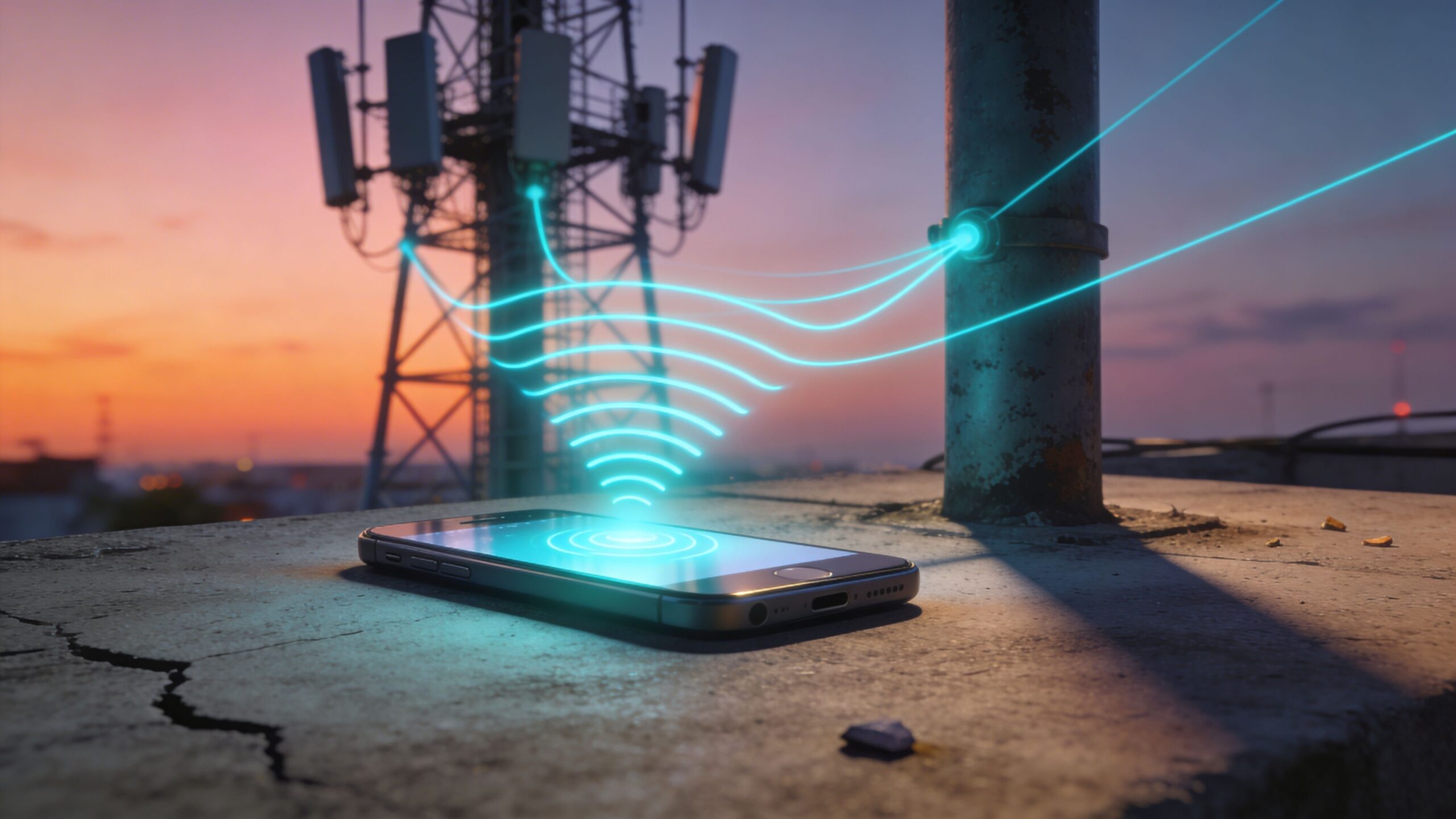
Every interaction with your phone starts with a transformation. Whether you’re sending a text, loading a webpage, or making a call, your device converts your input into digital data. This data is then encoded into radio signals using advanced modulation techniques, allowing it to travel wirelessly through the air.
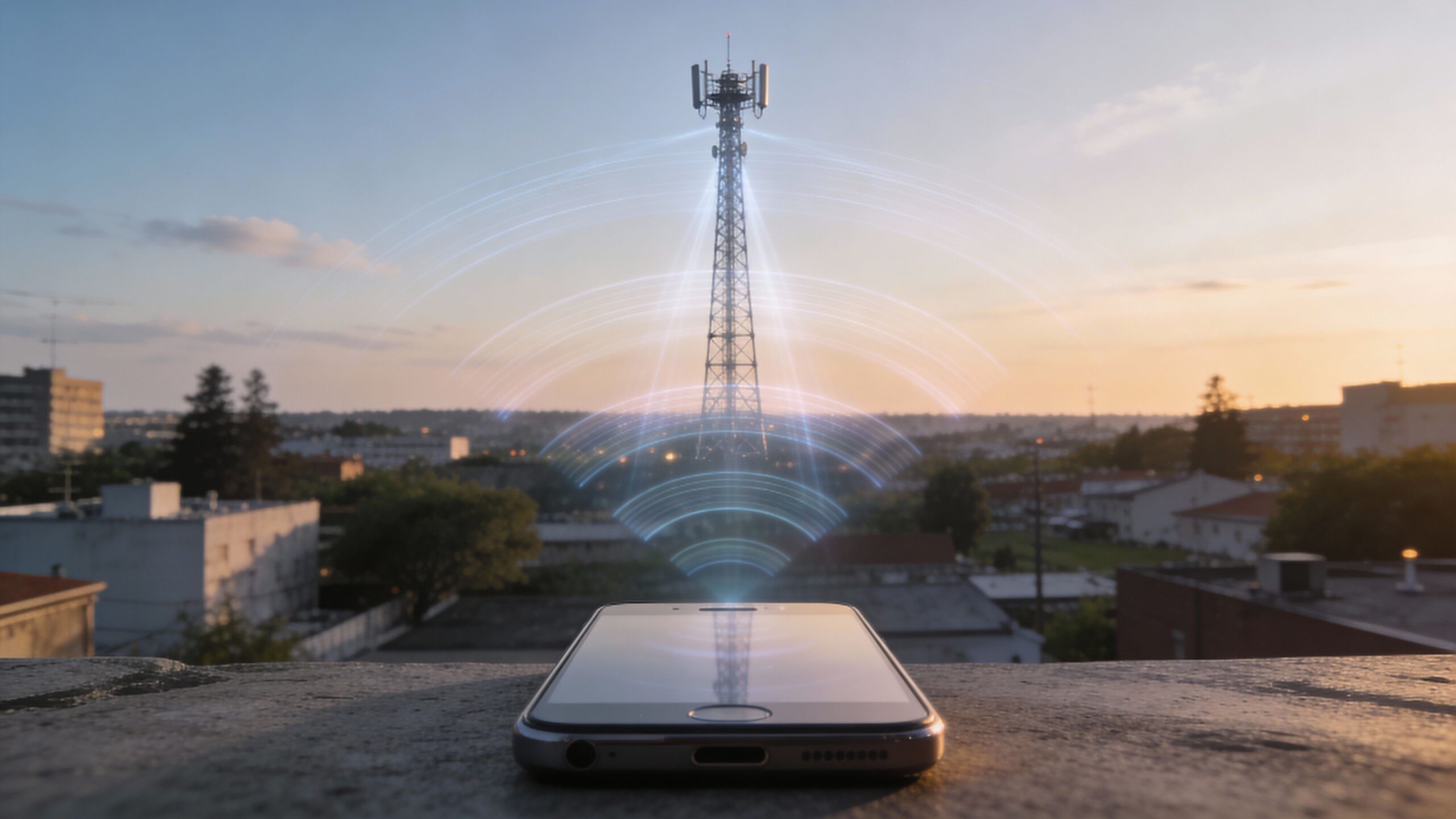
Your phone constantly scans for the strongest available signal from nearby base stations, often referred to as cell towers. Once it connects, it transmits data over specific frequency bands assigned by the network. These frequencies are carefully managed to avoid interference and maximize efficiency.
The communication between your device and the tower is known as the radio access network, or RAN. This is the first and most critical step in the journey. It is where the physical world of electromagnetic waves meets the digital world of data packets. Every signal sent from your phone is shaped, timed, and encoded to ensure it arrives accurately and efficiently.
Towers and Base Stations: The Gatekeepers of Connectivity
Cell towers are far more than tall metal structures. They house sophisticated equipment known as base stations, which include antennas, radios, and processing units that handle communication with thousands of devices at once.
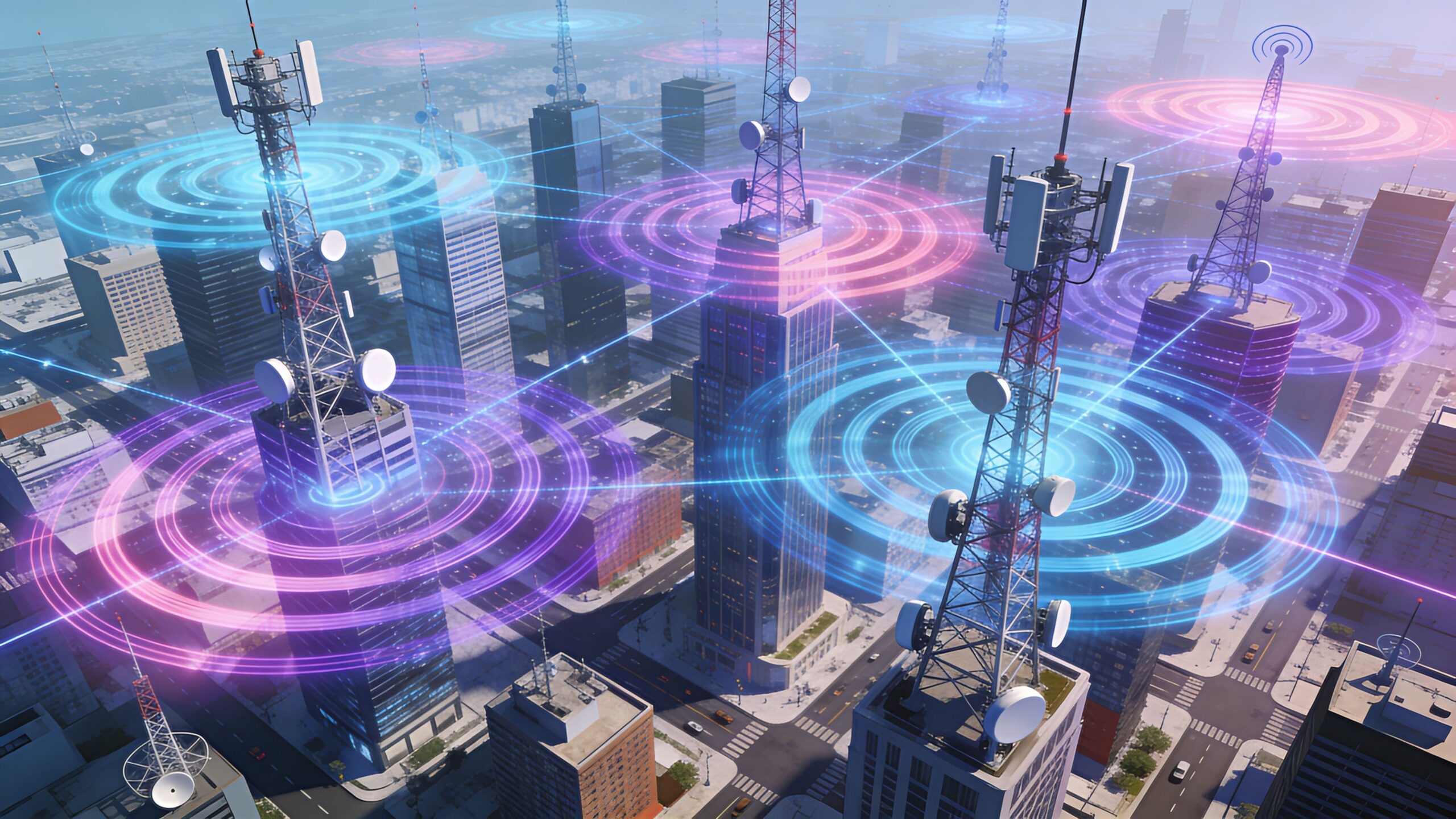
Each tower covers a defined geographic area called a cell. These cells are carefully planned to overlap slightly, ensuring continuous coverage. As your phone communicates with a tower, the base station manages your connection, assigns resources, and ensures your data is transmitted without interference from other users.
Modern base stations are highly intelligent. They use technologies like multiple-input multiple-output, or MIMO, to send and receive multiple signals simultaneously. They also use beamforming to direct signals toward specific devices, improving both speed and reliability.
The tower acts as the entry point into the broader network. Once your signal is received, it is converted back into digital form and prepared for transport across the network.
The Transport Layer: Moving Data at the Speed of Light
After leaving the tower, your data enters the transport network, often referred to as the backhaul. This is where information travels beyond the local cell and begins its journey across cities, regions, or even continents.
The backbone of this system is typically fiber optic infrastructure. Fiber cables use pulses of light to transmit data at incredibly high speeds, allowing massive volumes of information to move with minimal delay. In areas where fiber is not available, microwave links may be used to connect towers wirelessly.
This layer is crucial because it determines how quickly and efficiently data can move through the network. Even if the radio connection is strong, a weak or congested transport network can slow everything down. Telecom providers invest heavily in expanding and upgrading this infrastructure to keep up with growing demand.
As your data travels through the transport layer, it is routed toward the core network, where the real intelligence of the system resides.
The Core Network: The Brain Behind the System
The core network is where decisions are made. It acts as the central control system of the cellular network, responsible for routing data, managing connections, enforcing security, and ensuring quality of service.
When your data reaches the core, it is analyzed and directed to its destination. If you’re making a call, the core determines how to connect you to the recipient. If you’re accessing the internet, it routes your data to the appropriate server and back again.
The core network also handles authentication, ensuring that only authorized devices can access the network. It keeps track of your location, enabling seamless mobility as you move between cells. It manages billing, usage tracking, and policy enforcement, all in real time.
In modern networks, the core is increasingly software-based, running on cloud infrastructure. This allows for greater flexibility, scalability, and efficiency. It also enables advanced features like network slicing, where different types of traffic can be prioritized based on their needs.
Handoffs and Mobility: Staying Connected Without Interruption
One of the most impressive aspects of a cellular network is its ability to keep you connected while you’re on the move. As you travel, your device continuously communicates with nearby towers, ensuring that your connection remains strong.
When you move out of one cell’s coverage area, the network performs a handoff, transferring your connection to the next tower. This process happens so quickly that you don’t notice it, even during a call or video stream.
The system uses predictive algorithms to determine the best time to initiate a handoff. It considers factors like signal strength, network load, and your speed. By coordinating between multiple towers and the core network, it ensures a smooth transition without dropped connections.
This constant coordination is what allows cellular networks to support mobility at scale, from pedestrians in crowded cities to vehicles traveling at highway speeds.
Managing the Airwaves: Efficiency in a Crowded Spectrum
The airwaves are a limited resource, and cellular networks must use them efficiently. With millions of devices competing for bandwidth, managing the radio spectrum is one of the biggest challenges in network design.
To address this, networks divide frequencies into channels and allocate them dynamically based on demand. Advanced technologies like carrier aggregation allow multiple frequency bands to be combined, increasing data speeds and capacity.
Interference management is also critical. Signals from different towers and devices can overlap, causing disruptions. To prevent this, networks use sophisticated coordination techniques, adjusting power levels and timing to minimize conflicts.
As demand continues to grow, new spectrum is being introduced, including higher-frequency bands that offer greater capacity. However, these frequencies come with trade-offs, such as shorter range and reduced ability to penetrate obstacles. Balancing these factors is key to delivering consistent performance.
The Rise of 5G: Redefining Network Capabilities
The evolution of cellular networks has reached a new milestone with the introduction of 5G technology. This next-generation system is designed to deliver faster speeds, lower latency, and greater capacity than ever before.
5G achieves this by combining multiple innovations, including the use of higher-frequency bands, advanced antenna systems, and a more flexible core network. It also introduces concepts like edge computing, where data processing is moved closer to the user, reducing delays.
One of the defining features of 5G is its ability to support a wide range of applications, from high-definition streaming to autonomous vehicles and smart cities. It is built to handle not just human communication, but also machine-to-machine interactions on a massive scale.
The rollout of 5G involves a denser network of infrastructure, including small cells placed throughout urban environments. These work alongside traditional towers to provide consistent coverage and performance.
The Seamless Experience: Engineering the Future of Connectivity
What makes cellular networks truly remarkable is not just their complexity, but their invisibility. Billions of interactions happen every day without users ever thinking about the systems behind them. The network adapts in real time, balancing demand, managing resources, and ensuring reliability. From the moment your device sends a signal to the instant it reaches its destination, a carefully orchestrated sequence unfolds. Each layer of the network plays a specific role, working together to deliver a seamless experience. As technology continues to advance, cellular networks will become even more integrated into everyday life. Faster speeds, smarter systems, and new applications will push the boundaries of what’s possible. Yet the core principle will remain the same: connecting people and devices through an invisible, ever-evolving network. Understanding what happens inside a cellular network offers a new perspective on the world around you. It reveals the engineering brilliance that powers modern communication and highlights the importance of the infrastructure we often take for granted. Every signal tells a story, and behind each one is a system designed to keep the world connected.