5G is often described as the next big leap in mobile technology, but the term itself can feel vague or overloaded with hype. At its core, 5G is not a single tower, device, or frequency. It is an entire upgrade to how mobile networks are built, managed, and scaled. When people say “5G,” they are usually referring to a combination of faster speeds, lower delay, and the ability to connect far more devices at once. What makes this possible is a new kind of infrastructure designed to handle modern digital demands more efficiently than previous generations. Unlike earlier networks that were built mainly for calls and basic data, 5G infrastructure is designed from the ground up to support video streaming, cloud computing, connected machines, and real-time services. It is less about one dramatic change and more about a series of smart engineering decisions that, together, reshape how networks behave. Understanding 5G in plain English starts with recognizing that it is an evolution of the entire system, not just a faster signal on your phone.
A: Sometimes it feels that way, but 5G adds new radio tech (massive MIMO/beamforming) and can use much wider channels.
A: Higher frequencies struggle through walls and coated glass. Mid/low-band help, and Wi-Fi calling is often the simplest fix.
A: Low-band travels far, mid-band is the best balance, and mmWave is ultra-fast but very short-range and easy to block.
A: Congestion—more users share the same cell resources during peak hours unless the site has extra spectrum or small cells.
A: A mini tower that adds “extra capacity” right where people use data—busy streets, shopping areas, stadiums.
A: It’s the site’s connection to the core/internet. Weak backhaul can cap speeds even with strong 5G signal.
A: It means 5G runs end-to-end with a 5G core (not LTE-anchored), enabling deeper features where available.
A: It’s amazing in the right places (open dense areas), but it’s not the main everyday coverage layer for most people.
A: Yes, but uplink is still harder due to phone power limits. Mid-band and clean signal help the most.
A: Enable Wi-Fi calling indoors and test speeds at different times—if peak-hour drops are huge, it’s congestion, not your phone.
The New Way Signals Move Through the Air
One of the biggest differences between 5G and older networks is how data is sent over the air. Traditional networks broadcast signals broadly, covering large areas with a single transmission pattern. 5G changes this by using more precise methods to direct signals where they are needed. Instead of shouting in every direction, the network speaks more clearly and more efficiently to individual devices.
This is made possible through advanced antenna systems that can steer signals dynamically. When your phone connects, the network focuses energy toward your device rather than wasting it across empty space. This improves speed, reliability, and capacity all at once. It also allows more users to share the same area without slowing each other down, which is critical in dense urban environments.
Another change is the use of a wider range of frequencies. Some 5G signals travel long distances and penetrate buildings well, while others carry huge amounts of data over shorter ranges. The network intelligently balances these layers, choosing the best option based on location, demand, and conditions. From a user perspective, this complexity is hidden, but it is one of the main reasons 5G feels more responsive and consistent.
Why 5G Needs More Sites, Not Just Taller Towers
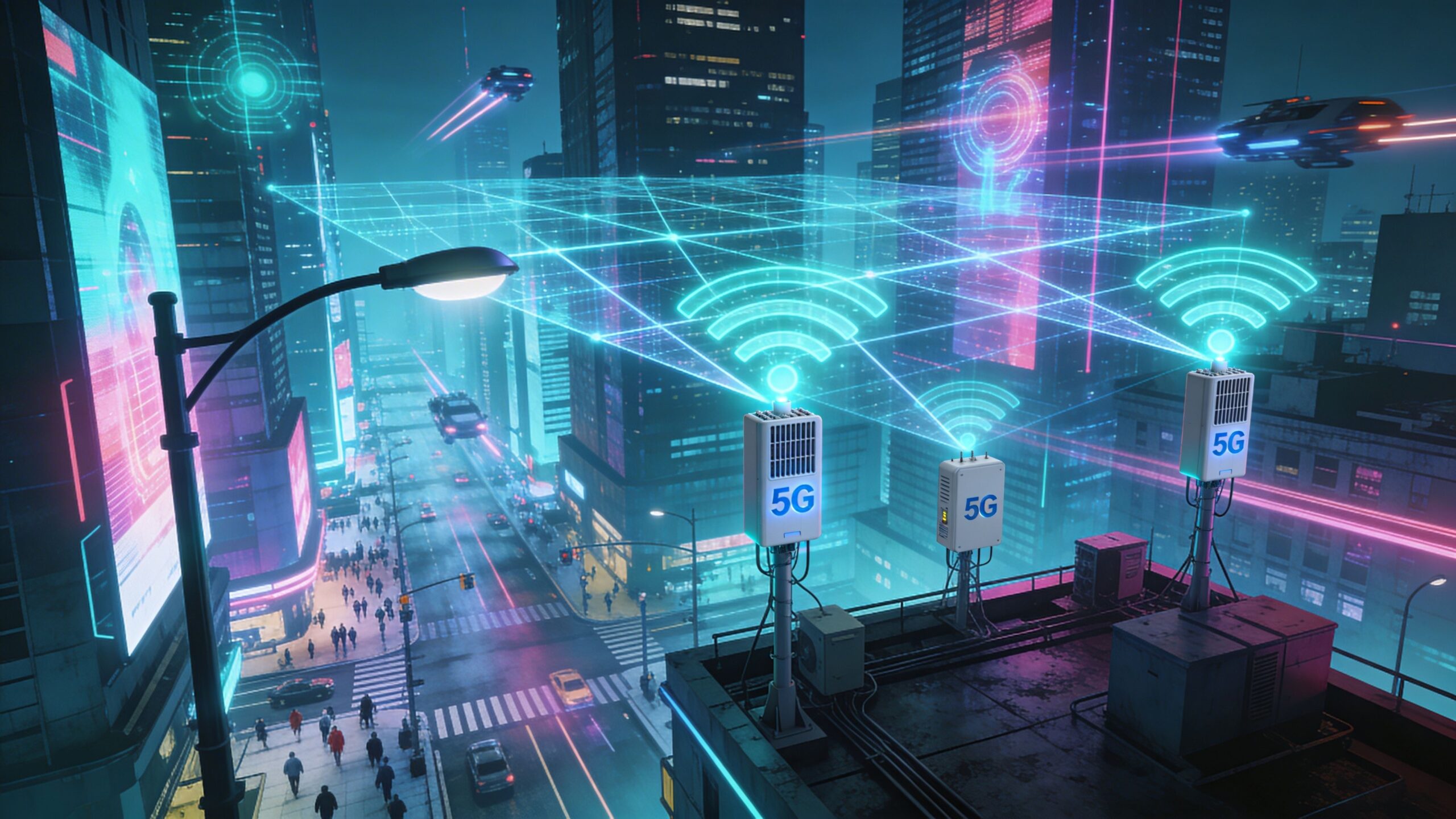
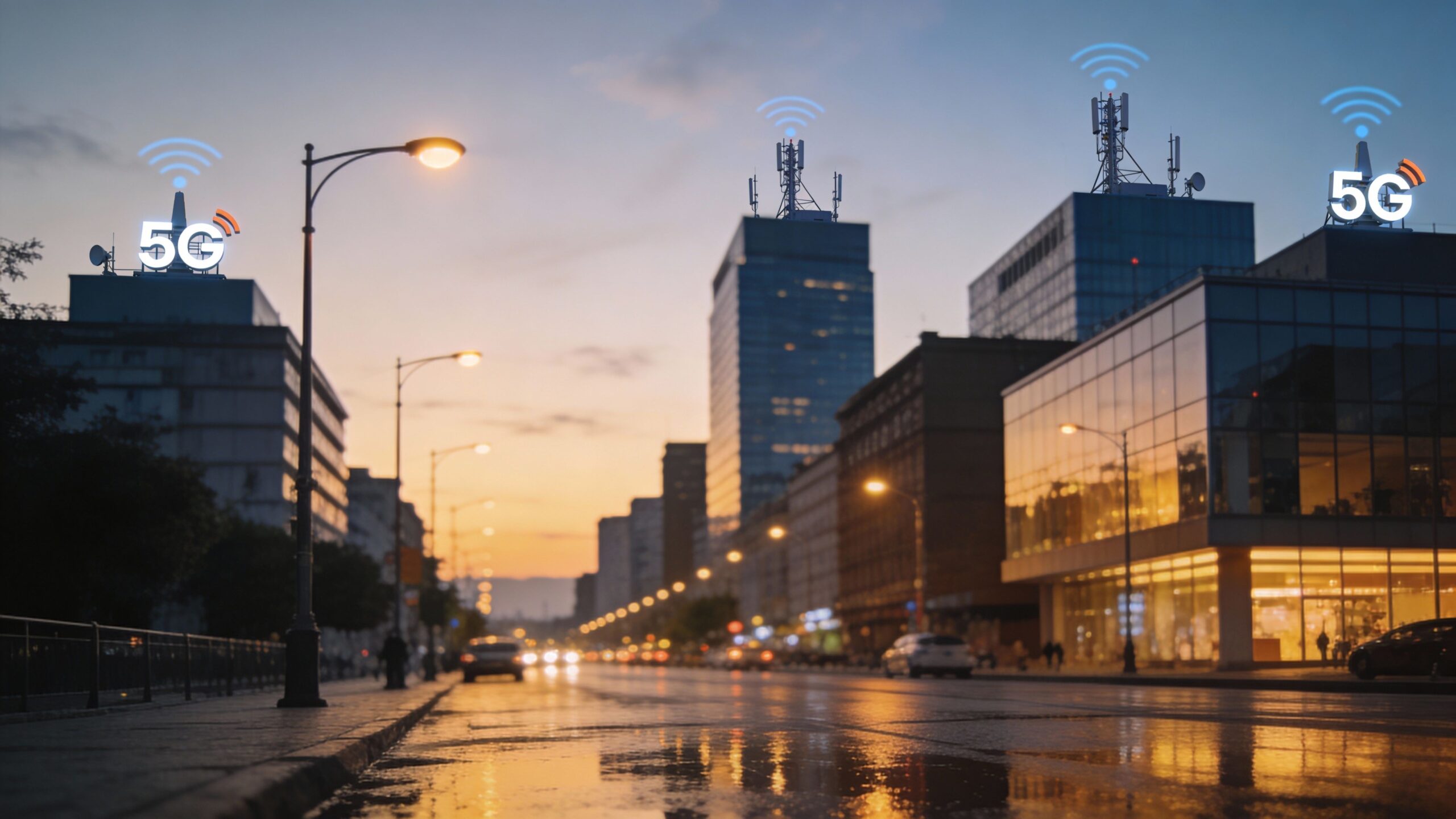
A common misconception is that 5G simply requires upgrading existing towers. In reality, 5G infrastructure depends on many more connection points spread closer to users. These smaller sites, often placed on streetlights, buildings, or utility poles, bring the network physically nearer to devices. This proximity improves performance and reduces delays.
Think of it like adding more local roads instead of relying only on highways. Traffic flows better when access points are closer and congestion is distributed. In cities, these small sites are essential for handling high data usage from thousands of devices in a compact area. In suburbs and towns, they help fill coverage gaps and improve indoor performance.
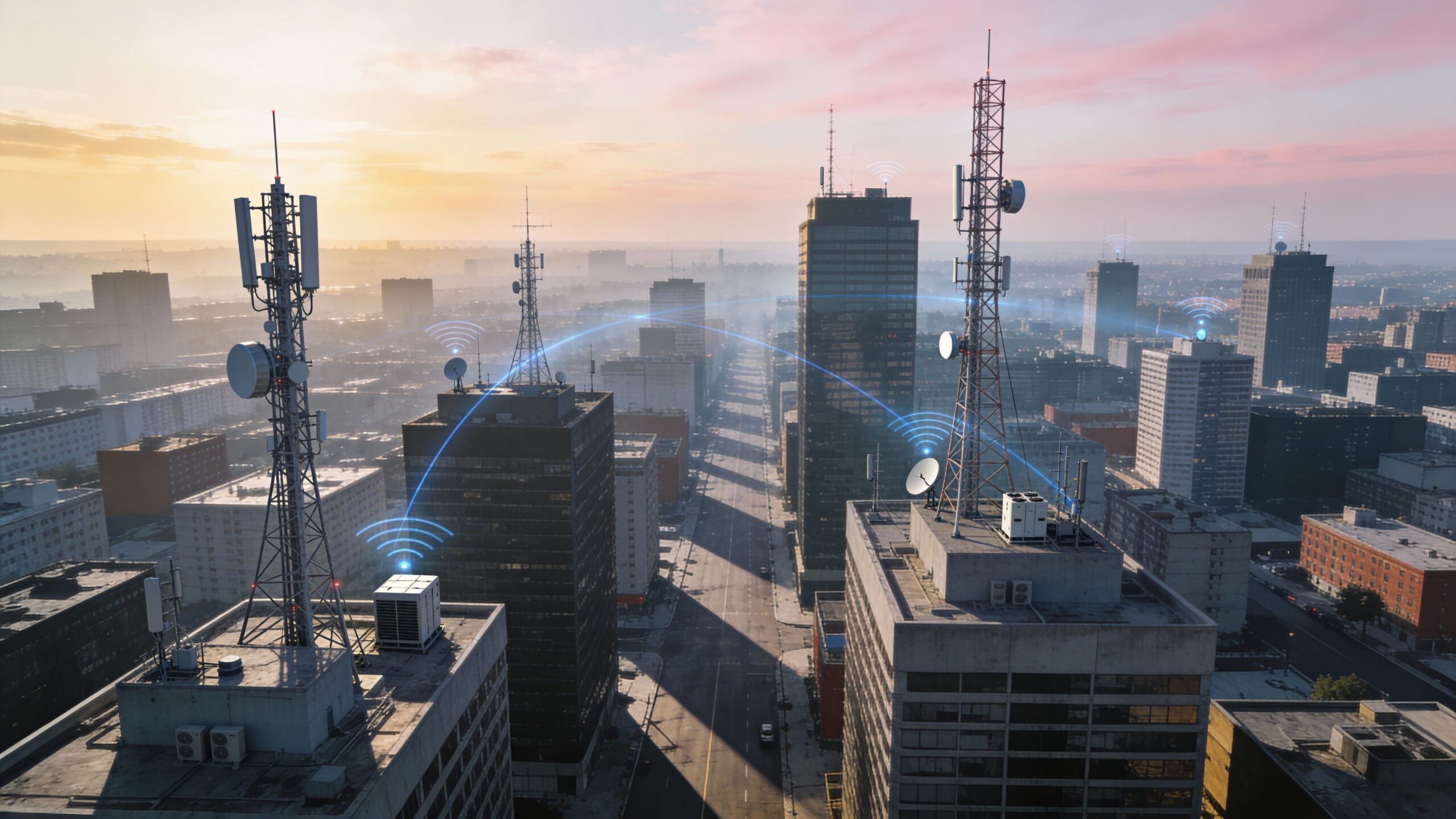
This shift does not eliminate traditional towers, but it changes their role. Large towers still provide wide-area coverage, while smaller installations handle capacity and speed. Together, they form a layered network that adapts to different environments. This is one reason 5G rollout looks different from place to place and why deployment takes time and careful planning.
Another major part of 5G infrastructure is not visible at all. Behind the scenes, networks are becoming far more software-driven. Instead of relying on fixed-purpose hardware, many network functions now run as software on flexible computing platforms. This allows operators to update, optimize, and scale their networks much more quickly.
In plain terms, this means the network can think and react faster. It can allocate resources dynamically based on demand, prioritize critical traffic, and isolate different types of services from one another. A video call, a medical device, and a factory sensor can all share the same physical network while receiving different levels of performance and reliability.
This software-based design also makes it easier to introduce new services without rebuilding infrastructure from scratch. As applications evolve, the network can evolve with them. This flexibility is one of the most important but least visible aspects of 5G, and it is what enables many of the capabilities people associate with the technology.
Speed Is Only Part of the Story
Much of the conversation around 5G focuses on speed, and while faster downloads are real, they are only one piece of the puzzle. Just as important is latency, which refers to how quickly data can travel back and forth. Lower latency makes interactions feel immediate, whether you are playing a game, controlling a device remotely, or participating in a video meeting.
5G infrastructure is designed to reduce these delays by shortening the path data must travel and by processing information closer to where it is generated. This creates a more responsive experience and opens the door to applications that were not practical on older networks. The improvement may not always show up as a dramatic speed test result, but it is noticeable in how smoothly things work.
Capacity is another key factor. 5G can support far more devices in the same area without performance dropping. This matters in crowded places like stadiums, airports, and city centers, but it also matters as more everyday objects connect to networks. From vehicles to appliances, the number of connected devices is growing rapidly, and 5G infrastructure is built to handle that scale.
How 5G Supports Everyday Life and New Industries
While 5G often sounds futuristic, much of its impact is already practical and familiar. Better mobile performance improves everyday tasks like navigation, streaming, and remote work. Calls are clearer, connections are more stable, and services feel more reliable even in busy areas. These improvements may seem subtle, but they add up across millions of interactions each day. Beyond personal use, 5G infrastructure supports entire industries. Transportation systems rely on fast, reliable communication to manage traffic and improve safety. Healthcare providers use connected devices to monitor patients and share data quickly. Businesses depend on mobile networks for logistics, coordination, and customer engagement. In many cases, 5G does not create new activities so much as make existing ones faster, safer, and more efficient. The ability to connect machines as easily as people is especially important. Factories, utilities, and infrastructure systems increasingly rely on real-time data. 5G provides the reliability and scale needed to support these operations, turning connectivity into a foundational tool rather than a convenience.
Security and Reliability in a Faster Network
As networks become more capable, they must also become more secure. 5G infrastructure includes stronger protections for data and devices, built into the network from the start. Authentication processes are more robust, and encryption is applied more consistently across connections. This helps protect users and systems from unauthorized access and interference.
Reliability is equally important. 5G networks are designed with redundancy and intelligent management to maintain service even when conditions change. Traffic can be rerouted, resources reallocated, and issues addressed automatically. This resilience is critical as society becomes more dependent on mobile connectivity for essential services.
Trust in the network is not optional. Whether supporting emergency communications or everyday transactions, 5G infrastructure must operate predictably and securely. The technology is built with this responsibility in mind, balancing innovation with stability.
What the Future Looks Like With 5G in Place
5G infrastructure is not a final destination but a foundation for what comes next. As networks continue to expand and mature, they will enable services that feel more integrated into daily life. Connectivity will become less noticeable, fading into the background as systems respond instantly and reliably. The real significance of 5G lies in how it reshapes expectations. People will come to assume that connections are fast, responsive, and available almost everywhere. Industries will design systems around constant connectivity rather than working around its limitations. This shift changes how technology fits into society. Explained in plain English, 5G infrastructure is about smarter networks rather than just faster ones. It is a combination of new radio techniques, denser physical deployment, flexible software, and intelligent management. Together, these elements power a more connected world, quietly supporting modern life while setting the stage for the next wave of digital progress.