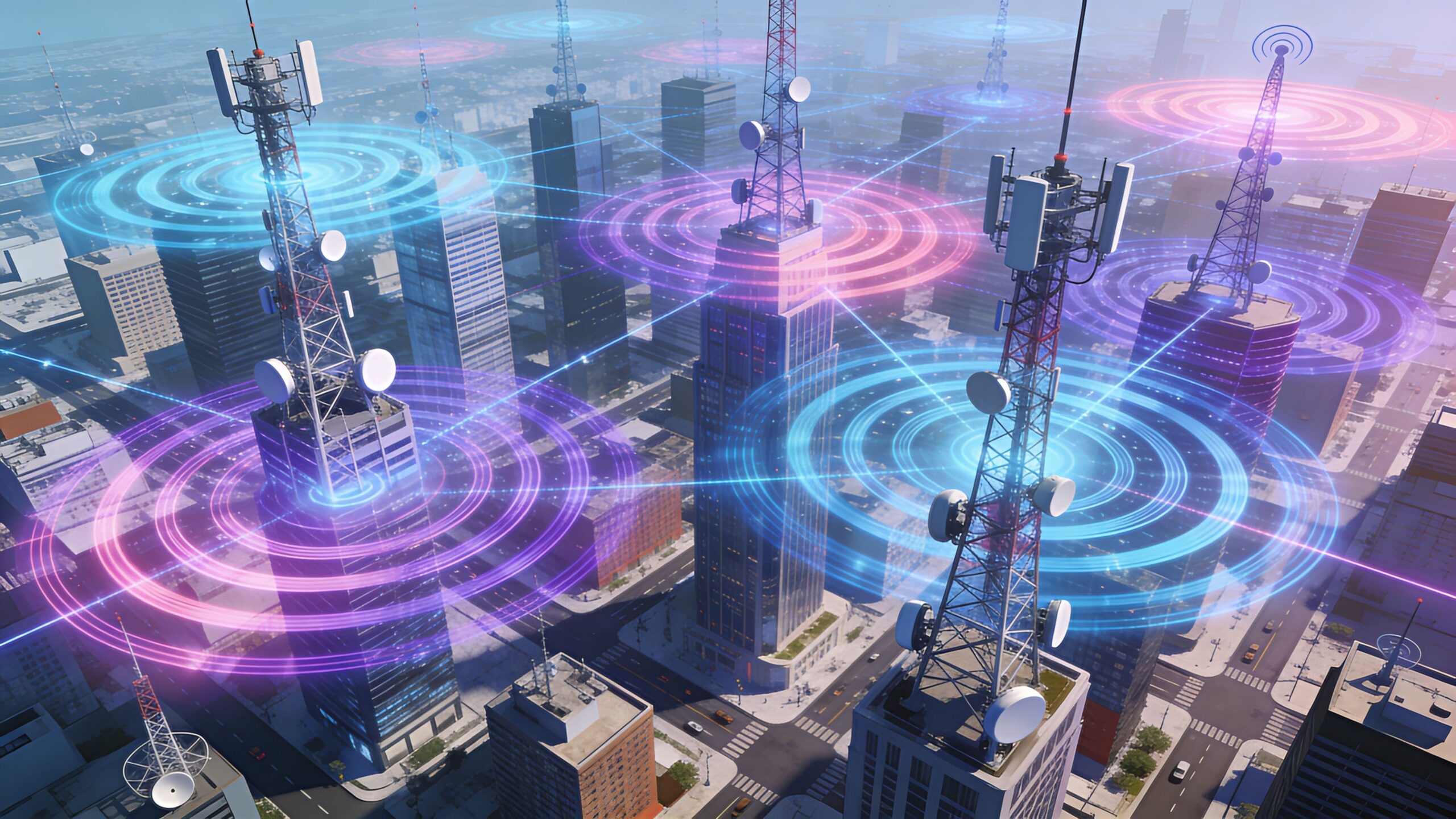
The modern economy no longer runs on physical storefronts, paper transactions, or fixed locations. It operates in a fluid, always-on environment where information moves instantly and decisions are made in real time. At the center of this transformation is mobile infrastructure, an often overlooked system that quietly powers nearly every aspect of the digital economy. From mobile banking and e-commerce to remote work and cloud computing, the ability to connect anytime and anywhere has reshaped how businesses operate and how consumers interact with services. Mobile infrastructure makes this possible by providing the connectivity layer that links devices, platforms, and people. It is not just a convenience; it is a foundational system that enables economic activity at a global scale.
A: Because it supports a huge share of digital communication, transactions, coordination, and app-based economic activity.
A: No, it now supports banking, logistics, streaming, navigation, commerce, healthcare, and connected devices.
A: Better coverage keeps workers, customers, services, and transactions connected with fewer interruptions.
A: They provide the local wireless access needed for apps, payments, customer service, field operations, and real-time coordination.
A: Communication slows, payments may stall, logistics become harder, and essential services can lose real-time visibility.
A: Fiber carries traffic beyond the cell site, allowing the network to support large volumes of digital activity.
A: Yes, it can be even more critical there because it often supports safety, commerce, and access where fewer alternatives exist.
A: Retail, logistics, finance, healthcare, education, transportation, media, and public services all depend on them heavily.
A: No, Wi-Fi helps locally, but mobile networks provide broader reach, mobility, resilience, and continuous service outside fixed locations.
A: It combines scale, mobility, speed, and constant availability, which makes digital activity possible almost everywhere.
From Convenience to Necessity: The Rise of Mobile-First Economies
What began as a tool for communication has evolved into the primary gateway for economic participation. Smartphones are now the dominant platform for accessing financial services, shopping, entertainment, and business tools. In many parts of the world, mobile devices are not just an option but the only means of connecting to the digital economy.
This shift has given rise to mobile-first economies, where businesses design their services primarily for mobile users. Payment systems, delivery platforms, and digital marketplaces are optimized for small screens and on-the-go access. The success of these systems depends entirely on reliable mobile infrastructure.
Without consistent connectivity, transactions fail, services become unreliable, and user trust erodes. The expectation of instant access has become so ingrained that even minor disruptions can have significant economic consequences. Mobile infrastructure ensures that this expectation is met, enabling seamless interactions across industries.
Enabling Commerce Without Borders
One of the most powerful impacts of mobile infrastructure is its ability to eliminate geographic barriers. Businesses can reach customers across cities, countries, and continents without the need for physical presence. Consumers can access products and services from anywhere, at any time.
This borderless commerce relies on a network that can handle vast amounts of data while maintaining speed and reliability. Every online purchase, digital payment, and customer interaction travels through mobile networks, often crossing multiple systems before reaching its destination.
For small businesses and entrepreneurs, this connectivity opens doors that were previously closed. A single individual can launch a global operation from a smartphone, reaching audiences that were once accessible only to large corporations. Mobile infrastructure levels the playing field, enabling innovation and competition on a global scale.
The Backbone of Financial Inclusion
Mobile infrastructure has also played a transformative role in expanding access to financial services. In regions where traditional banking systems are limited or inaccessible, mobile networks provide an alternative pathway to participation in the financial system.
Mobile payment platforms, digital wallets, and peer-to-peer transfer services allow individuals to send, receive, and manage money without the need for a physical bank branch. These systems rely entirely on mobile connectivity to function, making infrastructure a critical component of financial inclusion.
The impact extends beyond individual users. Businesses can process transactions more efficiently, governments can distribute aid more effectively, and entire communities can participate in economic activities that were previously out of reach. Mobile infrastructure becomes not just a technical system, but a tool for social and economic empowerment.
Powering the Gig Economy and Remote Work
The rise of the gig economy and remote work has further highlighted the importance of mobile infrastructure. Workers are no longer tied to specific locations or traditional office environments. Instead, they rely on mobile connectivity to access platforms, communicate with clients, and complete tasks.
Ride-sharing drivers, delivery workers, freelancers, and remote employees all depend on consistent network performance. A dropped connection or slow data speed can directly impact productivity and income. Mobile infrastructure ensures that these workers can operate efficiently, regardless of their location.
For businesses, this flexibility allows access to a global talent pool. Teams can collaborate across time zones, and operations can continue without interruption. The ability to work from anywhere is no longer a luxury but a standard expectation, made possible by robust mobile networks.
Data as Currency: The Role of Infrastructure in Information Flow
In the digital economy, data has become one of the most valuable resources. Every interaction generates information that can be analyzed, monetized, and used to drive decision-making. Mobile infrastructure serves as the pipeline through which this data flows.
From user behavior and transaction history to real-time analytics and machine learning inputs, vast amounts of data are transmitted across networks every second. The efficiency of this process depends on the capacity and reliability of the infrastructure.
As demand for data continues to grow, networks must evolve to handle increased traffic without compromising performance. This includes expanding capacity, reducing latency, and improving overall efficiency. The ability to move data სწრაფly and securely is essential for maintaining competitiveness in the digital economy.
Supporting Innovation Across Industries
Mobile infrastructure is not limited to consumer applications. It plays a critical role in enabling innovation across a wide range of industries, from healthcare and transportation to manufacturing and energy.
In healthcare, mobile networks support telemedicine, remote monitoring, and real-time data sharing between providers and patients. In transportation, they enable navigation systems, fleet management, and the development of autonomous vehicles. In manufacturing, they facilitate smart factories and connected supply chains.
These applications require more than just connectivity; they demand reliability, low latency, and the ability to handle large volumes of data. Mobile infrastructure provides the foundation for these capabilities, allowing industries to adopt new technologies and improve efficiency.
The ripple effects of this innovation extend throughout the economy, driving growth and creating new opportunities.
The Evolution Toward Intelligent Networks
As the digital economy continues to expand, mobile infrastructure is evolving to meet new challenges. Advances in network technology, including the transition to 5G, are enabling faster speeds, lower latency, and greater capacity.
These improvements are not just about performance; they are about creating intelligent networks that can adapt to changing conditions and optimize resource use. Technologies like network virtualization and edge computing allow for more flexible and efficient operation, supporting a wider range of applications.
The integration of artificial intelligence into network management further enhances this capability. Networks can analyze traffic patterns, predict demand, and adjust performance in real time. This level of intelligence ensures that infrastructure can keep pace with the growing complexity of the digital economy.
The Foundation of a Connected Future
Mobile infrastructure is more than a technical system; it is the foundation upon which the digital economy is built. It enables communication, supports commerce, drives innovation, and connects people and businesses across the globe. As technology continues to advance, the importance of this infrastructure will only increase. New applications, services, and industries will emerge, all relying on the ability to connect quickly and reliably. The systems that support this connectivity must continue to evolve, expanding capacity and improving performance. The digital economy depends on a network that is both resilient and adaptable. Mobile infrastructure provides that stability, ensuring that the flow of information remains uninterrupted. It is the silent engine that powers modern life, enabling a world where opportunities are no longer limited by location or access. In a landscape defined by constant change, one thing remains clear: the strength of the digital economy is directly tied to the strength of its infrastructure. And at the heart of that infrastructure lies the mobile network, quietly connecting the world one signal at a time.