Few things feel more confusing than watching your phone’s signal jump or drop when you move only a few feet. You have not changed buildings, driven across town, or done anything dramatic, yet your connection suddenly improves or collapses. This experience feels random, but it is not. Mobile signal strength is incredibly sensitive to small changes in position because radio waves behave in ways that are invisible but highly reactive to the world around you. What seems like a tiny step for you can be a massive change for the physics governing your connection.
A: Reflections and interference create tiny “hot spots” and “dead spots,” especially indoors and in cities.
A: Usually physics + environment; phones differ, but multipath and building materials are the main drivers.
A: Walls, metal framing, elevators, and coated glass block and reflect signal, creating sharp coverage pockets.
A: The bars display updates on a delay while your phone measures and averages link conditions.
A: Yes—antenna orientation and your hand placement can change how well your phone couples to the signal.
A: Move a few feet, try a different corner/height, and toggle Airplane Mode if the phone seems “stuck.”
A: Often yes—higher-frequency 5G layers are more sensitive to blockage and small position changes.
Radio Waves Are Not Straight Lines
One of the biggest misconceptions about mobile signal is the idea that it travels in a straight, uninterrupted path from a tower to your phone. In reality, radio waves spread outward, bounce, scatter, and interfere with one another. As these waves move through space, they interact with buildings, walls, vehicles, trees, and even people. When you move a few feet, your phone may shift from receiving a clean version of the signal to receiving a version that has bounced off multiple surfaces. These reflected signals can either reinforce each other or cancel each other out, dramatically changing the signal strength your phone detects.
Reflection, Interference, and the Invisible Battle
Every environment is filled with overlapping radio waves arriving from different directions. Some of these waves strengthen the signal by aligning in phase, while others weaken it by interfering destructively. This phenomenon is known as multipath interference, and it is one of the main reasons small movements have such big effects. When you move a few feet, you may step into a spot where reflections combine perfectly, boosting your signal. Move again, and those same reflections may cancel out, causing an abrupt drop. These invisible interference patterns shift constantly, turning everyday spaces into complex signal landscapes.
Walls, Corners, and the Power of Obstacles
Physical objects play an outsized role in how signals behave over short distances. Walls, doors, windows, and even furniture can absorb or deflect radio waves. Standing near a corner or doorway can place you in a zone where signals funnel or weaken depending on angles and materials. Modern buildings often use materials like reinforced concrete and metal-coated glass, which are especially unfriendly to radio signals. A step toward a window or away from a wall can drastically change how much signal energy reaches your phone, even though the room itself feels unchanged.
Your Body Is Part of the Equation
It may be surprising, but your own body can affect signal strength. Human bodies absorb radio energy, particularly at the frequencies used by modern mobile networks. How you hold your phone, which side of your body faces the tower, and even how you tilt the device can influence reception. When you move a few feet, you may also change your orientation relative to the tower or nearby obstacles. This can either block or open a path for the signal, causing noticeable changes without any obvious external cause.
Towers, Cells, and Invisible Boundaries
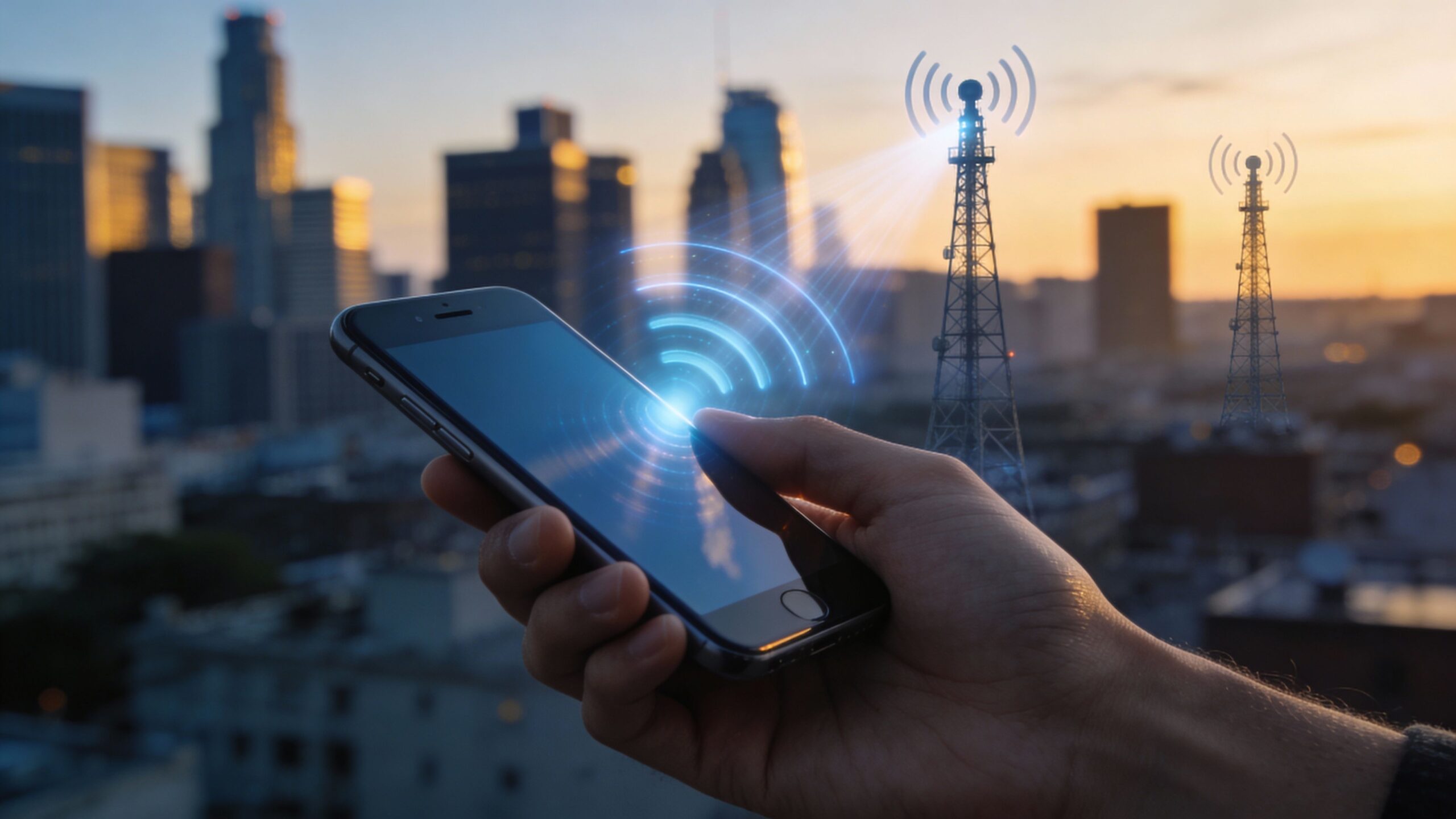
Mobile networks divide coverage areas into overlapping cells, each served by a tower or antenna sector. These boundaries are not marked and rarely align neatly with streets or rooms. When you move a few feet, you may cross an invisible threshold where your phone decides another tower or sector offers a better connection. This handoff process is usually smooth, but signal strength can fluctuate during the transition. In dense urban areas with many overlapping cells, these boundaries can be extremely tight, making small movements more likely to trigger noticeable changes.
Modern Networks Adapt in Real Time
Today’s mobile networks are constantly adjusting power levels, frequencies, and data rates to optimize performance. Your phone and the network are in continuous communication, negotiating how best to maintain a connection. When conditions change, even slightly, the system may lower speeds, switch bands, or adjust signal strength to preserve stability. These adaptations can make signal changes feel sudden, even though they are part of a finely tuned response to minute environmental shifts. What feels like instability is often the network reacting precisely to new conditions created by your movement.
Why This Sensitivity Is a Feature, Not a Flaw
The fact that signal strength changes when you move just a few feet is not a sign of weak technology. It is evidence of how precisely mobile networks operate. By responding to small changes in position and environment, networks can deliver reliable connections across complex landscapes. The same sensitivity that causes sudden drops also enables phones to find better signals in challenging conditions. Once you understand that radio waves are shaped by reflections, obstacles, bodies, and invisible boundaries, these changes feel less frustrating and more fascinating. Your phone is not guessing. It is navigating an invisible, constantly shifting world where even a single step can change everything.