Every time your phone lights up with a text, streams a video, or loads a map, it is tapping into an invisible web of radio energy that surrounds you at all times. Mobile signal strength feels simple on the surface, yet it is governed by physics, infrastructure, software, and human behavior all at once. What we casually call “bars” is really a constantly changing conversation between your phone and a vast network of towers, antennas, and core systems. That conversation is fragile, adaptive, and sometimes chaotic, which is why your signal can feel rock solid one moment and vanish the next without warning.
A: Congestion, limited tower backhaul, or de-prioritization can slow you down even with strong signal.
A: Walls and coated glass block radio waves—higher-frequency 5G/LTE bands are affected the most.
A: Rapid handoffs between towers, terrain changes, and the phone reselecting bands can create brief gaps.
A: Not always. Some 5G bands are faster but less reliable indoors or at distance than LTE or low-band 5G.
A: Strength is how loud the tower is; quality is how clean the signal is amid interference and noise.
A: Voice routing (VoLTE/VoNR), uplink limitations, or network configuration can affect calls differently than data.
A: It can—toggling it forces your phone to re-register and often pick a better tower or band.
A: Yes—antenna design varies by model, and some thick/metal cases can slightly reduce performance in weak areas.
A: Reflections, interference, and dense small-cell layouts can cause rapid fluctuations over short distances.
A: Enable Wi-Fi Calling and strengthen your Wi-Fi—often the most reliable solution without extra hardware.
From Towers to Phones: How Signals Actually Travel
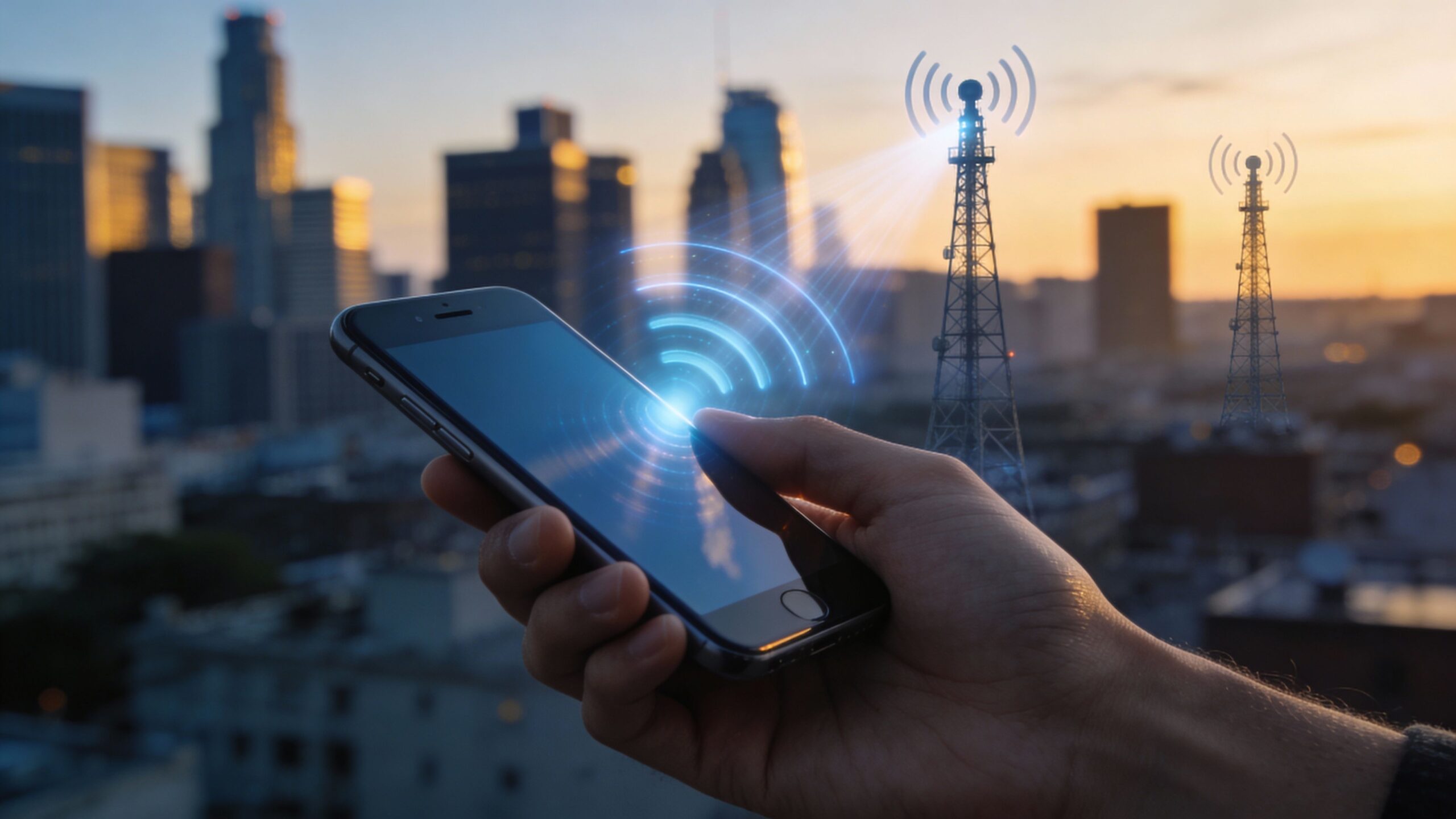
Mobile signal strength begins as radio waves transmitted from cell towers, which are strategically placed to cover overlapping geographic areas called cells. These towers do not send signals directly to your phone like a flashlight beam. Instead, they broadcast radio energy outward, and your phone listens, responds, and negotiates a connection in real time. The strength of that connection depends on how much of the original signal reaches your device after spreading through space and interacting with everything in its path. Buildings, trees, terrain, weather, and even your own body can weaken or distort the signal before it ever reaches your phone.
What Signal Bars Really Measure
The bars on your phone are not a universal standard, and they do not measure the same thing across devices or carriers. Behind the scenes, your phone is measuring signal power in decibels, often displayed internally as negative numbers. A stronger signal is closer to zero, while weaker signals fall deeper into the negatives. Manufacturers then translate those raw values into bars using their own formulas. This means two phones side by side can show different bar counts while receiving essentially the same signal. Bars are best understood as a rough confidence indicator, not a precise measurement of connection quality.
Why Signal Strength Changes as You Move
As you move through the world, your phone is constantly reassessing which tower offers the best connection. This process, known as handoff or handover, happens seamlessly most of the time. However, each cell has limits, and signal strength naturally fades as you move farther from a tower. Urban environments complicate this further because signals bounce off buildings, creating reflections and interference. A step or two in any direction can change how those reflections combine, suddenly boosting or cancelling the signal reaching your phone. This is why signal strength can change dramatically without you traveling very far.
The Hidden Role of Network Congestion
Signal strength alone does not guarantee good performance. Even with a strong signal, your connection can slow down or drop if too many people are using the same cell at once. Towers have finite capacity, and when demand spikes, the network must prioritize, delay, or deny connections. This is common during large events, rush hours, or emergencies. From your phone’s perspective, it may still see strong radio energy, but the network cannot allocate enough resources to keep the data flowing smoothly. To the user, this feels like a mysterious drop in service despite full bars.
How Buildings and Geography Steal Your Signal
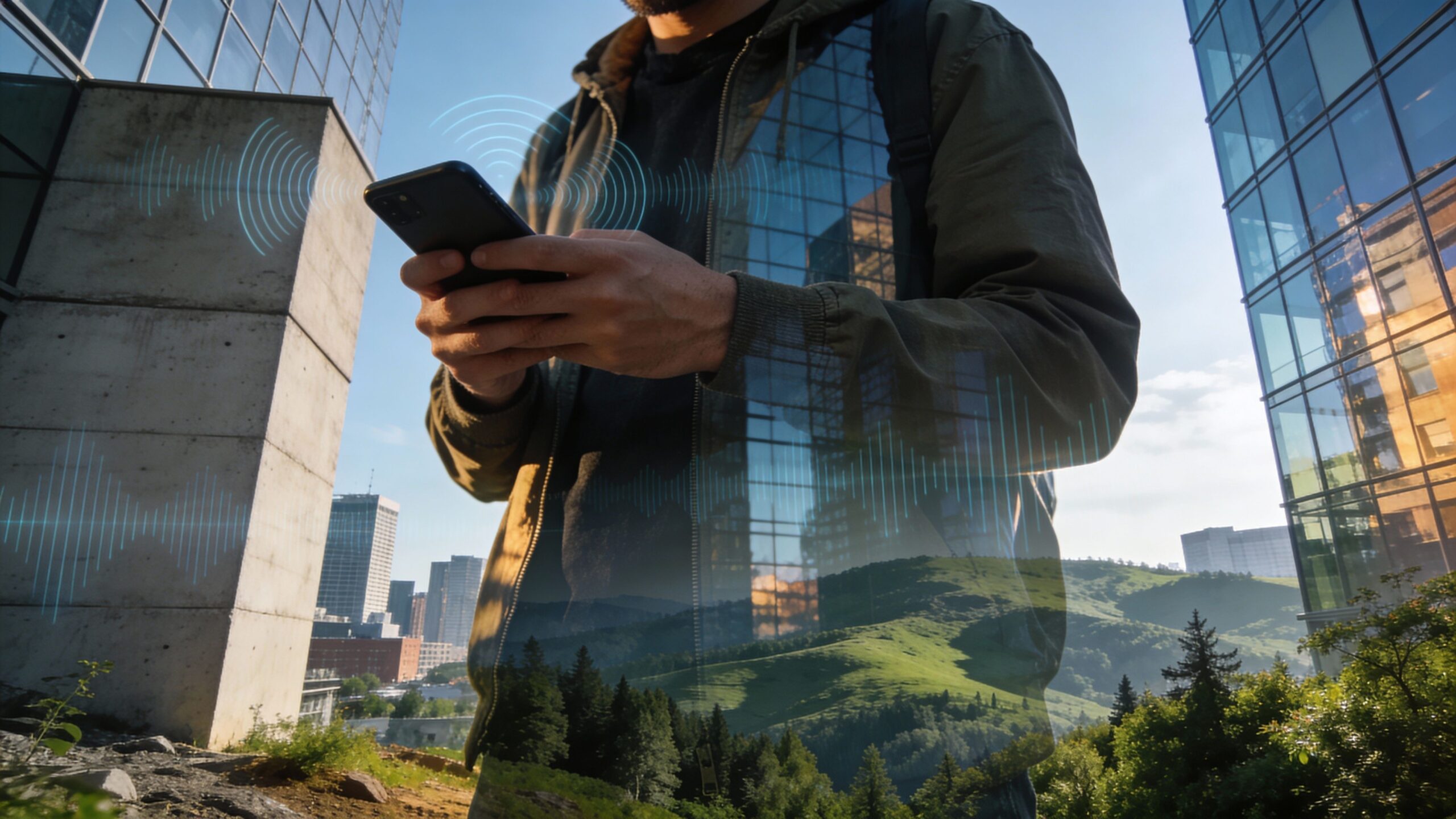
Materials matter more than most people realize. Concrete, metal, brick, and energy-efficient glass can all absorb or reflect radio waves, reducing the signal that reaches your phone indoors. Elevators, parking garages, and basements are especially hostile environments for mobile signals. Geography plays a similar role outdoors. Hills, valleys, and dense vegetation can block or scatter radio waves, creating dead zones even in areas that appear well-covered on maps. These physical barriers are one of the most common reasons signal strength drops suddenly when you enter a building or pass behind a natural feature.
The Impact of Modern Technologies Like 4G and 5G
Newer mobile technologies bring faster speeds and lower latency, but they also change how signal strength behaves. Higher-frequency signals, which enable faster data rates, do not travel as far and are more easily blocked by obstacles. This makes modern networks more sensitive to positioning and environment. Your phone may rapidly switch between different frequency bands or technologies depending on conditions, sometimes causing brief drops or fluctuations. While these systems are designed to optimize performance, the complexity of managing multiple layers of coverage can introduce moments of instability that users notice as sudden signal loss.
Why Drops Feel Random but Aren’t
Signal drops often feel unpredictable because they result from many small factors aligning at once. A slight movement, a passing vehicle, a surge in network traffic, or a software decision made in milliseconds can all affect your connection. Your phone is constantly making trade-offs, choosing between signal strength, data speed, and network availability. When conditions change faster than the system can adapt, the connection may falter briefly. These drops are rarely caused by a single failure. Instead, they are the visible edge of an extremely complex system working at the limits of physics and infrastructure.
Understanding the System Changes How You Experience It
Once you understand how mobile signal strength really works, sudden drops feel less mysterious and more mechanical. Your phone is not failing you, and the network is not randomly unreliable. Both are navigating a dynamic environment where invisible forces shift second by second. By recognizing the roles of distance, obstacles, congestion, and technology, you gain a clearer picture of why your connection behaves the way it does. Mobile networks are remarkable in their resilience, and the fact that they work as well as they do, most of the time, is a quiet technological achievement happening all around you.