Mobile signal strength often feels like a simple concept. You glance at the bars, make a quick judgment, and assume your phone should work accordingly. In real-world use, however, those bars hide a far more complicated story. Mobile signal is shaped by a constantly shifting mix of physics, infrastructure, environment, and network decisions happening in fractions of a second. What affects your signal the most is rarely one single factor. Instead, it is the combined influence of where you are, what surrounds you, how the network is behaving, and how your phone is negotiating its place within that system.
A: Obstacles (buildings/terrain), frequency band, and congestion—often in that order.
A: You may switch sectors/small cells or move into/out of a reflection/interference pocket.
A: Concrete, steel, and coated glass block radio waves—higher-frequency bands suffer the most.
A: Not always—some 5G bands are fast but weaker at distance/indoors; LTE or low-band 5G can be more stable.
A: Congestion: your radio link is strong, but the tower’s capacity is shared among many users.
A: Usually less than obstacles, but heavy precipitation and wet foliage can worsen higher-frequency performance.
A: Move slightly, toggle Airplane Mode, switch LTE/5G, and try Wi-Fi Calling indoors.
A: Voice routing, uplink weakness, or handoffs can affect calls differently than general data traffic.
A: Yes—antenna design and supported bands vary, which changes how well your phone holds and uses signal.
A: Strong Wi-Fi + Wi-Fi Calling, or consider switching carriers if your area is persistently weak/congested.
Distance From the Tower Still Matters More Than You Think
At the most fundamental level, mobile signal weakens with distance. The farther your phone is from a cell tower, the more the radio signal spreads out and loses strength before reaching you. While modern networks are designed to cover large areas, physics has not changed. Even a few hundred extra feet can noticeably affect signal quality, especially in areas with fewer towers. In rural regions, distance is often the dominant factor shaping real-world signal reliability. In cities, distance still matters, but it becomes intertwined with other obstacles that complicate how signals travel.
Buildings, Materials, and the Environment Around You
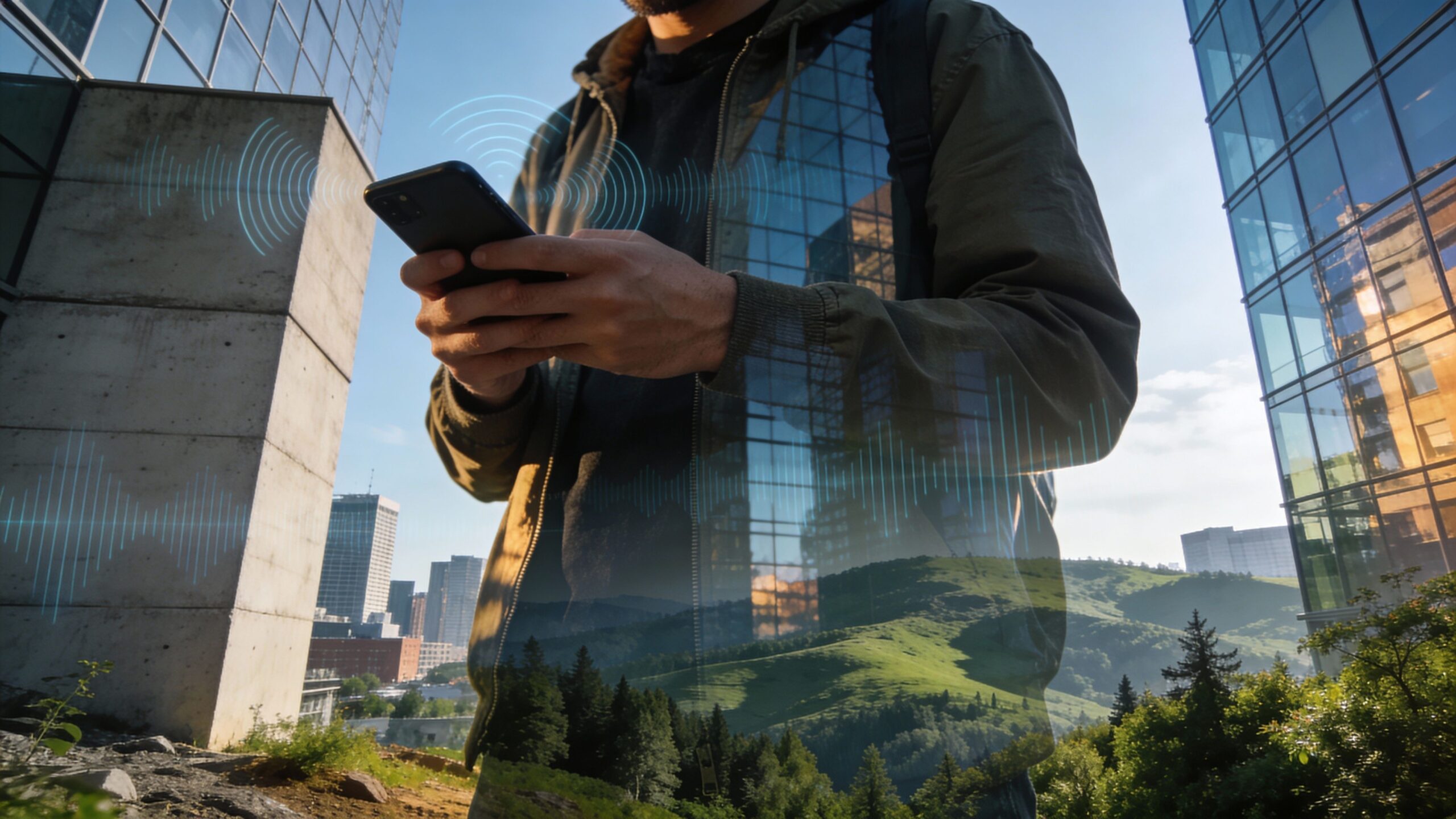
One of the biggest real-world signal killers is the physical environment. Radio waves do not pass through all materials equally. Concrete, brick, metal framing, and energy-efficient glass can significantly weaken or distort mobile signals. This is why your phone may work perfectly outside but struggle indoors, even when you have not moved far. Elevators, parking garages, basements, and interior rooms surrounded by dense walls are especially hostile environments. Outdoors, hills, valleys, dense trees, and even heavy foliage can block or scatter signals, creating unexpected dead zones in otherwise well-covered areas.
Network Congestion and the Crowd Effect
Even with excellent signal strength, mobile performance can collapse when too many people are using the same network resources at once. Cell towers have limited capacity, and that capacity must be shared among all connected devices. During rush hours, large public events, or emergencies, congestion becomes one of the most influential factors in real-world signal quality. Your phone may maintain a strong radio connection, but the network may not have enough available bandwidth to deliver data quickly. This is why slow speeds and dropped connections often happen in busy places, even when signal bars remain high.
How Your Phone’s Hardware Shapes the Experience
Not all phones are created equal when it comes to signal performance. Antenna design, internal components, and software tuning all affect how well a device can receive and transmit signals. Some phones are better at holding weak signals or switching efficiently between towers and frequency bands. The way you hold your phone can even influence reception, as your hand and body can partially block the antenna. In real-world use, this means two people standing side by side may have noticeably different signal experiences despite being on the same network.
Modern Networks and the Trade-Offs of Speed
Newer mobile technologies promise faster speeds and lower latency, but they also introduce new challenges. Higher-frequency signals, often used to deliver faster data, do not travel as far and are more easily blocked by obstacles. This makes modern networks more sensitive to positioning and movement. Your phone may rapidly switch between different bands and technologies to maintain performance, sometimes prioritizing signal stability over speed or vice versa. These constant adjustments can cause fluctuations that feel like random drops or slowdowns, even though the network is actively trying to optimize your connection.
Movement, Transitions, and the Cost of Staying Connected
Real-world use almost always involves movement. Walking, driving, or riding public transit forces your phone to continuously switch between cells as you move through coverage areas. These handoffs are usually seamless, but they are not perfect. Brief interruptions can occur when transitioning between towers, especially at higher speeds or in areas where coverage overlaps unevenly. Tunnels, bridges, and highways are common trouble spots because they combine movement, structural barriers, and rapid changes in signal conditions. The faster you move, the harder it becomes for the network to maintain a consistently strong connection.
The Invisible Influence of Network Management
Behind every connection is a complex system making real-time decisions about how resources are allocated. Networks prioritize traffic, manage interference, and balance loads to keep everything functioning. In real-world use, this means your signal experience can change even if nothing around you appears different. Software updates, temporary maintenance, or automated adjustments can all influence performance. Your phone may be shifted to a different tower, frequency, or priority level without you ever knowing. These invisible decisions often explain sudden changes in signal quality that seem to come out of nowhere.
Why Real-World Signal Is Always a Moving Target
What affects mobile signal the most in real-world use is not any single factor, but the interaction of many forces at once. Distance, obstacles, congestion, hardware, technology, movement, and network management all overlap in unpredictable ways. Mobile networks are designed to adapt constantly, and most of the time they do so remarkably well. The moments when signal drops or slows are not signs of failure, but evidence of a system operating at the edge of what physics and infrastructure allow. Understanding this complexity turns frustration into perspective and reveals just how much is happening behind the scenes every time your phone connects.