Travel has never been easier, but staying connected across borders can quickly become one of the most expensive parts of any trip. International roaming charges, often overlooked in the excitement of planning flights and accommodations, can quietly rack up into hundreds or even thousands of dollars. Many travelers only discover the true cost after returning home, greeted by a shocking phone bill that feels completely disconnected from their actual usage. The reality is that roaming fees are not random or unpredictable. They are built on a system of agreements between carriers, usage patterns, and pricing structures that can be understood—and more importantly, controlled. Once you grasp how these charges work, you gain the ability to avoid them entirely or reduce them to a minimal, manageable cost. The difference between a $10 trip and a $500 bill often comes down to awareness and preparation.
A: It is when your phone uses another carrier’s network while you are outside your home country or coverage zone.
A: Foreign network access is billed at special rates, and background data use can pile up fast.
A: Yes for cellular use, as long as you do not turn mobile service back on; Wi-Fi can still be used separately.
A: Usually yes for internet access, but calls or texts sent through your carrier may still behave differently depending on settings.
A: For short trips, passes are easy; for longer trips, eSIMs or local SIMs are often cheaper.
A: Usually yes, but whether they are free or charged depends on your carrier and plan.
A: Yes, many apps sync automatically in the background unless you disable those features.
A: Often no; cruise and maritime networks can be billed at much higher satellite-based rates.
A: Turn off roaming, use Wi-Fi carefully, limit background apps, and set up a travel plan before you leave.
A: Review your bill line by line and contact your carrier quickly if any roaming charges look wrong.
How International Roaming Actually Works
When you travel outside your home country, your mobile carrier no longer owns the network your phone connects to. Instead, your phone “roams” onto a foreign carrier’s network. This foreign carrier charges your home carrier for access, and your home carrier then passes those costs on to you, often with a markup.
Every action your phone takes while roaming—sending a text, making a call, loading a webpage, refreshing an app—creates data or service usage that is billed. Unlike domestic plans, which often include unlimited usage or bundled pricing, international roaming typically operates on a pay-per-use model unless you have a specific plan in place.
Data is the most expensive component. Even background processes like email syncing, app updates, and location services can quietly consume megabytes or gigabytes. Because pricing is often measured in small units, such as per megabyte, costs can escalate rapidly without noticeable warning.
The Biggest Culprit: Data Usage in the Background
One of the most misunderstood aspects of roaming charges is that you don’t need to actively use your phone to incur costs. Modern smartphones are constantly communicating with servers in the background. Apps check for updates, messages sync, photos upload, and notifications refresh automatically.
This silent activity can be incredibly expensive when roaming internationally. A single app updating in the background might use several megabytes of data. Multiply that across multiple apps over several hours, and the charges can become significant without any visible usage from the user.
Streaming services, social media, and navigation apps are particularly data-intensive. Even opening a map or scrolling through a feed can consume large amounts of data quickly. Without restrictions, a short session of casual browsing abroad could cost more than a full month of domestic service.
Understanding Carrier Pricing Models
Carriers typically offer several ways to handle international roaming, each with its own pricing structure. The default option is pay-as-you-go, which charges per call minute, per text message, and per megabyte of data. This is usually the most expensive option and the one that catches travelers off guard.
Another common option is a daily roaming pass. These plans charge a flat fee per day to access your domestic plan’s features while abroad. While more predictable, the cost can add up quickly over longer trips, especially if the daily fee is high.
Monthly international plans provide a set amount of data, minutes, and texts for a fixed price. These are often the most cost-effective for extended travel but require planning ahead. The key is understanding your expected usage and choosing a plan that aligns with it, rather than relying on default settings.
Smart Strategies to Avoid High Roaming Bills
Avoiding excessive roaming charges starts before you even leave your home country. Preparation is your strongest advantage. One of the simplest and most effective steps is to disable data roaming in your phone’s settings. This prevents your device from using cellular data abroad unless you explicitly enable it.
Another powerful strategy is to rely on Wi-Fi whenever possible. Hotels, cafes, airports, and public spaces often provide free or low-cost internet access. By connecting to Wi-Fi, you can use messaging apps, make calls, and browse the internet without incurring roaming charges.
Using apps designed for low data consumption can also make a significant difference. Messaging platforms and offline navigation tools allow you to stay connected and informed without constantly using mobile data. Downloading maps, playlists, and documents ahead of time ensures you have access without needing to stream or load content on the go.
The Rise of eSIMs and Local SIM Cards
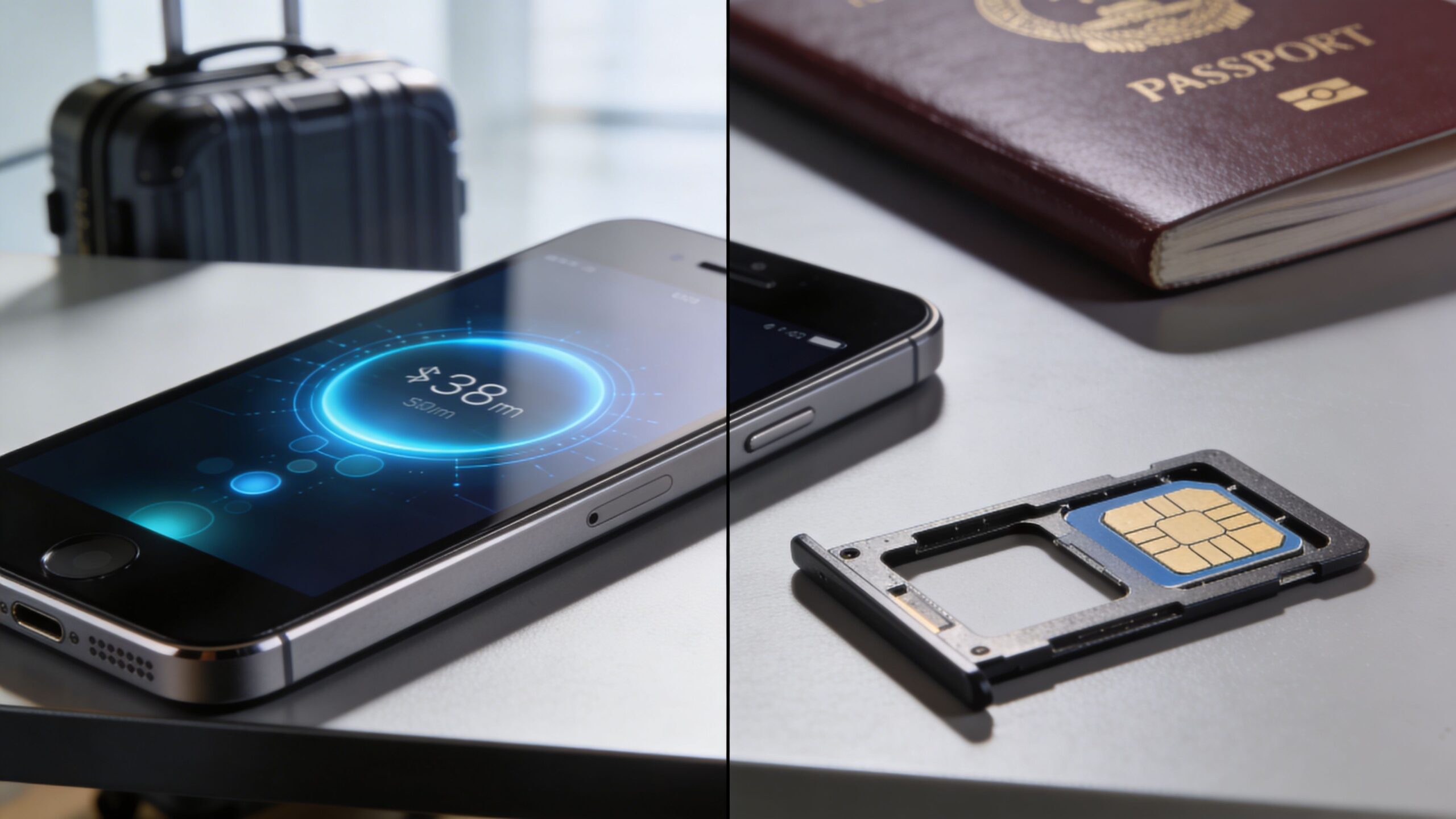
One of the most effective ways to avoid roaming charges entirely is to bypass your home carrier’s international rates. This is where local SIM cards and eSIM technology come into play. By purchasing a local SIM card in your destination country, you gain access to local rates, which are often significantly cheaper than roaming fees.
eSIMs take this concept even further by allowing you to activate a local plan digitally without swapping physical cards. This convenience has made eSIMs increasingly popular among frequent travelers. With a few taps, you can switch to a local data plan tailored to your destination, often at a fraction of the cost of traditional roaming.
These options not only reduce costs but also provide better network performance in many cases. Local carriers typically offer stronger coverage and faster speeds within their region, enhancing your overall experience while traveling.
Common Mistakes That Lead to Bill Shock
Despite the availability of solutions, many travelers still fall into common traps that result in unexpectedly high bills. One of the most frequent mistakes is assuming that “limited use” will not lead to significant charges. Even minimal usage can be costly under pay-as-you-go pricing.
Another mistake is forgetting to adjust phone settings. Leaving data roaming enabled, allowing automatic app updates, or failing to disable background data can all contribute to unnecessary charges. Similarly, answering calls or checking voicemail abroad can incur fees that are easy to overlook.
Travelers also often underestimate the cost of certain activities. Video calls, streaming music, and uploading photos are among the most data-intensive actions and can quickly consume large amounts of data. Without a plan in place, these activities can lead to rapid cost escalation.
How to Monitor and Control Your Usage in Real Time
Staying aware of your usage while traveling is essential to avoiding surprises. Most smartphones include built-in tools that allow you to track data usage in real time. By resetting your data usage statistics at the start of your trip, you can monitor how much data you are consuming each day.
Many carriers also offer apps or alerts that notify you when you reach certain usage thresholds. These alerts can serve as an early warning system, helping you adjust your behavior before costs spiral out of control.
Setting limits on your device, such as restricting background data or enabling low-data modes, can further reduce usage. These features are designed to minimize unnecessary data consumption, ensuring that your phone only uses data when absolutely necessary.
Staying Connected Without Breaking the Bank
International travel should be about exploration, connection, and new experiences—not worrying about your phone bill. By understanding how roaming charges work and taking proactive steps to manage your usage, you can stay connected without facing financial surprises. The key is to treat connectivity as part of your travel planning process. Just as you would research flights or accommodations, taking the time to evaluate your mobile options can save you significant money and stress. Whether it’s choosing the right carrier plan, using Wi-Fi strategically, or adopting new technologies like eSIMs, the tools to avoid high roaming costs are readily available. In a world where staying connected is more important than ever, the ability to do so affordably is a powerful advantage. With the right approach, you can navigate international roaming with confidence, ensuring that your memories—not your bills—are the only thing that lasts long after your trip ends.