In today’s hyper-connected world, staying online while traveling is no longer a luxury—it’s an expectation. Whether navigating unfamiliar streets, booking last-minute accommodations, or sharing moments in real time, reliable mobile connectivity has become an essential part of the travel experience. As international travel continues to evolve in 2026, one question stands out for travelers everywhere: should you use an eSIM or stick with a traditional physical SIM card? This decision is more than just a technical preference. It affects cost, convenience, flexibility, and even the quality of your overall travel experience. With both options widely available and increasingly competitive, understanding the differences between eSIM and physical SIM technology is key to making the right choice for your journey.
A: Often yes for convenience, but physical SIM can still be better for older phones, local deals, and easier device swapping.
A: Not by itself; signal depends mainly on the carrier and local partner networks behind the plan.
A: Many modern dual-SIM phones allow that, which is useful for keeping your home line while adding travel data.
A: eSIM is usually easier because you can install it digitally before departure.
A: Physical SIM often wins when local prepaid carriers offer strong value for longer use.
A: Then physical SIM is the obvious travel option, assuming your phone is unlocked and compatible.
A: It can be, since you can often move it to another phone quickly if your main device fails.
A: Many are, though some do include calling or number support depending on the provider.
A: It depends on the destination, because eSIM wins on convenience while local physical SIMs may offer better raw pricing.
A: Use eSIM for speed and flexibility, and choose physical SIM when compatibility, local value, or easy swapping matters more.
Understanding the Basics of SIM Technology
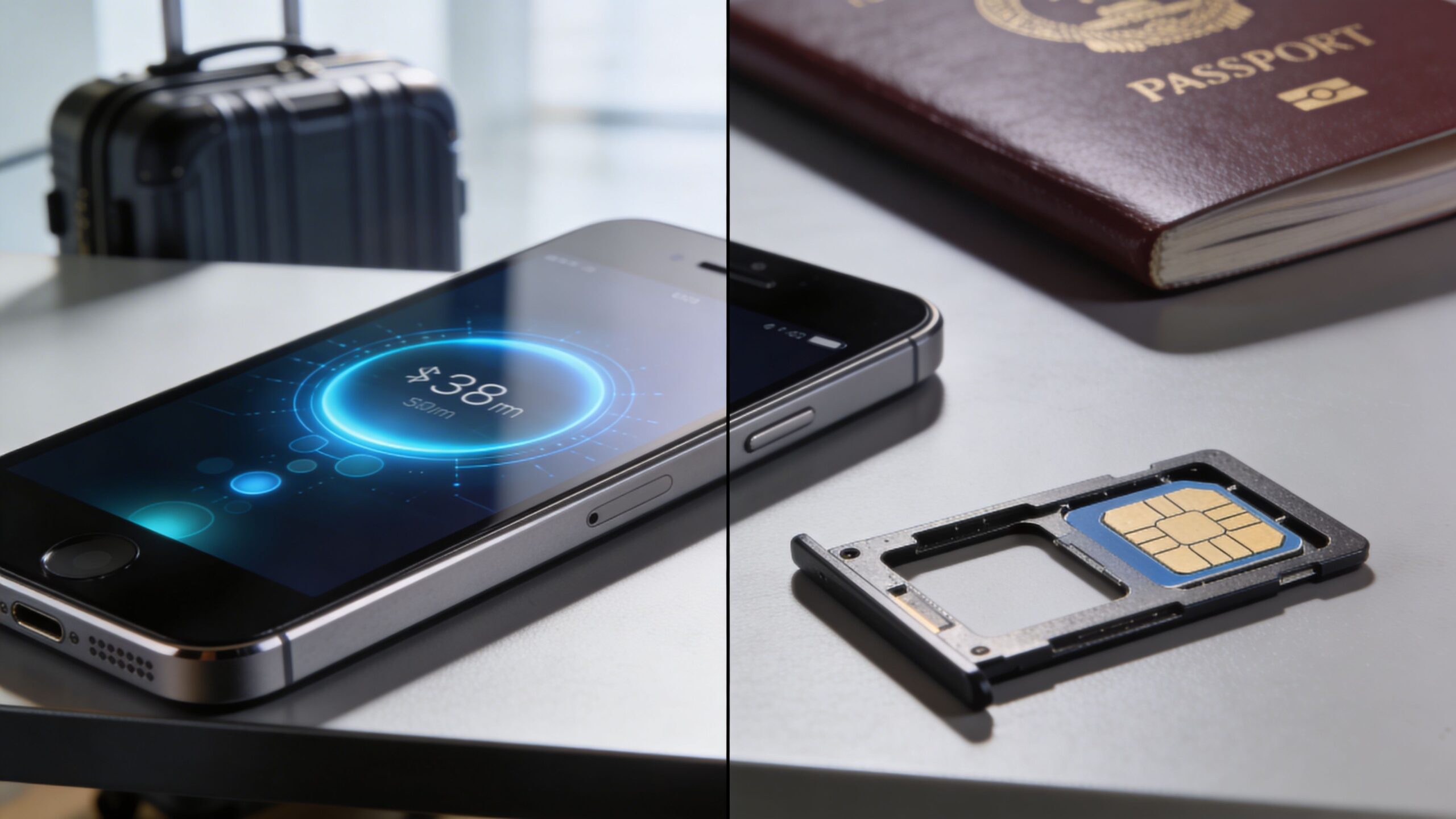
At its core, a SIM card is what connects your phone to a mobile network. Traditional physical SIM cards are small, removable chips that you insert into your device. They store your subscriber information and allow your phone to communicate with a carrier’s network. For years, this has been the standard method of mobile connectivity worldwide.
eSIMs, or embedded SIMs, represent the next evolution. Instead of a physical card, the SIM functionality is built directly into your device. Activation happens digitally, often through scanning a QR code or downloading a carrier profile. This eliminates the need to physically swap cards and opens up new possibilities for managing multiple plans simultaneously.
While both technologies serve the same fundamental purpose, the way they are used—and the experiences they create for travelers—can be dramatically different.
Convenience Redefined: The Power of eSIM
One of the most compelling advantages of eSIM technology is convenience. With an eSIM, you can set up your mobile plan before you even leave home. By the time you land in your destination, your phone is already connected, ready to provide maps, ride-sharing access, and instant communication.
This seamless activation process removes one of the most common travel frustrations: finding and purchasing a local SIM card upon arrival. No more searching for kiosks, dealing with unfamiliar languages, or waiting in long airport lines. Everything can be handled in minutes from your device.
eSIMs also make it easy to switch between plans. If you’re traveling across multiple countries, you can change carriers without physically swapping cards. This flexibility is particularly valuable for travelers exploring regions like Europe or Southeast Asia, where crossing borders is frequent and often spontaneous.
The Reliability Factor: Why Physical SIM Still Holds Ground
Despite the rapid rise of eSIMs, physical SIM cards continue to offer advantages that make them a strong contender for travelers. One of the most notable is reliability. Physical SIM cards connect directly to local networks and are often optimized for that specific region, providing consistent performance and strong coverage.
In some parts of the world, especially in developing regions, physical SIM cards remain more widely supported than eSIMs. Local carriers may offer better deals, faster speeds, and more stable connections through traditional SIM options. For travelers venturing off the beaten path, this reliability can be a crucial factor.
Physical SIM cards also provide a level of familiarity. Many travelers are comfortable with the process of inserting a card and using a local number. This simplicity can be reassuring, particularly for those who are less familiar with newer technologies or prefer a straightforward setup.
Cost Considerations: Which Option Saves You More?
When it comes to cost, both eSIM and physical SIM options can offer significant savings compared to international roaming. However, the better choice depends on your travel style and destination.
eSIM plans are known for their transparency. Pricing is typically clear, with defined data limits and validity periods. This makes budgeting easier and reduces the risk of unexpected charges. For short trips or multi-country travel, eSIMs often provide excellent value due to their flexibility and ease of use.
Physical SIM cards, on the other hand, can sometimes offer lower prices for high data usage, especially when purchased locally. In countries with competitive telecom markets, local SIM cards may provide larger data packages at a fraction of the cost of international plans.
The trade-off lies in convenience. While physical SIMs may be cheaper in certain cases, they require more effort to acquire and set up. eSIMs, while sometimes slightly more expensive, offer a streamlined experience that many travelers find worth the additional cost.
Flexibility and Multi-Plan Management
One of the standout features of eSIM technology is its ability to support multiple profiles on a single device. This means you can keep your home number active while using a local or international data plan simultaneously. For business travelers or those who need to stay reachable, this dual functionality is a game changer.
Switching between plans is simple and can be done directly from your phone’s settings. This eliminates the need to carry multiple SIM cards or worry about losing them during your trip. It also allows for greater control over your connectivity, enabling you to adapt to changing travel conditions.
Physical SIM cards, by contrast, are limited to one active card at a time in most devices. While some phones support dual SIM functionality, this often involves using a combination of one physical SIM and one eSIM, further highlighting the advantages of digital solutions.
Security and Setup: What Travelers Should Know
Security is an often-overlooked aspect of mobile connectivity, but it plays an important role in your overall experience. eSIMs offer enhanced security because they cannot be physically removed from your device. This reduces the risk of theft or loss and makes it harder for unauthorized users to access your network.
The digital nature of eSIM activation also allows for quicker troubleshooting. If something goes wrong, you can often resolve the issue remotely without needing to replace a physical card. This can be particularly useful when traveling in unfamiliar locations.
Physical SIM cards, while generally secure, are more susceptible to loss or damage. Replacing a lost SIM card abroad can be inconvenient and time-consuming. However, they do offer a level of independence from digital systems, which some travelers may prefer.
Compatibility and Device Limitations
Before choosing between eSIM and physical SIM, it’s important to consider your device’s compatibility. Not all smartphones support eSIM technology, and even those that do may have limitations based on carrier restrictions or regional settings.
Most newer flagship devices are eSIM-compatible, but older models may require a physical SIM. Travelers should verify their device’s capabilities before making a decision. This ensures that you can take full advantage of the features offered by your chosen option.
Physical SIM cards have the advantage of universal compatibility. Almost all mobile devices support them, making them a reliable fallback option for any traveler. This universality is one reason why physical SIMs continue to remain relevant, even as eSIM adoption grows.
Choosing the Right Option for Your Travel Style
Ultimately, the choice between eSIM and physical SIM comes down to how you travel. For frequent travelers, digital nomads, and those visiting multiple countries, eSIMs offer unmatched convenience and flexibility. The ability to activate plans instantly and switch between networks seamlessly aligns perfectly with modern travel habits.
For longer stays in a single country or travel to regions with limited eSIM support, physical SIM cards may provide better value and performance. They offer strong local connectivity and can be more cost-effective for high data usage.
The best approach is to evaluate your priorities. If you value simplicity and speed, eSIM is likely the better choice. If you prioritize cost savings and local optimization, a physical SIM may be the way to go. In many cases, a combination of both technologies can provide the ideal balance.
The Future of Travel Connectivity
As we move further into 2026 and beyond, the gap between eSIM and physical SIM technology continues to narrow. eSIM adoption is accelerating, driven by advancements in smartphone design and the growing demand for seamless global connectivity. At the same time, physical SIM cards remain a reliable and accessible option for travelers around the world. The future points toward greater integration, where connectivity becomes an invisible part of the travel experience. Travelers will no longer need to think about how they connect—they simply will. Until then, understanding the strengths and limitations of each option empowers you to make informed decisions that enhance your journey. In the end, whether you choose eSIM or physical SIM, the goal remains the same: staying connected effortlessly as you explore the world. With the right choice, your mobile connection becomes a tool that supports your adventure, rather than a complication that holds it back.