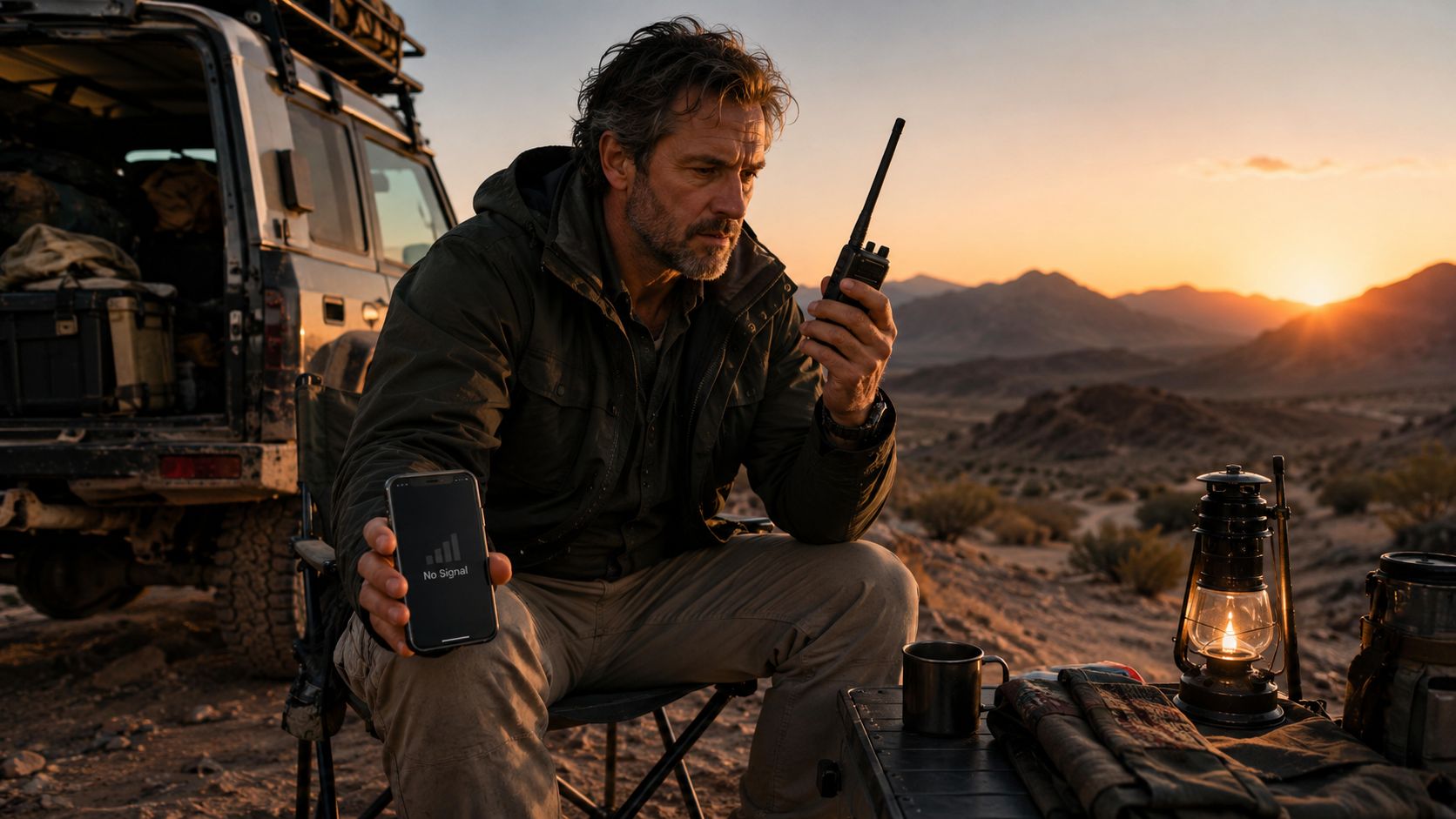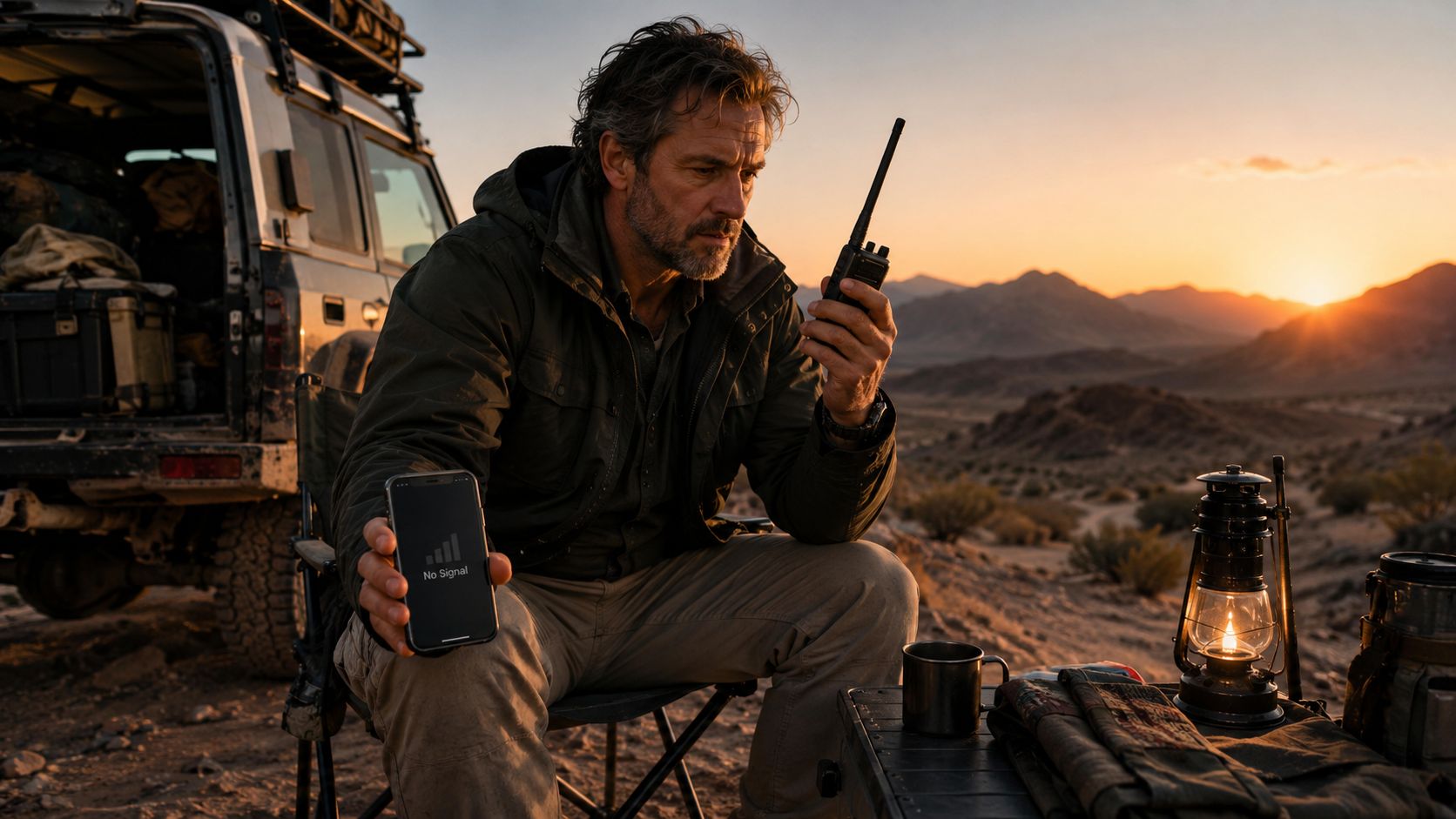
The modern outdoor lifestyle has evolved far beyond simple camping trips at nearby parks. Today’s hikers cross isolated mountain ranges, overlanders navigate endless desert backroads, and campers establish remote base camps far from crowded campgrounds and cell towers. Adventure has become bigger, bolder, and more independent than ever before. Yet with that freedom comes one major challenge that can quickly turn excitement into danger: communication. Cell phones work beautifully in cities and along developed highways, but deep wilderness environments expose their limitations almost immediately. One steep canyon wall, one isolated forest trail, or one remote stretch of desert can erase service completely. For outdoor enthusiasts pushing farther into off-grid territory, satellite phones have become essential tools for safety, navigation, emergency preparedness, and peace of mind.
A: The best hiking option is lightweight, rugged, easy to use, and supported by strong coverage in your route area.
A: Yes. They are especially useful at remote campsites with no cell service.
A: It is a smart safety tool for remote trails, deserts, forests, and long backroads.
A: Not usually. A satellite phone is best as a remote communication backup, while a cell phone handles daily tasks.
A: They may struggle inside tents, vehicles, or buildings, so outdoor sky view is usually better.
A: Yes. Most require prepaid airtime, a monthly plan, or an annual subscription.
A: Many models can send short messages, but the experience is usually slower than smartphone texting.
A: Some are water-resistant or rugged, but ratings vary by model, so check the device specs.
A: Bring a charger, power bank, emergency contacts, offline maps, and a written trip plan.
A: Yes, if you regularly hike, camp, hunt, boat, or overland beyond reliable cell coverage.
Why Satellite Phones Matter in the Backcountry
The wilderness has a way of making people feel both incredibly free and surprisingly vulnerable at the same time. The farther someone travels from cities and highways, the more unpredictable nature becomes. Weather shifts rapidly in mountain regions, vehicles break down miles from help, trails become confusing after dark, and injuries can happen in isolated terrain where no one else is nearby.
Satellite phones provide something that ordinary smartphones often cannot: communication independence. Unlike cellular devices that rely on nearby towers, satellite phones connect directly to satellites orbiting above Earth. This allows communication in remote regions where there is no cell infrastructure at all.
For hikers, this can mean calling for help after an injury deep in the backcountry. For campers, it can mean staying informed about dangerous weather moving toward campgrounds. For overlanders, it can mean maintaining navigation support and emergency contact while crossing hundreds of miles of isolated terrain.
The emotional value of satellite communication is often underestimated. Outdoor adventures become more enjoyable when travelers know they still have a connection to emergency services, family members, or rescue coordination if something goes wrong. That reassurance allows people to explore more confidently without sacrificing safety.
Satellite phones have also become increasingly important because more travelers are intentionally seeking remote destinations. Overlanding routes across deserts, forest service roads, and mountain passes continue growing in popularity. Backpackers are venturing deeper into wilderness areas, and remote camping experiences are becoming more desirable as people search for solitude away from crowded tourist destinations.
In these environments, communication is not simply about convenience. It becomes part of survival planning.
Iridium Extreme 9575 and the Gold Standard of Reliability
When people discuss elite satellite phones for extreme wilderness travel, the Iridium Extreme 9575 almost always enters the conversation immediately. It has earned a reputation as one of the most dependable satellite communication devices ever created for outdoor use.
The biggest strength of the Iridium network is its near-global coverage. Unlike some satellite systems that struggle in certain regions, Iridium satellites orbit in a way that allows communication across mountains, oceans, deserts, and polar regions. For hikers crossing isolated alpine terrain or overlanders venturing into international wilderness routes, this coverage provides enormous confidence.
The device itself is built for punishment. Dust, rain, freezing temperatures, and harsh environments are exactly what it was designed to handle. Its rugged construction appeals strongly to serious adventurers who expose gear to extreme conditions regularly.
Battery life is another reason outdoor travelers respect the Iridium Extreme. Long standby performance matters deeply during multi-day expeditions where charging opportunities are limited. A satellite phone that dies quickly becomes useless exactly when it may be needed most.
One feature that makes the device especially valuable for wilderness travelers is its integrated SOS functionality. Emergency distress signals can be transmitted with GPS coordinates, allowing rescue services to locate users even in remote terrain. For solo hikers and expedition teams, this capability can become life-saving.
While the Iridium Extreme is more expensive than many alternatives, its reputation for reliability continues making it one of the most trusted choices among serious adventurers, expedition leaders, and survival-focused travelers.
Garmin inReach and the Rise of Hybrid Adventure Communication
Not every outdoor traveler wants a traditional satellite phone designed primarily for voice communication. Many hikers and overlanders now prefer compact hybrid devices that focus heavily on satellite messaging, navigation, GPS tracking, and emergency coordination.
The Garmin inReach series has become one of the most influential products in modern outdoor communication because it blends multiple functions into a single compact device. Instead of functioning like a conventional phone, the inReach system focuses on two-way satellite messaging, location sharing, route tracking, weather forecasting, and SOS rescue services.
For hikers and backpackers, this approach offers enormous advantages. The devices are lightweight, portable, and optimized for wilderness movement. Travelers can send text messages from isolated trails, share GPS locations with family members, and monitor changing weather conditions while remaining far from cellular infrastructure.
Battery performance is one of the biggest strengths of the Garmin ecosystem. Multi-day hiking expeditions often require careful power management, and compact devices with long battery life become extremely valuable in those conditions.
Overlanders also appreciate Garmin devices because they integrate well with mapping systems and off-road navigation tools. Long-distance remote travel often involves route planning across isolated terrain where navigation errors can create dangerous situations. Combining communication and navigation into one ecosystem simplifies expedition planning considerably.
The Garmin inReach series represents a broader shift in off-grid communication technology. Many outdoor travelers now prioritize messaging, GPS coordination, and emergency alerts over traditional voice calling. This evolution reflects how wilderness communication continues adapting to modern adventure lifestyles.
Thuraya Phones and Affordable Global Exploration
For international travelers and overlanders exploring remote regions across Europe, Africa, Asia, and the Middle East, Thuraya satellite phones have carved out a strong reputation for balancing affordability with reliable performance.
Thuraya devices are often smaller and more smartphone-like compared to some rugged satellite models. This design appeals to travelers who want communication tools that feel familiar and portable rather than industrial or military-inspired.
Coverage remains one of the most important factors when choosing any satellite phone, and Thuraya performs especially well across large portions of the Eastern Hemisphere. Overlanders crossing international routes frequently appreciate having access to communication systems that function across multiple countries without relying on inconsistent local cellular infrastructure.
Another major advantage is pricing. Satellite communication can become expensive quickly, particularly for travelers on extended expeditions. Thuraya devices and service plans are often more affordable than premium global systems, making them attractive for budget-conscious adventurers who still need dependable off-grid communication.
The Thuraya X5-Touch stands out because it bridges the gap between satellite phones and smartphones more effectively than many competitors. It includes Android functionality alongside satellite communication capabilities, creating a more modern user experience for travelers accustomed to smartphone ecosystems.
This hybrid style reflects the future direction of satellite communication. Outdoor travelers increasingly want devices that feel intuitive and connected rather than isolated from the broader digital world.
Rugged Features That Matter Most Outdoors
Choosing the right satellite phone involves much more than comparing brand names or coverage maps. Outdoor conditions place unique demands on communication equipment, and certain features become incredibly important once civilization disappears behind the horizon.
Durability ranks near the top of the list. Hiking, camping, and overlanding expose equipment to dirt, moisture, impact, vibration, and temperature extremes. Devices designed for urban office environments rarely survive prolonged wilderness use comfortably. Rugged construction with water resistance and shock protection becomes essential.
Battery life may matter even more. A satellite phone only works if it still has power during emergencies. Multi-day adventures often involve limited charging opportunities, especially for backpackers relying on portable battery packs or solar chargers. Efficient standby performance can dramatically extend device usefulness in remote areas.
Ease of use is another surprisingly important factor. Emergencies create stress, and complicated interfaces become frustrating quickly when someone is injured, lost, or facing dangerous weather. The best satellite phones maintain simple, reliable functionality even under pressure.
GPS integration has also become increasingly valuable. Many modern satellite devices include mapping support, route tracking, and coordinate-sharing features that improve navigation safety dramatically. Overlanders traveling across remote deserts or forest systems benefit enormously from integrated navigation capabilities.
Compact design matters particularly for hikers and backpackers. Every ounce carried across long distances affects energy levels and endurance. Smaller communication tools allow adventurers to maintain safety without overloading packs unnecessarily.
Finally, network reliability remains the foundation of every satellite communication system. A beautifully designed device means very little if coverage becomes inconsistent in critical locations. Understanding where each network performs best helps travelers choose equipment suited for their specific adventures.
Satellite Phones for Overlanding and Vehicle Expeditions
Overlanding has exploded in popularity because it combines exploration, self-reliance, camping, and remote travel into one immersive outdoor lifestyle. Unlike traditional road trips focused on destinations, overlanding emphasizes the journey itself, often across isolated terrain where infrastructure becomes sparse or nonexistent.
Satellite phones fit naturally into this world because vehicle-based adventures frequently extend far beyond reliable cellular coverage. Desert crossings, mountain passes, remote forest roads, and international expedition routes can leave travelers isolated for days or even weeks.
Vehicle travelers often prioritize slightly different features compared to hikers. Battery charging is less challenging because vehicles can support power systems, but communication reliability across long-distance routes becomes even more important. Overlanders may also spend extended periods in regions where weather, navigation problems, or mechanical breakdowns create serious risks.
Many overlanders choose satellite communication systems as part of a layered safety strategy. GPS mapping systems, emergency recovery equipment, fuel planning, and communication tools all work together to create self-sufficient travel capability.
Group expeditions also benefit heavily from satellite communication. Coordinating multiple vehicles across remote terrain becomes easier when communication remains reliable beyond cellular infrastructure. Route adjustments, weather warnings, and emergency coordination can happen efficiently even in isolated wilderness environments.
Satellite communication also provides reassurance to families and friends back home. Sharing location updates or sending periodic messages from remote regions reduces anxiety and improves overall travel safety.
As overlanding culture continues growing globally, satellite communication is increasingly viewed not as luxury equipment but as standard expedition gear for serious remote travel.
The Future of Outdoor Satellite Communication
Satellite communication technology is evolving rapidly, and the next generation of devices may transform wilderness travel completely. What once required large, expensive hardware is gradually becoming smaller, smarter, and more integrated into everyday devices.
One of the biggest developments is the integration of satellite connectivity into mainstream smartphones. Several manufacturers are already introducing emergency satellite messaging capabilities that allow limited communication beyond cellular coverage. While these systems remain more limited than dedicated satellite phones, they represent a major shift toward hybrid communication technology.
Low Earth orbit satellite networks are also expanding rapidly. These systems aim to provide faster, more reliable global communication with lower latency than traditional satellite systems. Over time, this could dramatically improve wilderness connectivity for outdoor travelers.
Artificial intelligence, GPS integration, weather forecasting, and advanced mapping tools are likely to become increasingly connected within future communication devices. Instead of carrying separate navigation tools, emergency beacons, and communication equipment, outdoor travelers may eventually rely on unified systems capable of handling all expedition functions simultaneously.
Battery efficiency is improving as well. Longer-lasting devices combined with better portable charging solutions make remote travel safer and more practical than ever before.
Despite these innovations, one truth remains constant: wilderness environments will always challenge communication systems. Mountains, storms, remote terrain, and isolation create conditions where preparation matters deeply. Reliable communication tools will continue playing a major role in outdoor safety for decades to come.
Staying Connected Where Adventure Begins
The best satellite phone is not simply the one with the most features or the highest price tag. The ideal device is the one that matches the type of adventure waiting ahead. A solo backpacker crossing mountain trails has very different needs compared to an overlander driving remote desert routes or a camper exploring isolated national forests. Satellite phones have evolved from niche expedition equipment into practical tools for modern outdoor lifestyles. They allow travelers to venture farther from civilization while maintaining an essential safety connection to the outside world. In emergencies, they provide communication when traditional infrastructure disappears completely. For hikers, compact messaging devices like the Garmin inReach offer lightweight efficiency and GPS-focused functionality. For global expedition travelers, rugged systems like the Iridium Extreme deliver unmatched reliability in harsh environments. For budget-conscious international explorers, Thuraya phones provide a strong balance between affordability and capability. As outdoor adventure continues growing in popularity, satellite communication is becoming more important than ever. People are intentionally seeking remote experiences beyond crowded highways and developed campgrounds. They want solitude, exploration, and the freedom that comes from disconnecting from urban life without completely sacrificing safety. In the end, satellite phones are about far more than technology. They represent confidence, preparedness, and the ability to explore wild places with greater security. Whether crossing remote mountains, camping beneath desert stars, or navigating endless backcountry roads, reliable communication ensures that adventure can continue even when the nearest cell tower disappears far beyond the horizon.