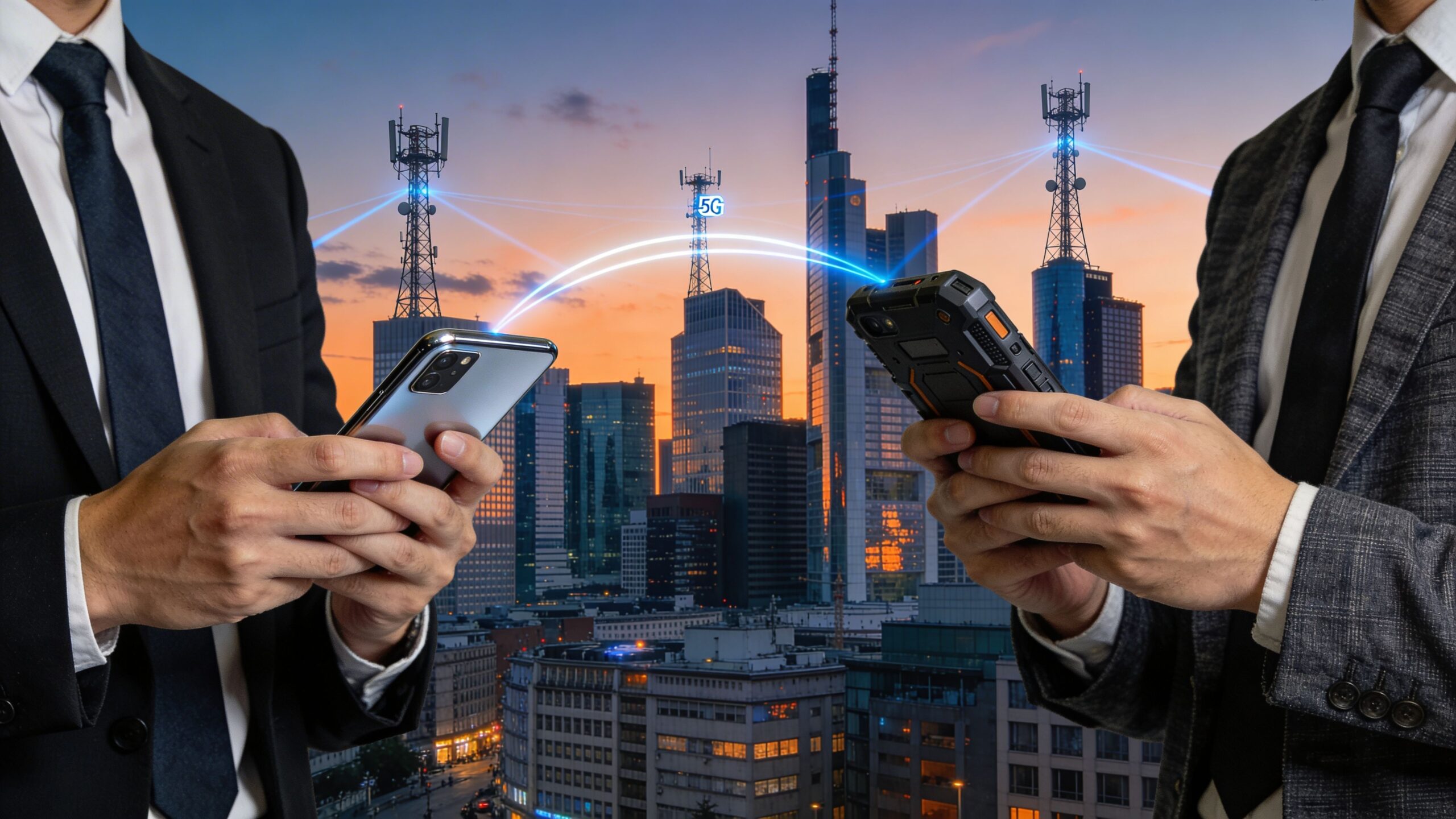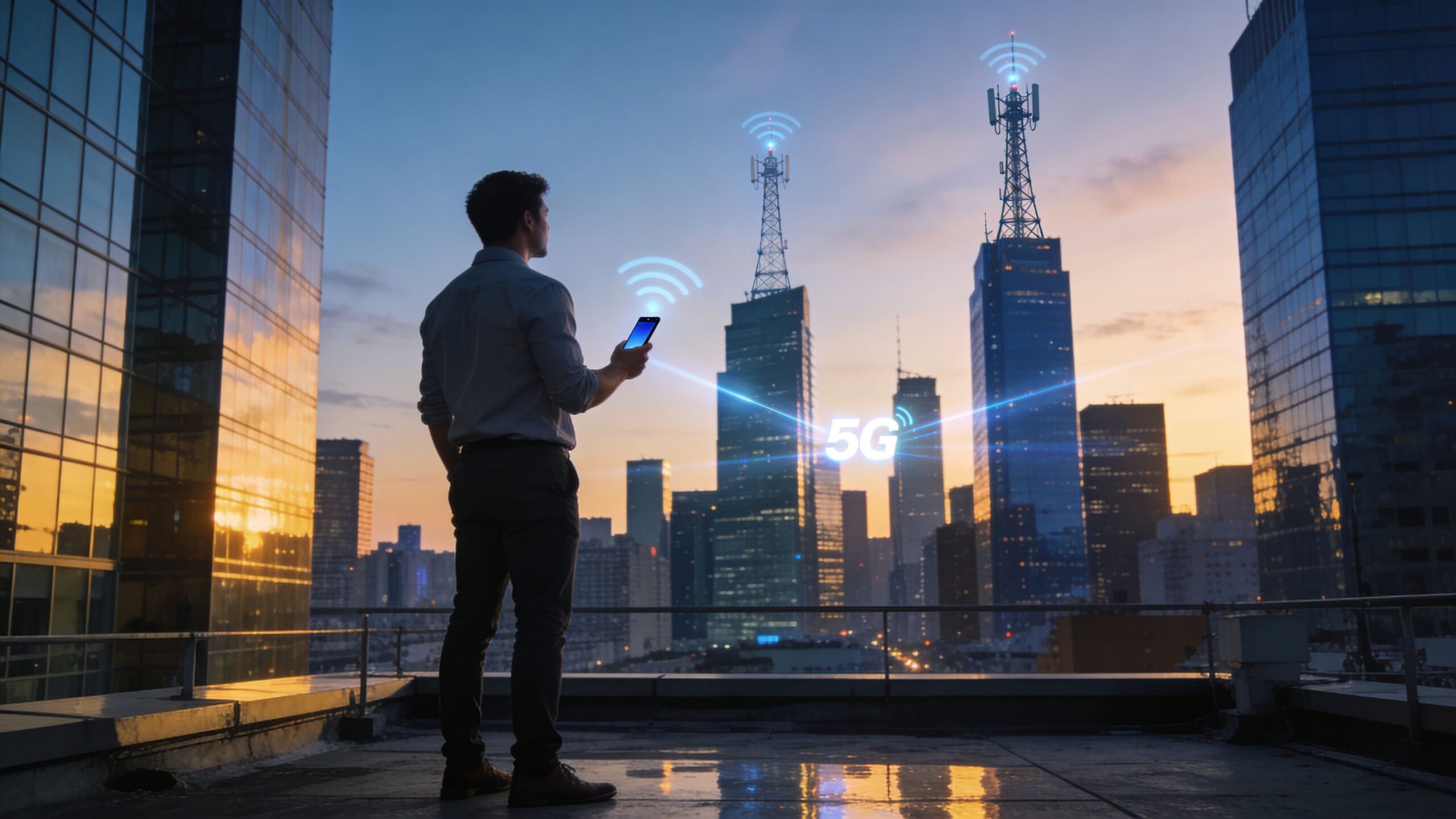
The conversation around wireless networks has evolved rapidly over the past decade, but in 2026, the question of 5G versus LTE is still highly relevant. While 5G has been marketed as the future of connectivity, LTE continues to power a massive portion of global mobile traffic. For consumers, businesses, and even governments, the decision isn’t as simple as choosing the newest technology. It’s about understanding performance, coverage, cost, and real-world usability. In many ways, 2026 represents a transitional phase. 5G networks have expanded significantly, but LTE remains deeply embedded in infrastructure, devices, and everyday experiences. The real question is not just which technology is better, but which one actually matters more depending on how you live, work, and connect.
A: No. A strong LTE signal can outperform weak or congested 5G in real-world use.
A: It can, especially during heavy data use or constant switching between LTE and 5G zones.
A: Yes. LTE is still excellent for everyday tasks and remains crucial in many coverage areas.
A: Heavy streamers, hotspot users, mobile gamers, travelers in strong cities, and people moving large files.
A: Mid-band usually matters most because it offers meaningful speed gains without the extreme range limits of mmWave.
A: Only if your carrier has strong local 5G and your current phone struggles with speed, congestion, or coverage.
A: Often yes, because LTE coverage can still be broader and more consistent outside dense urban zones.
A: Sometimes, but call quality also depends on carrier voice systems, phone hardware, and local signal conditions.
A: It depends. Low-band 5G often works indoors better than higher-frequency 5G layers.
A: The one that is strongest where you live, work, commute, and travel—not just the one with the newer name.
LTE in 2026: The Quiet Workhorse That Refuses to Fade
LTE, often referred to as 4G LTE, continues to serve as the backbone of mobile connectivity in 2026. Despite the hype around newer technologies, LTE has proven to be incredibly reliable, consistent, and widely available. It offers strong coverage across urban, suburban, and rural areas, making it the default network for millions of users worldwide.
One of LTE’s biggest advantages is its maturity. Years of infrastructure investment have created a network that is stable and optimized. Speeds are more than sufficient for everyday tasks such as streaming, video calls, browsing, and social media. For many users, LTE delivers a seamless experience without the variability that sometimes accompanies newer networks.
Another key factor is device compatibility. Virtually every smartphone, tablet, and connected device supports LTE, ensuring universal access without the need for the latest hardware. In contrast, not all devices can fully take advantage of 5G capabilities, particularly older or budget models.
LTE also plays a crucial role behind the scenes. Even in areas with strong 5G presence, devices frequently fall back on LTE when signal strength fluctuates. This makes LTE not just relevant, but essential as a support system for modern connectivity.
5G in 2026: Speed, Potential, and the Reality Check
5G has come a long way since its initial rollout, and in 2026, it is far more widespread and capable than in previous years. With faster speeds, lower latency, and the ability to connect more devices simultaneously, 5G is designed to power the next generation of digital experiences.
In ideal conditions, 5G can deliver blazing-fast download speeds that rival home broadband connections. This opens the door to high-definition streaming, real-time gaming, augmented reality applications, and advanced cloud computing. For businesses, 5G enables innovations in automation, smart cities, and industrial IoT systems.
However, the reality of 5G is more nuanced. Performance can vary significantly depending on the type of 5G being used. High-band millimeter wave offers incredible speeds but limited range, while low-band 5G provides broader coverage but only modest improvements over LTE. Mid-band 5G strikes a balance, but availability still depends on location.
In everyday use, many users may not notice a dramatic difference between LTE and 5G, especially in areas where network infrastructure is still developing. This gap between promise and reality is one of the defining characteristics of 5G in 2026.
Coverage Wars: Where You Live Still Decides Everything
When comparing 5G and LTE, coverage remains one of the most important factors. LTE continues to dominate in terms of geographic reach, particularly in rural and less densely populated areas. Its infrastructure is well-established, making it the more reliable choice for consistent connectivity across large regions.
5G coverage has expanded significantly, especially in major cities and high-traffic areas. Urban environments often benefit from dense network deployments that support faster speeds and lower latency. However, coverage gaps still exist, and signal strength can fluctuate more than LTE, particularly indoors or in areas with physical obstructions.
For many users, the experience of 5G depends heavily on location. In some cities, it delivers exceptional performance that transforms how people use their devices. In others, it may feel only marginally different from LTE. This uneven distribution means that LTE continues to play a critical role in ensuring consistent connectivity.
Speed vs Stability: What Actually Impacts Daily Use
Speed is often the headline feature in discussions about 5G, but stability is just as important in real-world scenarios. While 5G can achieve significantly higher peak speeds, LTE offers a more predictable and stable connection in many environments.
For everyday tasks such as messaging, browsing, and video streaming, LTE provides more than enough bandwidth. The difference in speed becomes more noticeable in data-heavy activities like downloading large files or streaming ultra-high-definition content. Even then, the advantage of 5G depends on network conditions.
Latency is another area where 5G excels. Lower latency enables faster response times, which is crucial for applications like online gaming, remote work tools, and emerging technologies such as virtual reality. However, for the average user, the impact of lower latency may not always be immediately noticeable.
Ultimately, the choice between speed and stability comes down to priorities. Users who value consistency may find LTE more dependable, while those seeking cutting-edge performance may prefer 5G where available.
The Device Factor: Your Phone Shapes Your Experience
In 2026, the device you use plays a significant role in determining whether 5G or LTE matters more. Modern smartphones are increasingly designed to take full advantage of 5G networks, with advanced antennas and processors that optimize performance.
However, not all devices are created equal. Budget and mid-range phones may support 5G but lack the hardware needed to fully utilize its capabilities. This can result in performance that is only slightly better than LTE, despite being connected to a 5G network.
Battery life is another consideration. 5G connectivity can consume more power, especially when switching between different frequency bands. While newer devices have improved efficiency, LTE often remains the more energy-efficient option for prolonged use.
For many users, the decision to prioritize 5G depends on whether their device can truly benefit from it. Without the right hardware, the advantages of 5G may not fully materialize.
Business and Innovation: Where 5G Pulls Ahead
While LTE continues to serve consumers effectively, 5G is making a significant impact in business and innovation. Industries such as healthcare, manufacturing, and transportation are leveraging 5G to enable new capabilities that were not possible with previous technologies.
In healthcare, 5G supports remote surgeries and real-time patient monitoring. In manufacturing, it powers smart factories with connected machines and automated processes. In transportation, it enables advancements in autonomous vehicles and traffic management systems.
These applications rely on the unique strengths of 5G, particularly its low latency and ability to handle massive device connectivity. LTE simply cannot match these capabilities at scale, making 5G the driving force behind many technological advancements.
For businesses, the value of 5G goes beyond speed. It represents a platform for innovation that can transform operations, improve efficiency, and create new opportunities. This is where 5G truly differentiates itself from LTE.
Cost and Accessibility: The Hidden Decision Drivers
Cost is often an overlooked factor in the 5G versus LTE debate, but it plays a significant role in determining which technology matters most. While 5G plans have become more affordable, they can still come at a premium compared to LTE options, particularly when bundled with high-end devices.
Accessibility is another important consideration. Not everyone has access to strong 5G coverage, and upgrading to a 5G-compatible device may not be practical for all users. LTE, on the other hand, remains widely accessible and cost-effective, making it the more inclusive option.
For many consumers, the decision comes down to value. If LTE meets their needs at a lower cost, the incentive to switch to 5G may be limited. On the other hand, users who require higher performance or want to future-proof their connectivity may find the investment in 5G worthwhile.
The Verdict for 2026: Which Network Technology Matters Most?
In 2026, the answer to whether 5G or LTE matters most is not a simple one. Both technologies play essential roles, and their importance depends on context. LTE remains the foundation of mobile connectivity, offering reliability, widespread coverage, and sufficient performance for most everyday tasks. 5G, however, represents the future. It is the technology that will drive innovation, enable new experiences, and support the growing demands of a connected world. Its impact is already being felt in industries and urban environments, and its influence will continue to expand in the coming years. For the average user, LTE still matters more in terms of day-to-day reliability and accessibility. But for those looking ahead, 5G is where the momentum lies. The smartest approach in 2026 is not choosing one over the other, but understanding how they work together to deliver a seamless connectivity experience. As networks continue to evolve, the line between LTE and 5G will blur, creating a hybrid ecosystem that combines the strengths of both. In that sense, the real winner is not one technology over the other, but the users who benefit from faster, more reliable, and more versatile connectivity than ever before.